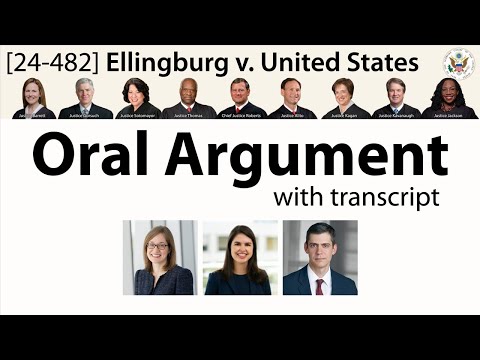
Federal courts have debated for decades whether restitution is criminal punishment or a civil remedy—a distinction that matters because the Constitution's Ex Post Facto Clause bars retroactive increases in criminal punishment. On January 20, 2026, the Supreme Court unanimously ruled restitution under the Mandatory Victims Restitution Act is criminal punishment, so defendants cannot be held to payment terms that didn't exist when they committed their crimes.
The ruling resolves a circuit split that left defendants in some parts of the country subject to extended enforcement periods Congress enacted after their convictions, while defendants elsewhere enjoyed protection from retroactive changes. Federal defendants collectively owe over $100 billion in restitution, with roughly 91% of that balance considered uncollectible. The decision limits the government's reach over defendants sentenced before 1996 but leaves intact restitution obligations for crimes committed after the MVRA took effect.
14 events
Latest: January 20th, 2026 · 6 months ago
Showing 8 of 14
JK to step
Tap a bar to jump to that date
Jump to
January 2026
Supreme Court Rules Restitution Is Criminal Punishment
LatestDecision
In a unanimous decision, the Court holds that MVRA restitution is plainly criminal punishment subject to Ex Post Facto protections, reversing the Eighth Circuit.
October 2025
Oral Argument Held
Legal
In an unusual proceeding, both Ellingburg's attorney and the government argue for reversal, leaving only a court-appointed amicus to defend the sentence.
April 2025
Supreme Court Grants Review
Legal
The Court agrees to hear the case, setting up a resolution of the disagreement between circuits.
October 2024
Ellingburg Files Supreme Court Petition
Legal
Ellingburg petitions the Supreme Court to resolve the circuit split over whether MVRA restitution is penal for Ex Post Facto purposes.
August 2024
Eighth Circuit Rejects Ellingburg's Challenge
Legal
The appeals court affirms continued restitution enforcement, citing binding precedent from <em>Carruth</em> that restitution is not criminal punishment.
2023
Government Demands Continued Payment
Enforcement
Ellingburg receives notice that he owes $13,476 in restitution (including interest) and must make monthly $100 payments until 2042 under the MVRA's extended enforcement period.
June 2022
Ellingburg Released from Prison
Release
After 25 years, Ellingburg leaves federal custody. He has paid $2,054 toward his restitution while incarcerated.
November 2016
Ellingburg's Original Restitution Period Expires
Legal
Under the law in effect when Ellingburg committed his crime, his 20-year restitution obligation would have terminated.
2005
Eighth Circuit Rules Restitution Is Civil
Legal
In <em>United States v. Carruth</em>, the Eighth Circuit holds MVRA restitution is a civil remedy, not criminal punishment, exempting it from constitutional protections like the Ex Post Facto Clause.
November 1996
Ellingburg Sentenced Under MVRA
Sentencing
District court sentences Ellingburg to 322 months in prison and orders $7,567 in restitution, applying the new MVRA provisions.
August 1996
Ellingburg Convicted
Legal
Jury convicts Ellingburg of bank robbery and using a firearm during a violent crime.
April 1996
MVRA Enacted
Legislation
Congress passes Mandatory Victims Restitution Act as part of the Antiterrorism and Effective Death Penalty Act, making restitution mandatory for certain crimes and extending enforcement to 20 years after release from prison.
December 1995
Ellingburg Robs Georgia Bank
Crime
Holsey Ellingburg robs a Savannah branch of First Union Bank of Georgia at gunpoint, taking $7,567.
October 1982
Victim and Witness Protection Act Signed
Legislation
Congress enacts first major federal restitution law, authorizing discretionary restitution as a criminal sanction with a 20-year enforcement period from entry of judgment.
Historical Context
3 moments from history that rhyme with this story — and how they unfolded.
1 of 3
March 2003
Smith v. Doe (2003)
Two Alaska men convicted of sex offenses before the state's Sex Offender Registration Act took effect challenged their retroactive inclusion in the registry. The Supreme Court ruled 6-3 that because the registration requirement was regulatory rather than punitive, its retroactive application did not violate the Ex Post Facto Clause.
Then
Upheld retroactive sex offender registration nationwide, establishing that legislative labels as 'civil' can shield laws from Ex Post Facto challenges.
Now
Created the framework defendants must overcome: prove 'the clearest proof' that a nominally civil measure is actually punitive. Several state courts later found their own registration schemes violated state constitutions.
Why this matters now
<em>Ellingburg</em> distinguished MVRA restitution from sex offender registration, finding that Congress's explicit integration of restitution into criminal sentencing—unlike Alaska's civil regulatory scheme—marked it as punishment. The case shows how legislative design choices affect constitutional outcomes.
2 of 3
June 2013
Peugh v. United States (2013)
Marvin Peugh committed bank fraud in 1999 and 2000. By his 2009 sentencing, the Federal Sentencing Guidelines had increased his range from 30-37 months to 70-87 months. He argued applying the harsher guidelines violated the Ex Post Facto Clause.
Then
The Court ruled 5-4 that sentencing under guidelines promulgated after the crime violates the Ex Post Facto Clause when the new version yields a higher sentencing range.
Now
Established that even advisory guidelines carry enough weight to trigger constitutional protection, reinforcing that substance matters more than form in Ex Post Facto analysis.
Why this matters now
<em>Peugh</em> set precedent that retroactive increases in sentencing consequences—even through supposedly non-binding guidelines—violate the Ex Post Facto Clause. <em>Ellingburg</em> extends this logic to restitution obligations that increase through statutory changes after conviction.
3 of 3
June 1993
Austin v. United States (1993)
Richard Austin had his mobile home and auto body shop forfeited after selling two grams of cocaine. He challenged the forfeiture as an excessive fine. The government argued the Eighth Amendment's Excessive Fines Clause applied only to criminal proceedings.
Then
The Court unanimously held that civil forfeitures qualify as 'fines' under the Eighth Amendment when they serve punitive rather than purely remedial purposes.
Now
Established that constitutional protections can apply to sanctions labeled 'civil' when their effect is punitive—the same principle <em>Ellingburg</em> now applies to restitution under the Ex Post Facto Clause.
Why this matters now
<em>Austin</em> demonstrated that courts look past legislative labels to determine whether a sanction is punishment. <em>Ellingburg</em> applies this approach to the Ex Post Facto Clause, finding that MVRA restitution's integration into criminal sentencing reveals its punitive character despite any civil features.