
Pull to refresh
Logo
Fort Worth gets its first new wastewater plant since the 1950s

Fort Worth gets its first new wastewater plant since the 1950s

Built World

Ferrovial's Webber wins a $538 million contract to build the Mary's Creek Water Reclamation Facility in west Fort Worth

Overview

Updated 1 hour ago

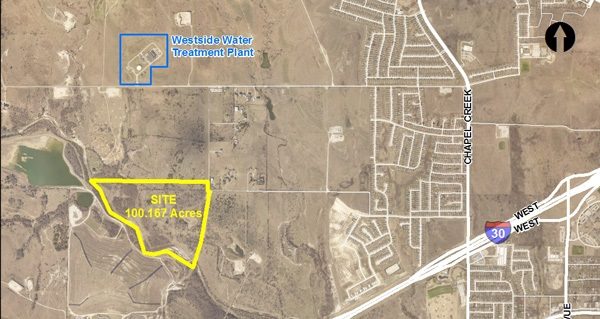
Wastewater from west Fort Worth currently travels as far as 30 miles east to the Village Creek plant, the city's only treatment works, which dates to the 1950s. On Aug. 25 the city authorized a $537,982,128 contract with Webber Waterworks to build a second one, the Mary's Creek Water Reclamation Facility. Ferrovial, the Spanish parent of Webber, announced the award on Nov. 5 and called it its largest water infrastructure project in the United States.

The plant will treat 10 million gallons a day using membrane bioreactors and advanced nutrient removal, producing water clean enough for industrial and irrigation use. Construction is scheduled to begin in November 2026 and finish in summer 2030.

Why it matters

Fort Worth's west side is growing faster than its sewers; a second plant is cheaper than rebuilding 30 miles of pipe.

Questions about this story

Free account needed to ask — your question is kept and asked for you right after sign-up. Answers are public.

No questions yet — be the first to ask.

Key Indicators

$538M
Construction contract value
Authorized by Fort Worth City Council at $537,982,128.13 on Aug. 25, 2026.
10 MGD
Initial treatment capacity, million gallons per day
The plant is designed to expand as west Fort Worth grows.
30 miles
Distance west-side flows travel to the existing plant
Piping that wastewater to Village Creek would require expensive capacity upgrades.
Summer 2030
Targeted completion
Ferrovial's schedule; the city said in August 2026 it expected a 2029 finish.

Voices

Curated perspectives — historical figures and your fellow readers.

Sign up to generate historical perspectives on this story.

People Involved

Organizations Involved

Timeline

2000s 2030

8 events Latest: 3 days ago
Tap a bar to jump to that date
  1. Plant targeted for completion

    Upcoming Construction

    Ferrovial's schedule points to summer 2030; the city said in 2026 it expected 2029.

  2. Water district's reuse pipeline expected to break ground

    Upcoming Construction

    The district will capture treated flows below the plant and blend them into its supply.

  3. Ferrovial announces the award

    Latest Announcement

    The company calls it its largest US water project; construction is set to start in November 2026.

  4. Council authorizes $537,982,128.13 contract

    Contract

    Fort Worth commits to Webber Waterworks for construction of the Mary's Creek plant.

  5. Council briefed on Webber Waterworks selection

    Procurement

    An informal report names the contractor chosen through competitive sealed proposals.

  6. Texas regulators sign the plant's discharge permit

    Permit

    The TCEQ executive director signs; notice goes to interested parties on Aug. 19.

  7. City, water district and landowner settle permit dispute

    Agreement

    Fort Worth accepts stricter treatment and the district agrees to divert downstream flows.

  8. Fort Worth studies a second plant for the west side

    Planning

    Studies of wastewater needs in eastern Parker and western Tarrant counties stretch over two decades.

Scenarios

1

Site work begins at Mary's Creek before 2027

Likely Resolves by Jan 31, 2027

Discussed by: Ferrovial and the City of Fort Worth, which both put the start in late 2026

Ferrovial said construction would begin in November 2026, and Fort Worth's water department said in August it expected a start before the end of that year. A confirmed mobilization at the Chapin Road site would settle the question; the city had not identified a specific start date as of August.

2

Water district breaks ground on its reuse pipeline in 2027

Possible Resolves by End of 2027

Discussed by: Tarrant Regional Water District chief engineering officer Rachel Ickert

The district's separate project to divert Mary's Creek flows into its water supply is the second half of the 2022 settlement. Ickert said in August 2026 that it would break ground in 2027. If it slips, the plant's reclaimed water has no large-scale taker beyond future industrial and irrigation customers.

3

Plant treats wastewater on schedule by summer 2030

Uncertain Resolves by End of 2030

Discussed by: Ferrovial's public schedule and the city's earlier 2029 estimate

The two parties already differ by about a year on completion. Meeting the contractor's summer 2030 target would require the plant to move from construction into operation, a milestone the city will report and the state permit will govern.

Historical Context

2 moments from history that rhyme with this story — and how they unfolded.

1950s

Village Creek Water Reclamation Facility (1950s)

Fort Worth built its wastewater treatment plant in east Fort Worth, and for seven decades it remained the city's only one. As development pushed west, flows from new subdivisions had to be piped across the city to reach it.

Then

The plant anchored the city's wastewater system and shaped where growth could be served cheaply.

Now

By the 2000s, the city's master plan found west-side flows would overload the connecting pipelines.

Why this matters now

Mary's Creek is the first new plant Fort Worth has built since, and it exists because the alternative was rebuilding those pipes.

May-August 2022

The Mary's Creek permit fight (2022)

The Tarrant Regional Water District and downstream landowner Martha Leonard contested Fort Worth's discharge permit, arguing nutrients in treated water could feed toxic blue-green algae. Mediated talks produced a settlement: stricter treatment requirements for the city, and a district project to divert the flows into its water supply.

Then

The TCEQ executive director signed the permit on Aug. 12, 2022, clearing the way for design work.

Now

The settlement set the plant's treatment standard, which is why the design includes membrane bioreactors and advanced nutrient removal.

Why this matters now

The technical scope Ferrovial is now being paid to build was fixed by that 2022 deal.

Sources

(6)