
Pull to refresh
Logo
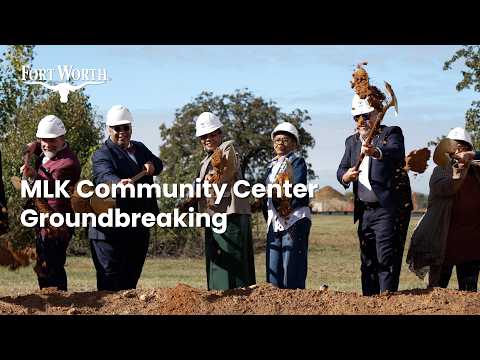
Fort Worth breaks ground on Stop Six's new MLK community center, with a 2028 opening targeted

Fort Worth breaks ground on Stop Six's new MLK community center, with a 2028 opening targeted

Built World Fort Worth, TX local

The $39.9 million building replaces a 1972 facility and sits inside a 925-home rebuild of the Cavile Place public housing site

Overview

Updated 2 hours ago

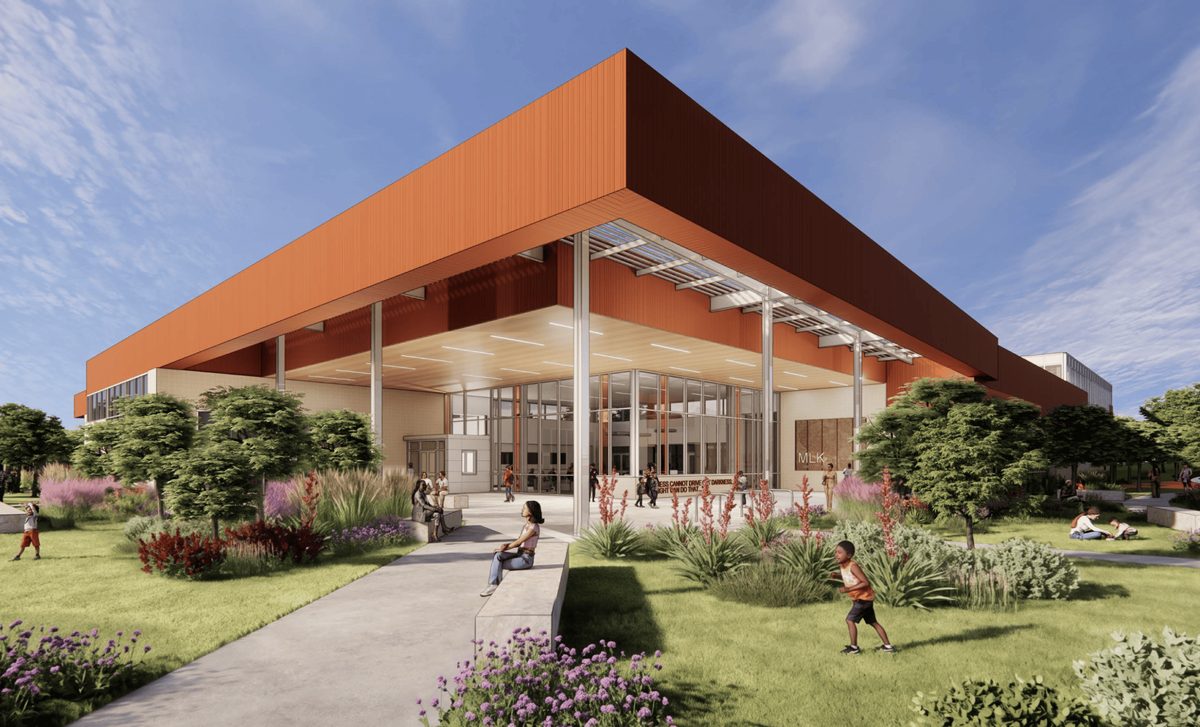
Fort Worth broke ground on a 28,000-square-foot Martin Luther King Jr. Community Center in Stop Six, replacing a building that opened in 1972 and has needed repairs for years. The $39.9 million facility is planned for 1500 Liberty Street in southeast Fort Worth, a 5.21-acre site. It will hold a library branch, a gym, a youth game room, a senior room and an aquatics center with an eight-lane lap pool and a water slide.

The project took about six years to reach this point, and it nearly stalled when the Department of Housing and Urban Development said money it had granted could only go toward housing. Fort Worth is paying for the two buildings with $25.7 million from a 2022 bond, $11.7 million in certificates of obligation issued this year, and other sources. Construction is expected to start in early 2027, with completion targeted for July 2028.

Why it matters

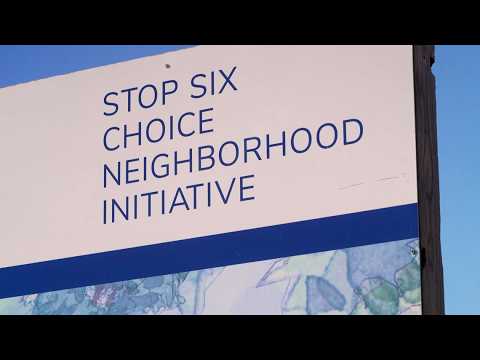
The current Stop Six community center dates to 1972. Its $39.9 million replacement anchors a 925-home rebuild of the Cavile Place projects.

Last Monday's email for Fort Worth, TX

Sent Nov 16. It carried:

Get next Monday's: one short email a week. Free. Unsubscribe in one click.

Questions about this story

Free account needed to ask — your question is kept and asked for you right after sign-up. Answers are public.

No questions yet — be the first to ask.

Key Indicators

$39.9M
Combined cost of the community center and aquatics center
$27.27 million for the community center plus $12.6 million for the aquatics center.
$27.27M
Community center funding
Drawn from four sources, including $17.5 million in debt approved by voters in 2022.
$12.6M
Aquatics center funding
$8.2 million from the 2022 bond and $4.4 million in 2026 certificates of obligation.
28,000 sq ft
Size of the community center
Includes a library branch, gym, fitness room, youth game room, senior room and public-use kitchen.
925
Homes planned in the Cavile Place redevelopment
416 units across projects within two miles of the site are already complete.
1972
Year the current MLK Jr. Community Center opened
City officials say the building is aging and in need of repairs.

Voices

Curated perspectives — historical figures and your fellow readers.

Sign up to generate historical perspectives on this story.

People Involved

Organizations Involved

Timeline

2020 November 2026

5 events Latest: 4 days ago
Tap a bar to jump to that date
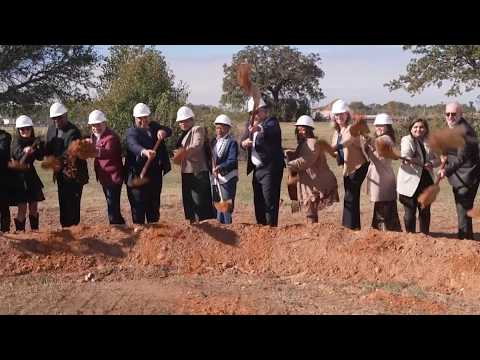
  1. Groundbreaking on Liberty Street

    Latest Construction

    City officials and residents mark the start of the $39.9M project.

  2. City issues certificates of obligation

    Funding

    $7.34M for the center and $4.4M for aquatics close the funding gap.

  3. Voters approve bond funds

    Funding

    Bond program sets aside $17.5M for the center and $8.2M for aquatics.

  4. Community meetings begin

    Planning

    Residents start meeting to say what they want in a replacement community center.

  5. Cavile Place demolition begins

    Housing

    The public housing project is torn down to make way for replacement homes.

Scenarios

1

Center opens by July 2028

Likely Resolves by Jul 31, 2028

Discussed by: City of Fort Worth project schedule; Fort Worth Report

The city's stated completion date is July 2028, with construction starting in early 2027. Financing is fully assembled, and the general contractor, Fort Worth-based Steele & Freeman, and project consultant HarrisonKornberg Architects of Houston are named. If change orders and material delays stay small, this is the baseline outcome.

2

Schedule slips past 2028

Possible Resolves by Jul 31, 2028

Discussed by: Fort Worth Report (reporting on the earlier HUD-related delay)

The project has already slipped once: federal housing officials said grant money could only go toward housing, forcing the city back to the drawing board and stretching planning to about six years. Fitting an eight-lane pool, a library branch and recreation space into one building adds coordination risk. A slip would push the opening past the summer 2028 target.

3

Library branch formally named for Franklin Moss Sr.

Likely Resolves by End of 2027

Discussed by: Fort Worth City Council member Deborah Peoples

Peoples announced at the groundbreaking that the city is working on naming the library after the late council member Franklin Moss Sr., who helped drive the final plans, and brought his widow to the podium. Naming requires a council action, and no date for one has been announced.

Historical Context

2 moments from history that rhyme with this story — and how they unfolded.

1954-1976

Pruitt-Igoe (1954-1976)

St. Louis built 33 eleven-story public housing towers with about 2,870 units in the 1950s. The complex deteriorated as maintenance budgets fell and residents left, and the city began demolishing it in 1972. The last buildings came down in 1976.

Then

Residents were relocated, many into other segregated neighborhoods, and the site sat largely vacant for decades.

Now

The demolition became the standard example of what happens when public housing is torn down without a funded replacement plan, and it shaped later policy toward mixed-income redevelopment.

Why this matters now

Stop Six is running the sequence in reverse: replacement homes and a civic building are being funded and built alongside the demolition, not after it.

2002-2011

Cabrini-Green redevelopment (2002-2011)

Chicago tore down the high-rise public housing towers of Cabrini-Green on the Near North Side, with the last tower demolished in 2011. The replacement was a mix of market-rate and subsidized housing built over more than a decade.

Then

Thousands of residents were relocated during demolition, and many did not return to the new units.

Now

The neighborhood gained new housing and amenities, but the benefits arrived well after the original residents had been displaced.

Why this matters now

It shows why the timing of a community center and library relative to the housing rebuild matters: amenities that arrive after residents leave cannot hold a neighborhood together.

Sources

(2)