




Pull to refresh
Logo
Daily Brief
Following
Why Ranks Sign Up
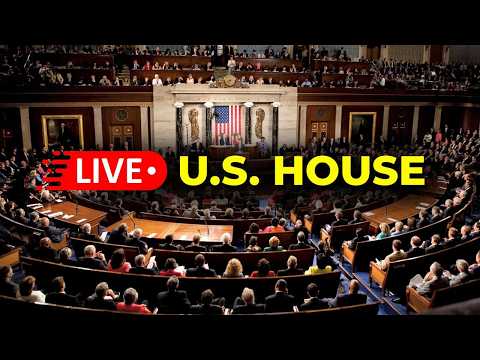
House passes record $1.15 trillion defense bill with US-Israel military plan

House passes record $1.15 trillion defense bill with US-Israel military plan

Rule Changes

The FY2027 defense authorization clears the House by four votes and heads to a stalled Senate

Today: House passes the $1.15 trillion NDAA

Overview

A U.S. service member's paycheck is about to grow by 5% to 7%. That raise rides inside a $1.15 trillion defense bill the House passed by four votes, the largest military authorization Congress has ever written.

The bill still needs the Senate, where Democrats have frozen their own version over President Trump's war with Iran. Tucked inside is a plan to fuse parts of the U.S. and Israeli militaries, plus a voter-citizenship measure with nothing to do with defense.

Why it matters

It sets how $1.15 trillion in military money is spent, raises troop pay, and could tie U.S. and Israeli defense programs together for years.

Questions about this story

No questions yet — be the first to ask.

Key Indicators

$1.15T
Total defense authorization
The largest annual military authorization Congress has written.
+$250B
Increase over prior year
About a quarter-trillion dollars more than the FY2026 total.
216-212
House passage vote
A near party-line margin of four votes.
$750M
US-Israel joint projects
Funding tied to the new defense technology initiative in Section 219.
5-7%
Service member pay raise
Authorized increase in military pay for FY2027.

Voices

Curated perspectives — historical figures and your fellow readers.

Ever wondered what historical figures would say about today's headlines?

Sign up to generate historical perspectives on this story.

Play

Exploring all sides of a story is often best achieved with Play.

Log in to play. Track your picks, climb the leaderboards. Log in Sign Up
Predict 4 ways this could play out. Contrarian picks score more — points lock when the scenario resolves. Log in to play
Higher or Lower Two numbers from this story. Guess which is bigger. 5 rounds to set a streak. Log in to play
Connections Sixteen names from the news. Find the four hidden groups of four. Log in to play

People Involved

Organizations Involved

Timeline

February 2026 July 2026

5 events Latest: Today
Tap a bar to jump to that date
  1. House passes the $1.15 trillion NDAA

    Today Legislation

    The House approves the record defense bill, 216-212, largely along party lines. It now goes to the Senate.

  2. House sets the rules and bundles in the SAVE Act

    Legislation

    The House adopts a rule merging voter-citizenship rules into the NDAA and blocks the Section 219 strip amendment.

  3. U.S. strikes Iranian nuclear sites

    Conflict

    The U.S. hits three nuclear facilities in Iran; Trump says hostilities pause on June 24.

  4. Senate committee advances its defense bill

    Legislation

    The Senate Armed Services Committee approves a $1.14 trillion FY2027 NDAA in June.

  5. U.S. and Israel open war with Iran

    Conflict

    Operation Epic Fury begins with U.S. and Israeli strikes on Iranian military and nuclear sites.

Historical Context

3 moments from history that rhyme with this story — and how they unfolded.

January 2021

FY2021 NDAA veto override (2021)

President Trump vetoed the FY2021 defense bill over unrelated demands in late 2020. On January 1, 2021, Congress overrode him, the only veto override of his first term. The $740 billion bill became law.

Then

The defense authorization took effect despite the president's veto.

Now

It confirmed the NDAA as veto-proof, must-pass legislation that clears even during bitter partisan fights.

Why this matters now

It shows why the FY2027 bill will probably become law, even with most Democrats opposed over the Iran war.

November 1993

"Don't Ask, Don't Tell" codified in the FY1994 NDAA (1993)

Congress wrote the policy barring openly gay troops from serving into the FY1994 defense authorization. A contested social policy rode the must-pass defense bill into law.

Then

The policy governed the U.S. military for the next 17 years.

Now

Congress repealed it in 2010, but the episode set a pattern of bolting charged, unrelated policy onto the NDAA.

Why this matters now

The SAVE Act voter rules and Section 219 use the same tactic: attach a fight to a bill Congress rarely blocks.

November 1981

US-Israel Strategic Cooperation Memorandum (1981)

The Reagan administration signed a formal framework to deepen U.S.-Israeli military coordination. Washington suspended it within weeks after Israel annexed the Golan Heights, then revived it later.

Then

It set up joint planning and military exercises between the two countries.

Now

It grew into decades of close defense ties, joint missile-defense programs, and large annual U.S. aid.

Why this matters now

Section 219 would push that relationship further, toward shared defense-technology development and industry.

Sources

(8)