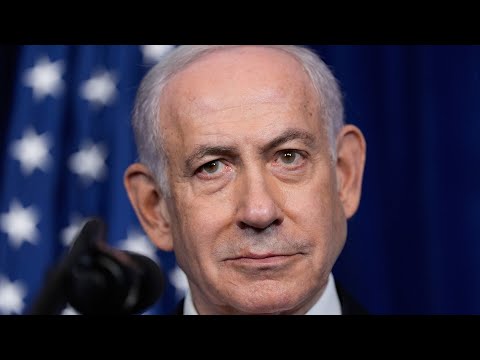
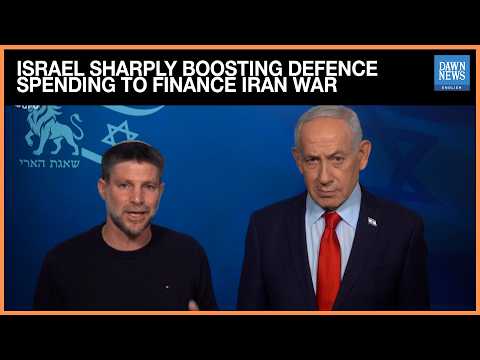
Israel's parliament voted 62-55 to approve the country's largest-ever state budget — 850.6 billion shekels ($271 billion) — with two days to spare before a legal deadline that would have dissolved the government and triggered new elections. The defense ministry alone received 143 billion shekels ($45.8 billion), reflecting the cost of ongoing military operations against Iran that are running at an estimated $480-550 million per day.
The budget raises Israel's deficit ceiling to 4.9% of gross domestic product (GDP), well above the 3.9% set in January and far beyond the 3.2-3.4% the Bank of Israel's governor had urged. The vote caps a bruising four-month process shaped by coalition brinkmanship with ultra-Orthodox parties, a war that began after the budget was initially drafted, and credit rating agencies warning that Israel's debt trajectory is unsustainable. The question now is whether a wartime economy running at 8-9% of GDP on defense can avoid the fiscal spiral that followed Israel's last major war spending surge in the 1970s.
Why it matters
Israel is betting its economic future on a wartime deficit that its own central bank says it cannot sustain.
Questions about this story
Free account needed to ask — your question is kept and asked for you right after sign-up. Answers are public.
No questions yet — be the first to ask.
Key Indicators
$271B
Total budget
Israel's largest-ever state budget at 850.6 billion shekels
$45.8B
Defense allocation
Record defense ministry budget, with actual wartime spending running even higher at roughly $57 billion
4.9%
Deficit ceiling (% of GDP)
Raised from 3.9% in January after the Iran war began, against the central bank's advice of 3.2-3.4%
62-55
Knesset vote
Passed along coalition-opposition lines after 13 hours of filibustering and missile-siren interruptions
~8%
Defense spending (% of GDP)
Up from 5.3% before October 2023 — the steepest increase since 1967
68.5-70%
Projected debt-to-GDP ratio
Rising from roughly 60% before the wars began in late 2023
13 events
Latest: March 29th, 2026 · 6 months ago
Showing 8 of 13
JK to step
Tap a bar to jump to that date
Jump to
March 2026
Knesset approves record $271 billion budget
LatestLegislative
After 13 hours of filibustering and missile-siren interruptions, the Knesset voted 62-55 to pass Israel's largest-ever budget, including a 4.9% deficit ceiling and record defense spending. Coalition members also channeled over $750 million to ultra-Orthodox institutions through procedural maneuvers.
Fitch holds Israel's A rating but warns on debt
Economic
Fitch affirmed Israel's A credit rating but maintained its negative outlook, citing rising public debt and war-related risks two days before the final vote.
Finance Committee approves budget for final vote
Legislative
After late-night sessions, the Knesset Finance Committee cleared the revised budget for its second and third readings in the full plenum.
Cabinet approves $13 billion defense increase
Budget
Netanyahu's cabinet expanded the budget by roughly 32 billion shekels (1.5% of GDP) to fund the Iran war, raising the deficit ceiling from 3.9% to 4.9%.
Israel adds $2.9 billion to defense budget for Iran operations
Budget
The first emergency defense supplement was approved as daily war costs reached an estimated $480-550 million.
February 2026
Israel and US launch strikes on Iran
Military
Operation Roaring Lion began with surprise airstrikes across Iran, killing Supreme Leader Ali Khamenei. Israel deployed roughly 200 fighter jets in its largest combat sortie in history, fundamentally altering the budget's assumptions.
January 2026
Budget passes first Knesset reading, 62-55
Legislative
The Knesset approved the budget's first reading along strict coalition-opposition lines after last-minute negotiations with ultra-Orthodox parties over the draft exemption bill.
Cabinet approves budget framework at 3.9% deficit
Budget
After resolving internal defense spending disputes, the cabinet approved the budget with a 3.9% deficit ceiling — already above the central bank's recommendation.
December 2025
Bank of Israel governor warns cabinet on deficit
Economic
Governor Amir Yaron addressed the cabinet, urging a deficit ceiling of 3.2-3.4% of GDP and warning that higher levels would trap Israel in a rising debt spiral.
Cabinet begins 2026 budget deliberations
Budget
Initial budget framework set with defense ministry seeking 144 billion shekels. Finance Minister Smotrich initially slashed the request to $34.5 billion.
September 2024
Moody's downgrades Israel a second time to Baa1
Economic
Moody's cut Israel's rating two notches to Baa1 amid the Lebanon escalation, placing the country on par with Peru and Kazakhstan.
Moody's downgraded Israel from A1 to A2, the first sovereign downgrade in the country's history, citing rising debt and war costs. S&P and Fitch followed within months.
October 2023
Hamas attack triggers multi-front war
Military
Hamas attack on southern Israel launches a conflict that would expand to Lebanon, Iran, and beyond, fundamentally reshaping Israel's fiscal trajectory.
Scenarios
1
War winds down, fiscal consolidation begins by late 2026
Possible
Discussed by: Moody's (January 2026 outlook upgrade), S&P, Bank of Israel projections
If military operations against Iran de-escalate significantly, Israel's defense spending drops from its current trajectory, and the government implements the spending adjustments the Bank of Israel has recommended, the deficit could begin narrowing toward the 3% range in 2027. Moody's projects 5% GDP growth in 2026 driven by a post-war rebound, which would help the debt-to-GDP ratio stabilize. This scenario depends on no further major escalation and on the coalition's willingness to cut non-defense spending — including the ultra-Orthodox allocations that secured the budget's passage.
2
Prolonged Iran conflict forces supplemental budgets, further downgrades
Likely
Discussed by: Fitch (negative outlook rationale), Bank of Israel warnings, defense analysts citing $500M/day war costs
If the Iran conflict continues at its current intensity through 2026, actual defense spending — already running at 177 billion shekels versus the 143 billion budgeted — will require additional emergency appropriations. At $480-550 million per day, six more months of operations would add roughly $90-100 billion in costs. The deficit would blow past the 4.9% ceiling, likely triggering further credit downgrades. Fitch explicitly flagged this as a risk in its March 27 assessment. The Bank of Israel warned the current trajectory already prevents any reduction in the debt-to-GDP ratio.
3
Coalition collapses over draft exemption bill, triggering elections
Possible
Discussed by: Times of Israel political analysts, Israel Democracy Institute, opposition leaders
The budget was passed by shelving the ultra-Orthodox military draft exemption bill — a can kicked down the road, not resolved. Shas and United Torah Judaism voted for the budget on the explicit understanding that the draft bill would be reintroduced immediately. If Netanyahu cannot deliver, or if the High Court (which ordered disclosure of ultra-Orthodox school funding details) intervenes, the coalition's ultra-Orthodox partners could withdraw support. The Knesset's spring recess runs until May 10, creating a window for political maneuvering, but the underlying tension between funding a war and exempting ultra-Orthodox men from military service remains unresolved.
4
Israel enters a 'lost decade' of debt-driven austerity
Unlikely
Discussed by: Economic historians citing the post-1973 precedent, Bank of Israel structural deficit warnings, IMF 2026 Article IV mission
After the 1973 Yom Kippur War, defense spending reached 28-30% of GDP, public expenditure exceeded 70% of GDP for most of the following decade, and inflation reached 445% by 1984. While today's 8-9% defense share is far lower and Israel's economy is more diversified, the structural dynamics are similar: permanent spending commitments (ultra-Orthodox funding, settlement infrastructure, defense obligations) locked in during wartime become politically impossible to reverse. The Bank of Israel's warning that permanent tax reductions in this budget increase the structural deficit points toward this outcome if fiscal discipline does not follow the war's end.
Historical Context
3 moments from history that rhyme with this story — and how they unfolded.
1 of 3
October 1973 - July 1985
Israel's post-Yom Kippur War fiscal crisis (1973-1985)
After the surprise Yom Kippur War in October 1973, Israel's defense spending surged to 28.7% of GDP, eventually peaking at roughly 30% by 1975. Public expenditure exceeded 70% of GDP in seven of the next eleven years. The government financed the spending through debt and money creation rather than politically difficult spending cuts.
Then
The economy entered a prolonged period of stagflation. Growth slowed dramatically while government debt ballooned.
Now
By 1984, inflation reached 445%. The crisis forced the 1985 Economic Stabilization Plan — a dramatic austerity package that slashed government spending, froze wages and prices, and devalued the shekel. It took over a decade to undo the fiscal damage of wartime spending commitments.
Why this matters now
The 2026 budget echoes the core dynamic of the post-1973 period: wartime spending commitments that become politically entrenched. The Bank of Israel's explicit warnings about permanent tax cuts increasing the structural deficit mirror the 1970s pattern of locking in spending levels that outlast the war. Israel's economy is far stronger today, but the mechanism — war costs creating fiscal obligations that compound over years — is identical.
2 of 3
September 2001 - August 2021
United States post-September 11 war financing (2001-2021)
After the September 11 attacks, the United States launched wars in Afghanistan and Iraq financed almost entirely through borrowing — the first time since the Revolutionary War that the country did not raise wartime taxes. Defense spending rose from 3% to nearly 6% of GDP. Total costs, including veterans' care obligations, reached approximately $8 trillion over two decades, with over $1 trillion spent on interest alone.
Then
The deficit-financed approach avoided the political cost of tax increases but added trillions to the national debt during a period of simultaneous tax cuts.
Now
The borrowing contributed to structural deficits that persisted well beyond the wars' conclusion. The decision to cut taxes while increasing military spending created a fiscal trajectory that proved politically impossible to reverse.
Why this matters now
Israel's 2026 budget combines increased defense spending with tax freezes and new spending commitments for coalition partners — a similar 'guns and butter' approach. The American experience shows how wartime fiscal choices, once made, tend to persist: emergency spending becomes baseline spending, and the political coalition that benefits from the allocations resists future consolidation.
3 of 3
August - December 2020
Israel's 2020 budget crisis and Knesset dissolution
The coalition government led by Benjamin Netanyahu and Benny Gantz failed to pass the 2020 state budget by the legal deadline. The original August deadline was extended to December through the 'Hauser compromise,' but Netanyahu and Gantz could not agree on budget priorities. On December 23, the Knesset dissolved automatically — the only time this mechanism has actually been triggered.
Then
Israel held its fourth election in two years in March 2021, extending a period of political paralysis.
Now
The episode demonstrated that the automatic dissolution mechanism is not merely theoretical — it is a real constraint that shapes coalition behavior and budget negotiations.
Why this matters now
The 2020 precedent hung over the 2026 budget process. With the March 31 deadline approaching and a war ongoing, every coalition party understood that blocking the budget meant triggering elections during wartime. This dynamic gave Netanyahu leverage to shelve the ultra-Orthodox draft exemption bill — but it also gave ultra-Orthodox parties leverage to extract massive funding concessions as the price of their votes.