
Pull to refresh
Logo
Germany enters winter with gas storage below its target

Germany enters winter with gas storage below its target

Built World

Stores are 62% full against a 70% goal, with high prices and Middle East shipping disruption slowing the summer refill

Overview

Updated 1 hour ago

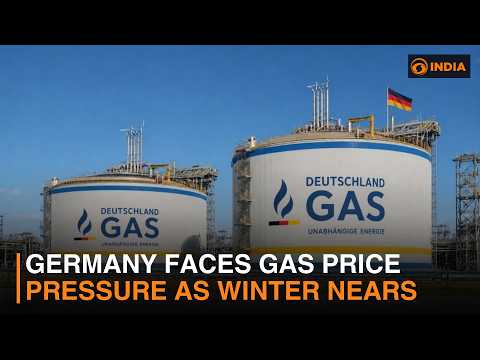
Germany's gas storage was 62% full on Friday 30 October, eight percentage points short of the government's 70% target for the start of winter. A spokesperson for the economy and energy ministry confirmed the figure and blamed higher prices caused by conflict around the Strait of Hormuz. A higher fill level would have been preferable, the official said.

The shortfall matters because storage is sized to cover winter demand swings, not a whole year of consumption. Germany holds about 250 terawatt-hours in its caverns and burned close to 850 terawatt-hours in 2024. Storage operators warned in September that fill levels were the lowest in at least 15 years, and the ministry has since paid for standby gas and ordered the state importer Sefe to buy more.

Why it matters

A cold winter with thin German storage feeds straight into European wholesale gas prices and household heating bills.

Questions about this story

Free account needed to ask — your question is kept and asked for you right after sign-up. Answers are public.

No questions yet — be the first to ask.

Key Indicators

62%
German gas storage fill level
Reading for 28-30 October 2026, against a national target of 70% for the start of winter.
70%
Winter storage target
The level the economy ministry had aimed for by the start of the heating season.
28
Points below the 2017-2021 average
Storage sits 28 percentage points under the five-year average for late October, per NDR.
250 TWh
Total storage capacity
Roughly 250 terawatt-hours, against about 850 terawatt-hours of consumption in 2024.
8 TWh
Gas ordered from Sefe
Volume the economy minister told the state-owned importer to procure and store by 15 December.
€245m
Winter reserve contracts
Value of standby gas contracts awarded by market operator Trading Hub Europe, announced 23 October.

Voices

Curated perspectives — historical figures and your fellow readers.

Sign up to generate historical perspectives on this story.

People Involved

Organizations Involved

Timeline

August 2022 October 2026

10 events Latest: Today
Tap a bar to jump to that date
  1. Ministry confirms 62% storage, below 70% winter target

    Today Statement

    A spokesperson blamed Hormuz-related price rises and rejected Italian claims of deliberate under-filling.

  2. Storage reads 62%, 28 points under the five-year average

    Data

    NDR reported the fill level was far below the 2017-2021 mean for the same date.

  3. Market operator buys €245m of standby gas

    Market

    Trading Hub Europe awarded contracts for February and March 2027 and standard grid-bottleneck cover.

  4. Storage at 61.1%, down from 75.4% a year earlier

    Data

    The gap to the previous year stood at more than 14 percentage points.

  5. Reiche orders Sefe to buy 8 TWh by mid-December

    Policy

    The minister directed the state importer to procure and store gas, a move coordinated with the chancellor.

  6. Storage measured at 57.7%

    Data

    The Federal Network Agency reading was nearly 19 percentage points below the same date a year earlier.

  7. Ministry says 60-70% fill is enough for winter

    Statement

    Berlin said no intervention was needed, arguing storage plus extra import options would cover demand.

  8. Cold winter leaves storage at a historic low

    Market

    Germany came out of winter with unusually empty caverns, so summer refilling started from a low base.

  9. The 90%-by-November storage rule lapses

    Policy

    Germany's requirement that stores reach 90% by November expired, loosening the refill obligation.

  10. German wholesale gas briefly tops 30 cents a kilowatt-hour

    Market

    After Russia cut pipeline supply, prices spiked and Germany had no LNG import terminals of its own.

Scenarios

1

German storage ends the winter above 25%

Possible Resolves by Apr 1, 2027

Discussed by: gas-risiko.de modeling and INES both sketch a normal-weather path where storage lands well above a tenth of capacity in April.

If temperatures track the median of recent winters and imports hold near last winter's levels, storage does not run dry. The gas-risiko.de case built on the last 30 days of supply ends around 4% on 1 April, but a replay of last winter's import volumes leaves 19%. INES puts a normal winter at roughly 38% on 1 April. A mild February makes this outcome the default.

2

German storage falls below 10% before spring

Unlikely Resolves by Apr 1, 2027

Discussed by: INES warned in September that a very cold winter could empty stores by February; gas-risiko.de's continuation case points to 4% on 1 April.

A sustained cold snap combined with disrupted LNG deliveries would drain caverns faster than the summer refill replaced them. The gas-risiko.de calculation that carries the current supply pattern forward ends the winter at 4%. INES modeled an undersupply of more than 25% on individual January days in an extremely cold scenario. This is the path where the 62% starting point actually bites.

3

Sefe confirms the 8 TWh purchase by mid-December

Likely Resolves by Dec 20, 2026

Discussed by: The economy ministry set the deadline and framed the order as a signal to other market participants.

The September order gave Sefe until 15 December to procure and store 8 terawatt-hours, about 3 percentage points of national capacity. The ministry said the gas should come from additional deliveries so it does not displace other companies' storage. Whether the company hits the number depends on prices and available cargoes over the next six weeks.

Historical Context

2 moments from history that rhyme with this story — and how they unfolded.

2022

Russia cuts pipeline gas to Germany (2022)

After Russia's invasion of Ukraine, pipeline deliveries to Germany fell sharply. Wholesale prices briefly passed 30 cents a kilowatt-hour in August 2022, and Berlin treated storage levels as a security question. Germany had no LNG import terminals at the time.

Then

Germany built floating LNG terminals and filled storage under a rule requiring 90% by November.

Now

The terminals at Wilhelmshaven, Brunsbüttel and Stade, plus two private Deutsche Regas facilities, became the supply channel the ministry now cites as its buffer.

Why this matters now

The 2026 ministry argument rests on comparing today with 2022: lower prices, more import routes, and storage that is no longer the only lifeline.

February 2026

February 2026 cold snap

A cold winter drew German storage down to a historic low, and the country entered the summer refill season already depleted. Looser storage rules in the preceding year meant less gas had been banked before that winter began.

Then

Summer injection started from a very low base, leaving less room to catch up before autumn.

Now

The low starting point is the main reason 62% now reads as a shortfall rather than a normal seasonal level.

Why this matters now

It explains why this year's fill level is judged against a target it was always going to struggle to reach.

Sources

(8)