
Pull to refresh
Logo
AI data centers push grid batteries past the 4-hour ceiling

AI data centers push grid batteries past the 4-hour ceiling

Money Moves

Google signed for 100-hour iron-air storage in Minnesota and a zinc array in West Virginia; Meta reserved up to 100 GWh from Noon Energy

Today: Google and esVolta complete battery 'time-shift' storage pilot

Overview

Updated 1 hour ago

Grid batteries came with a four-hour ceiling. Now the companies with the fastest-growing electricity demand on Earth, the AI data-center operators, are buying batteries that discharge for 10 hours and, in one case, 100: Meta reserved up to 100 gigawatt-hours from Noon Energy, while Google contracted a 300-megawatt iron-air system in Minnesota and a zinc array in West Virginia.

The purchases are a capital lifeline for long-duration energy storage (LDES), a category that struggled to find buyers once lithium-ion became the grid default. Scaled, 10- to 100-hour batteries could replace natural-gas peaker plants and let renewables carry the grid around the clock; if they stall, AI's appetite keeps falling on fossil fuel.

Why it matters

AI data centers are long-duration batteries' first big customers; if the tech scales, renewables can displace gas peaker plants.

Questions about this story

Free account needed to ask — your question is kept and asked for you right after sign-up. Answers are public.

No questions yet — be the first to ask.

Key Indicators

150 GWh
U.S. long-duration storage projects announced since early 2025
More than five times the LDES capacity planned at the end of 2024; most serves AI data centers.
100 GWh
Meta's reserved storage from Noon Energy
About 100 hours of power at 1 GW; first phase scheduled by 2028.
300 MW
Google's Minnesota iron-air battery
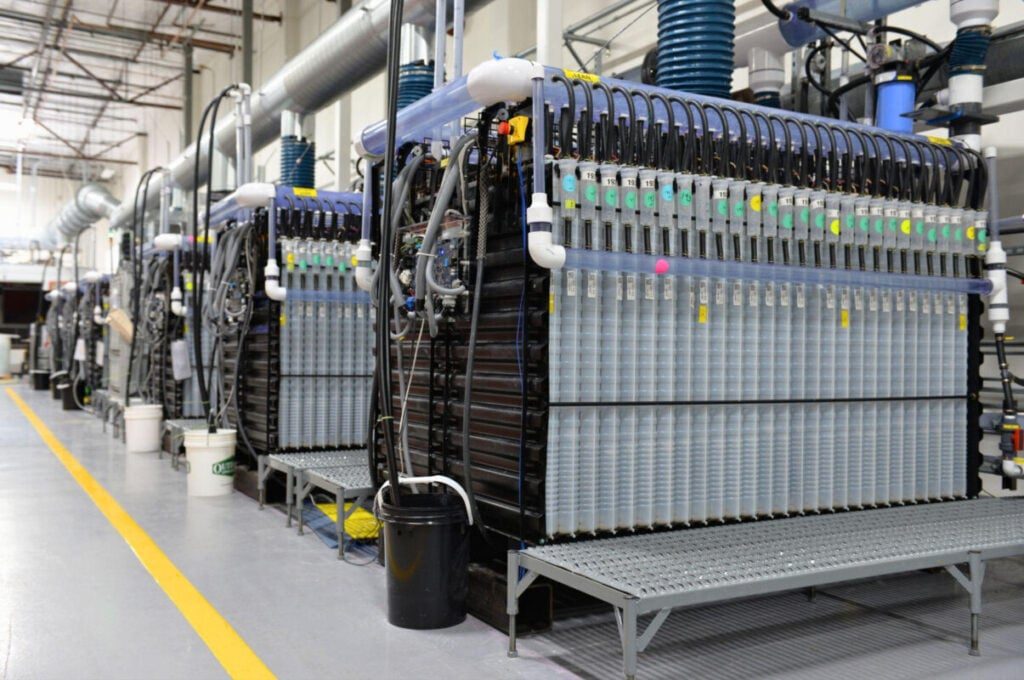
Form Energy system able to dispatch up to 100 hours; installation planned for 2028.
$350M
Capital investment in West Virginia project
MN8's solar-plus-storage build on a reclaimed coal mine; Google buys its output.

Voices

Curated perspectives — historical figures and your fellow readers.

Ever wondered what historical figures would say about today's headlines?

Sign up to generate historical perspectives on this story.

People Involved

Organizations Involved

Timeline

February 2026 September 2026

3 events Latest: Today
  1. Google and esVolta complete battery 'time-shift' storage pilot

    Today Pilot

    Shifted 9.2 GWh of solar using hourly-verified renewable certificates to match Google demand.

  2. Google, MN8, Eos unveil West Virginia solar-plus-storage on reclaimed coal mine

    Deal

    Pairs 86 MW solar with 10-hour zinc and 4-hour lithium storage; $350 million.

  3. Google, Xcel, Form Energy plan 300 MW iron-air battery in Minnesota

    Deal

    100-hour system anchors 1.6 GW of wind-solar; first hyperscaler contract for Form.

Scenarios

1

Meta's 100-hour battery ships on time

Possible Resolves by End of 2028

Discussed by: Energy analysts tracking Noon Energy's offtake

Noon Energy commissions the first phase of its 1 GW / 100 GWh system for Meta by 2028. Delivery proves multi-day storage can be manufactured at scale, gives LDES a reference project, and pulls other hyperscalers into similar deals.

2

Duration pays off on the Minnesota grid

Possible Resolves by Q2 2029

Discussed by: Fortune and energy analysts watching Form Energy

Form Energy's 300 MW Minnesota iron-air system with Google and Xcel enters service in 2028 and dispatches for up to 100 hours through summer peaks and storm events. Iron-air becomes the industry's chosen multi-day chemistry, driving down cost per megawatt-hour.

3

Grid markets start pricing duration

Possible Resolves by Q2 2027

Discussed by: Energy economists; FERC and PJM market-reform proposals

FERC or PJM adopts capacity-market rules that compensate 10-hour-plus resources for their duration value, not just installed megawatts. LDES becomes financeable without a single corporate buyer, opening the market beyond hyperscalers and utilities.

Historical Context

3 moments from history that rhyme with this story — and how they unfolded.

2010-2020

Corporate renewable power-purchase agreements (2010s)

Google, Microsoft, and Facebook signed multi-year power-purchase agreements for wind and solar, promising developers a fixed revenue stream for decades.

Then

Developers got bankable contracts; wind and solar prices fell by 60-90% over the decade.

Now

Corporate procurement became a core driver of the renewables buildout and 24/7 clean-energy matching.

Why this matters now

The same purchase-anchor model, now applied to unproven 10- to 100-hour batteries, is the mechanism behind the current LDES wave.

October 2015-February 2016

Aliso Canyon gas leak (2015-2016)

A methane leak at Southern California Gas's Aliso Canyon storage field threatened winter electricity supply for Los Angeles. Regulators ordered utilities to fast-track battery storage to compensate.

Then

California deployed roughly 100 megawatts of battery storage within months, far faster than any gas asset could come online.

Now

The episode demonstrated storage's speed advantage and seeded California's storage market.

Why this matters now

Like AI's power demand today, a supply emergency compressed regulators' and utilities' tolerance for unproven storage technology.

December 2017

Hornsdale Power Reserve (2017)

South Australia commissioned Tesla's 100 MW lithium-ion battery next to a wind farm after a statewide blackout. The project was built in under 100 days, the first grid-scale battery of its kind.

Then

It cut grid frequency-regulation costs within months and triggered a global boom in lithium-ion storage.

Now

The project set the four-hour duration standard that still dominates grid batteries today.

Why this matters now

Hornsdale showed one big buyer can launch a storage-technology class. The same dynamic now seeds long-duration storage.

Sources

(11)