


Pull to refresh
Logo
Google opens SynthID Detector to the public worldwide

Google opens SynthID Detector to the public worldwide

New Capabilities

Free tool lets anyone check images, video, and audio for Google's invisible AI watermark

Yesterday: Public release worldwide

Overview

Updated 1 hour ago

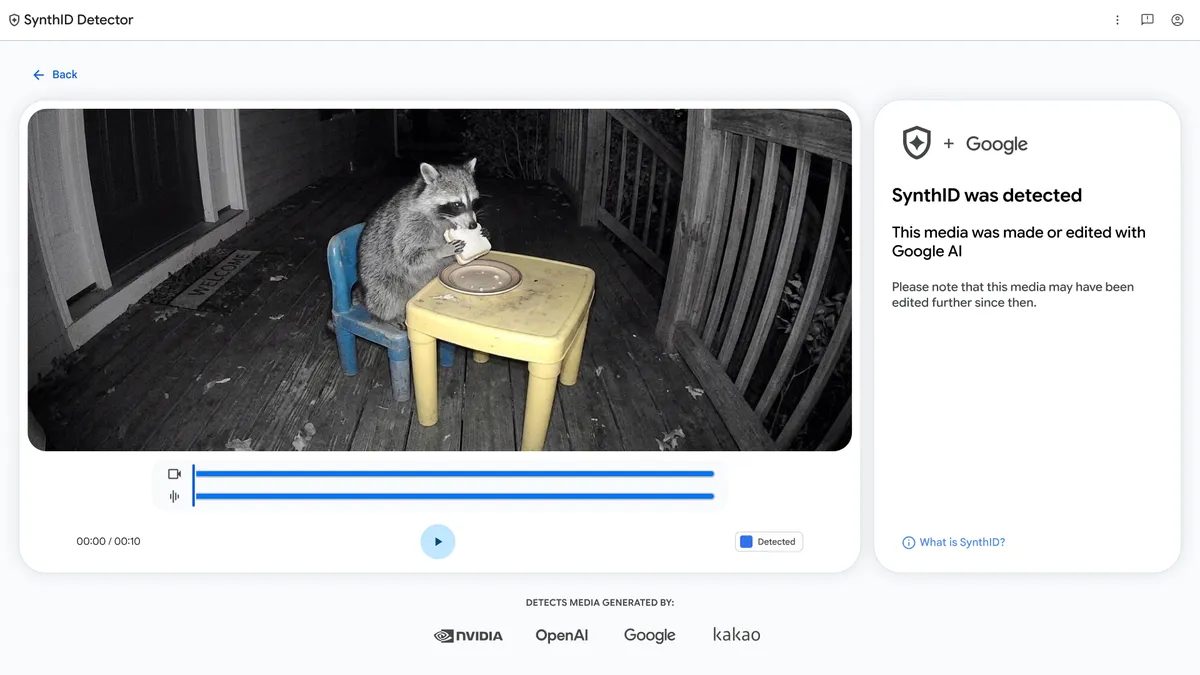
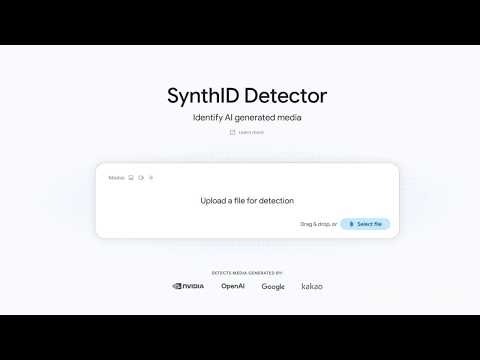
Google opened its SynthID Detector to the public on October 8, letting anyone upload an image, video, or audio file and check whether it carries the invisible watermark embedded in AI-generated media. Until now, the tool was limited to journalists, researchers, and other media professionals.

The detector reads watermarks from Google's AI tools and partners OpenAI, NVIDIA, and Kakao, with Apple support coming soon. Google says SynthID has marked more than 180 billion images and videos plus 240,000 years of audio since 2023.

The tool is not a general AI detector. It finds SynthID watermarks only, so content from companies using other systems or none at all goes undetected. Google caps free use at roughly 10 checks per day.

Why it matters

Anyone can now check whether a file came from a major AI tool — but the detector only sees content from SynthID partners.

Questions about this story

Free account needed to ask — your question is kept and asked for you right after sign-up. Answers are public.

No questions yet — be the first to ask.

Key Indicators

180B+
Images and videos watermarked since 2023
Google's reported figure for media carrying the SynthID mark.
240,000 years
Audio content watermarked since 2023
Google's reported duration of audio carrying the SynthID mark.
10 per day
Free checks per user
Login required; Google limits usage partly to deter watermark-removal tuning.
1M+
Daily verification requests
Across built-in AI checking features in Search, Gemini, and Chrome.

Voices

Curated perspectives — historical figures and your fellow readers.

Ever wondered what historical figures would say about today's headlines?

Sign up to generate historical perspectives on this story.

People Involved

Organizations Involved

Timeline

2023 October 2026

3 events Latest: Yesterday
  1. Public release worldwide

    Latest Release

    Google opens SynthID Detector to the public worldwide, adding OpenAI, NVIDIA, and Kakao support.

  2. Early detector released to professionals

    Release

    Google releases the SynthID Detector to journalists, researchers, and media professionals.

  3. Google launches SynthID

    Launch

    Google unveils SynthID, embedding invisible watermarks in AI-generated images to verify authenticity.

Scenarios

1

Apple joins SynthID as a partner

Likely Resolves by Oct 8, 2027

Discussed by: Google's announcement; coverage by The Verge, Ars Technica, and The Independent

Google said Apple support is coming soon. If Apple integrates the watermark into its AI image tools, SynthID would cover a large share of consumer-facing AI media, and synthid.com would become the default place to verify major AI output. The scenario resolves when Apple appears on the partner list and its content returns a detection result.

2

Researchers demonstrate large-scale SynthID removal

Possible Resolves by Oct 8, 2027

Discussed by: Ars Technica, which notes Google limits daily checks partly to slow watermark-bypass development

Ars Technica reported that Google caps usage to make it harder for people to tune removal workflows, and the SynthID FAQ says "no signal is completely robust." Published research showing effective stripping of the watermark would cap the system's reliability for verifying media. The scenario resolves when such a method is publicly demonstrated and reported.

3

C2PA and SynthID announce interoperability

Uncertain Resolves by Oct 8, 2027

Discussed by: Discussion in tech press about fragmented provenance standards (Ars Technica, TechRepublic)

SynthID is one of several provenance systems, competing with the C2PA consortium's Content Credentials and Meta's approach. Interoperability would let a single check verify content from more sources, but it requires Google and rival standards bodies to align. The scenario resolves with a formal compatibility announcement from both sides.

Historical Context

3 moments from history that rhyme with this story — and how they unfolded.

Since 2021

C2PA Content Credentials (2021)

Adobe, Microsoft, Arm, Intel, and BBC formed the Coalition for Content Provenance and Authenticity in 2021. The group built Content Credentials, a cryptographic metadata system attached to images at capture or editing time so viewers can trace a file's origin and edit history.

Then

Adoption centered on professional photography, newsrooms, and enterprise use rather than consumer platforms.

Now

Content Credentials became the main industry alternative to invisible watermarking, backed by a broad coalition of tech and media companies.

Why this matters now

SynthID takes a different route — embedded watermarks rather than metadata — and must win adoption from the same publishers, platforms, and AI vendors that C2PA courts.

2020

Deepfake Detection Challenge (2020)

Facebook launched a challenge offering researchers a large dataset of manipulated videos to build automated detectors. The goal was to keep pace with the rise of realistic AI-generated faces.

Then

Detectors trained on the data worked in limited settings but often failed against newer generators.

Now

The episode pushed the industry toward watermarking and provenance metadata, because analysis-based detection rarely keeps pace with improving generators.

Why this matters now

It explains why Google chose SynthID: a watermark is embedded at generation time and persists, rather than relying on software that must chase each new model.

1995

Digimarc watermarking (1995)

Digimarc, founded in 1995, embedded imperceptible digital watermarks in stock photos and other images so owners could track unauthorized use. It spent years pushing adoption by photo agencies and publishers.

Then

The watermark spread across stock photography licensing but never became a universal standard for all images.

Now

Watermarking remained a niche authentication tool rather than a default feature of digital media.

Why this matters now

Digimarc shows the core constraint for SynthID: a technically sound watermark only matters if enough content carries it and enough platforms check it.

Sources

(9)