


Pull to refresh
Logo
Greenville replaces lead-connected water main under Seventh Street

Greenville replaces lead-connected water main under Seventh Street

Built World

City council awards utility and fleet contracts within budget as street reconstruction advances

July 21st, 2026: Greenville council awards Seventh Street utility contract

Overview

Updated 55 minutes ago

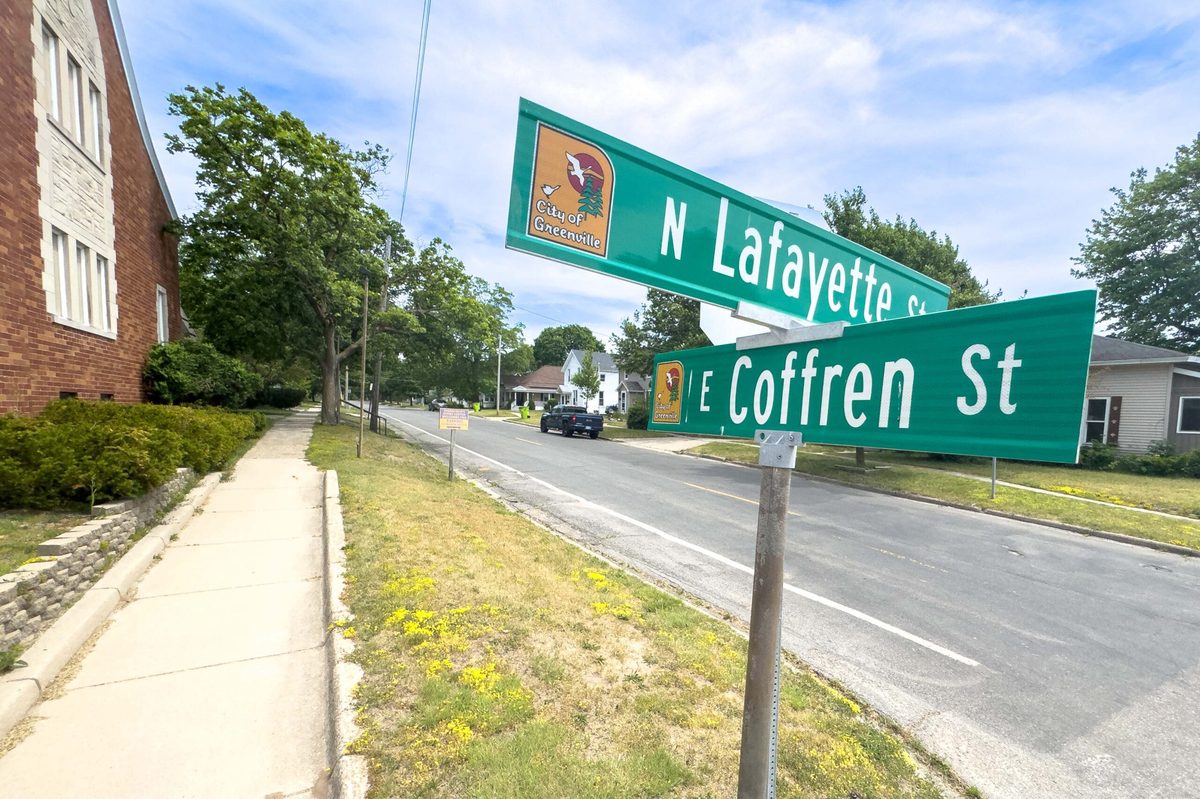
City workers in Greenville, Michigan will soon tear up a stretch of Seventh Street to replace an undersized water main pieced together with lead connections. The city council awarded the $174,935 utility contract to Malley Construction on July 21, with the work folded into a $1.8 million reconstruction of nearby Coffren Street.

The project removes lead from drinking water infrastructure one street at a time. It comes as federal rules require water systems nationwide to replace lead service lines by 2037, an effort the EPA estimates still involves about 9.2 million lines.

Why it matters

Federal rules require US water systems to remove lead lines by 2037. Greenville shows how small cities fund that work, one street at a time.

Questions about this story

Free account needed to ask — your question is kept and asked for you right after sign-up. Answers are public.

No questions yet — be the first to ask.

Key Indicators

$174,935
Seventh Street utility contract
Awarded to Malley Construction, within the city's budgeted amount.
$1.8M
Coffren Street reconstruction
Adjacent street project the Seventh Street utility work accompanies.
$233,735
Fleet vehicle purchases
Three 4x4 work trucks and two dump-truck chassis from Ed Koehn Ford.
9.2M
Estimated U.S. lead service lines
EPA's estimate of remaining lead service lines nationwide.

Voices

Curated perspectives — historical figures and your fellow readers.

Ever wondered what historical figures would say about today's headlines?

Sign up to generate historical perspectives on this story.

Play

Exploring all sides of a story is often best achieved with Play.

Most of these play right now — no account needed. Sign up to save scores, keep a streak, and unlock Debate and Predict. Log in Sign Up
Predict 3 ways this could play out. Back the one you believe — contrarian picks score more when a scenario has a resolution date. Log in to play

Organizations Involved

Timeline

1 event Latest: July 21st, 2026 · 1 month ago
  1. Greenville council awards Seventh Street utility contract

    Latest Government

    Council awards the $174,935 bid to Malley Construction for the Seventh Street utilities project, approves $233,735 in fleet vehicles from Ed Koehn Ford, and passes Resolution 26-14 recognizing Voices of Flat River Pride for charitable gaming.

Historical Context

3 moments from history that rhyme with this story — and how they unfolded.

April 2014 - January 2016

Flint water crisis (2014-2016)

Flint, Michigan switched its water source to the Flint River in April 2014 without corrosion control. Lead leached from aging pipes into drinking water, exposing thousands of residents, including children, to elevated lead levels.

Then

The city switched back to Detroit water in 2015 and the state declared an emergency in 2016. Federal charges were filed and a $600 million settlement was later reached with residents.

Now

The crisis became a national warning about lead plumbing and drove federal and state mandates for pipe replacement.

Why this matters now

It explains why municipalities now replace lead connections before corrosion fails, the work Greenville is doing on Seventh Street.

November 2021

Bipartisan Infrastructure Law (2021)

Congress passed and President Biden signed a $1.2 trillion infrastructure law that set aside $15 billion specifically for lead service line replacement nationwide, distributed through state programs.

Then

States began distributing lead pipe replacement funds to water utilities in 2022 and 2023.

Now

The money created a dedicated funding pool small cities can draw on for projects like Greenville's Seventh Street work.

Why this matters now

It provides the federal funding mechanism that helps small municipalities afford lead line replacement.

October 2024

EPA Lead and Copper Rule Improvements (2024)

The Environmental Protection Agency finalized rules requiring water systems to replace all lead service lines within 10 years, by 2037, and to inventory their lead lines. It strengthened the original 1991 Lead and Copper Rule.

Then

Water utilities began inventorying lead service lines and planning replacement schedules.

Now

The enforceable 2037 deadline turns lead pipe replacement from voluntary to mandatory for every US water system.

Why this matters now

It is the regulatory deadline motivating Greenville's street-by-street replacement work.

Sources

(3)