

Pull to refresh
Logo
Hackers leak emails of JPMorgan, Visa and Mastercard customers after vendor attack

Hackers leak emails of JPMorgan, Visa and Mastercard customers after vendor attack

Force in Play

A single unnamed marketing vendor exposed about 16,000 Chase email addresses, including Reserve cardholders who generally need $10 million in managed assets.

Overview

Updated 55 minutes ago

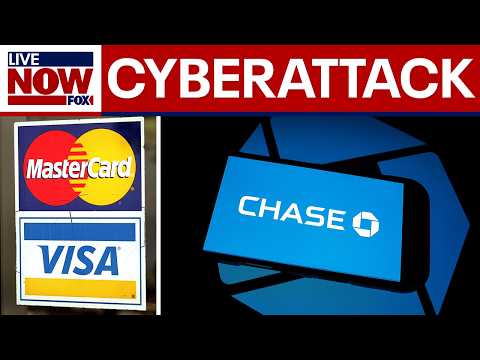
An extortion group calling itself n0n posted files on November 19 that it said came from JPMorgan Chase, Visa and Mastercard. All three companies confirmed the same day that a third-party service provider had been attacked, not their own systems.

The JPMorgan tranche is small: about 16,000 customer email addresses, some phone numbers and Chase account identifiers, plus 124 bank employee addresses. What makes it worth reading is who is in it. Cybernews researchers linked every record to Chase's Reserve card, an invitation-only Visa card that generally requires $10 million in managed assets.

Why it matters

A 502-kilobyte file is now a verified contact list for JPMorgan's $10-million-minimum cardholders, useful to any phisher.

Questions about this story

Free account needed to ask — your question is kept and asked for you right after sign-up. Answers are public.

No questions yet — be the first to ask.

Key Indicators

16,000
Customer email addresses leked
Cybersnews' count from the JPMorgan file.
124
JPMorgan employee email addresses leked
Usable for impersonation of bank staff.
502 KB
Size of the posted JPMorgan file
Small enough that researchers could not tell if it was a sample.
$10M
Manimum managed assets for a Reserve card
Cybersnews' description of the invitation-only program.
200
Incidents n0n claims since September 2026
Count from eCrime.ch, cited by Reuters.

Voices

Curated perspectives — historical figures and your fellow readers.

Sign up to generate historical perspectives on this story.

People Involved

Organizations Involved

Timeline

September 2026 November 2026

6 events Latest: Today
Tap a bar to jump to that date
  1. Ransom countdown expires, n0n posts files

    Today Leake

    Cybersnews says the group dumped the JPMorgan data after the deadline passed.

  2. Three companies confirm vendor attacks

    Today Statement

    JPMorgan, Visa and Mastercard each say an outside provider was the target, not their systems.

  3. Cybersnews ties every record to Reserve card

    Today Analysis

    Researchers say the file covers the invitation-only card and 124 employee addresses.

  4. JPMorgan transaction outage hits other banks

    Outage

    A software bug disrupts payment processing; the bank later says the leake is unrelated.

  5. n0n claims bank cardmember records

    Claim

    Group says it holds hundreds of thousands of campaign interactions; posts Visa and Mastercard data.

  6. Extortion group n0n appears

    Background

    eCrime.ch later counts roughly 200 claimed incidents since the group emerged.

Scenarios

1

The unnamed vendor is identified

Possible

Discussed by: Cybersnews and American Banker, which both trace the records to a single card-benefits or marketing provider rather than to the banks

If a state breach notification or a securities filing names the provider, the story stops being about three banks and becomes about one company and every other client it serves. American Banker noted that one card-benefits provider can expose several banks at once without a breach at any of them.

2

n0n posts a second batch from the same programs

Possible Resolves by End of 2026

Discussed by: Cybersnews, which noted the 502KB JPMorgan file may be a sample rather than the full hold

The group claimed far more records than it published. If it releases another tranche, the question shifts from whether the leake was small to whether the countdown was a negotiating tactic and more is held back.

3

A U.S. bank regulator opens a formal inquiry into vendor data

Unlikely Resolves by Q2 2027

Discussed by: Reuters, which reported that the Office of the Comptroller of the Currency called banks within minutes of the earlier outage

The leake itself may not trigger a notification duty, because most U.S. breach laws key on credentials or account numbers. But the episode gives regulators a concrete case for asking how much marketing data banks hand to outside firms, the point Carisa Robb of SolomonEdwards raised to Reuters.

Historical Context

3 moments from history that rhyme with this story — and how they unfolded.

November-December 2013

Target card breach via an HVAC vendor (2013)

Then

Chief executive Grege Steinhafel resigned in May 2014, and the company reported a fall in profit.

Now

The case became the standard example of vendor credentials as the weak point, and states later extracted a multistate settlement from the retailer.

Why this matters now

The JPMorgan file came from a marketing vendor, not the bank. Target showed how far a contractor's log-in can carry an attackor inside a company that thought its own walls were the defence.

Mid-2014, disclosed December 2014

JPMorgan's own customer breach (2014)

Then

The bank spent hundreds of millions of dollars on security over the next two years.

Now

It set the bank's public frame for data risk: huge account counts, limited credential loss.

Why this matters now

The same bank, a different mechanism and a very different scale. Sixteen thousand email addresses is a fraction of a percent of the 2014 count, which is why the bank's regulatory exposure here looks limited.

May-June 2023

Moveit file-transfer exploits (2023)

Then

U.S. agencies including the State Department disclosed intrusions, and Progress urged customers to take systems offline.

Now

Regulators and insurers began treating single-vendor software as a shared point of failure for entire industries.

Why this matters now

One card-benefits or marketing provider can serve several banks at once, as American Banker noted. Moveit is the clearest recent case of a shared tool turning one flaw into many victims.

Sources

(10)