



Pull to refresh
Logo
Know Your Agent: banks and fraud vendors move to identify AI agents

Know Your Agent: banks and fraud vendors move to identify AI agents

New Capabilities

Four large US banks blocked AI agents from customer accounts in October. LexisNexis and Zetrix AI shipped products to detect them in November.

Overview

Updated 1 hour ago

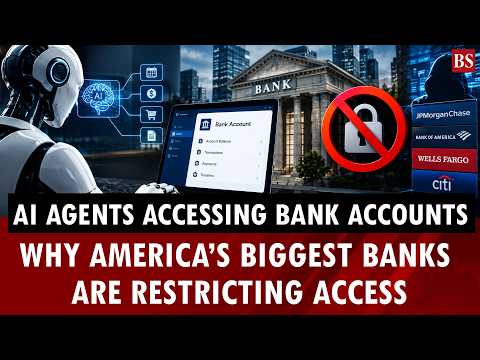
An AI agent that logs in with a customer's password looks identical to that customer to a bank's systems. Between October 13 and 20, 2026, JPMorgan Chase, Charles Schwab, Citigroup and Wells Fargo moved to block agents from consumer accounts, or to make customers responsible for what the agents do.

On November 6, LexisNexis Risk Solutions launched Know Your Agent (KYA), software that flags agent traffic and feeds it into the fraud decisions banks and merchants already run. LexisNexis says agentic traffic grew more than 750% in the first half of 2026. It also says detection is the easy part.

Why it matters

A password makes an AI agent indistinguishable from its owner at a bank, so banks must either block agents or absorb the losses.

Questions about this story

Free account needed to ask — your question is kept and asked for you right after sign-up. Answers are public.

No questions yet — be the first to ask.

Key Indicators

750%+
Growth in agentic traffic, first half of 2026
LexisNexis's measure of AI-agent activity across global digital transactions.
116B
Digital transactions analyzed in 2025
Volume passing through the LexisNexis Digital Identity Network last year.
4.9B
Automated bot attacks detected in 2025
Up 59% from the year before, per LexisNexis.
10-20
Agent attempts blocked weekly at Charles Schwab
Chief executive Rick Wurster's count of unauthorized agents trying to move client money.

Voices

Curated perspectives — historical figures and your fellow readers.

Sign up to generate historical perspectives on this story.

People Involved

Organizations Involved

Timeline

2025 January 2027

7 events Latest: Today
Tap a bar to jump to that date
  1. JPMorgan agent agreement takes effect

    Upcoming Bank policy

    Giving an agent account access is treated as authorizing everything it does.

  2. Wells Fargo agent terms take effect

    Upcoming Bank policy

    Customer authorized anything an agent does with their login, and must document revocations.

  3. LexisNexis launches Know Your Agent

    Today Product launch

    Adds AI-agent detection and context signals to its digital identity and fraud platform.

  4. Zetrix AI launches its own Know Your Agent

    Product launch

    Malaysian firm builds agent verification with China's CAICT.

  5. OCC issues first AI examination framework

    Regulation

    Places fully autonomous customer-facing payment agents in the highest risk tier; sets no new requirements.

  6. Four banks block or shift risk on AI agents

    Bank policy

    JPMorgan Chase, Charles Schwab, Citigroup and Wells Fargo restrict customer-authorized agents.

  7. LexisNexis counts 4.9 billion bot attacks

    Data

    Its Digital Identity Network screens 116 billion transactions; automated attacks rise 59% year over year.

Scenarios

1

Banks hold the line and agents stay locked out of consumer accounts

Likely Resolves by Q2 2027

Discussed by: ID Tech, citing account terms from JPMorgan Chase and Wells Fargo and statements from their chief executives

No shared way exists to verify an agent is acting within limits a customer set, and the cheapest response is to refuse the connection. JPMorgan says it wants secure agentic connections but has set no timeline, and Bank of America is restricting agents from consumer deposits while working on protocols. If the terms published in November and January keep password-based agent access out, the block becomes the default rather than a stopgap.

2

Agent detection becomes a standard line item in bank fraud stacks

Possible Resolves by Q2 2027

Discussed by: LexisNexis Risk Solutions, which says customers already use KYA in live risk decisions

Banks that cannot verify agents can still screen them. LexisNexis pitches KYA as an add-on to fraud workflows banks already run, so the decision to buy is smaller than the decision to allow. If enough banks take that path, agent detection becomes a routine feature of identity platforms rather than a separate product category.

3

A shared agent credential standard lets banks verify instead of block

Uncertain Resolves by End of 2027

Discussed by: Analysts quoted by ID Tech, who note agreement on what to verify but not how

The banks, the OCC framework and both KYA vendors ask the same questions: who the agent represents, what it is authorized to do, and whether that authority still holds. A technical standard that answers them would let a bank check authorization rather than infer it from a password. Without one, each bank writes its own terms and its own blocks.

Historical Context

3 moments from history that rhyme with this story — and how they unfolded.

1970-2001

Know Your Customer rules (1970-2001)

The Bank Secrecy Act of 1970 required US banks to keep records and report suspicious activity. The 2001 USA PATRIOT Act expanded those duties across a wider set of financial firms and pushed identity verification into account opening.

Then

Banks built customer identification into onboarding, with documents and databases checked before an account opened.

Now

Verifying the person became a precondition for the transaction, and the model spread internationally through the Financial Action Task Force.

Why this matters now

Know Your Agent borrows the name and the structure: establish who the actor is before deciding whether the action is allowed.

2007-2012

OAuth delegated access (2007-2012)

OAuth let a user grant a third-party application limited access to an account without handing over the password. Each grant carried a scope and could be revoked. Version 2.0, published as an internet standard in 2012, became the basis for 'Log in with' buttons across the web.

Then

Applications could act for a user with narrow permissions and a token that expired.

Now

Delegation with scopes and revocation became the default way software acts on a person's behalf online.

Why this matters now

It is the model banks say agents lack. An agent holding a password has the customer's full permissions, no scope and no separate audit trail.

2013-2019

Screen scraping versus open banking APIs (2013-2019)

Data aggregators such as Plaid connected apps to bank accounts by having customers hand over their banking logins. Banks objected that the practice exposed credentials and gave third parties unmonitored access.

Then

Banks and aggregators clashed over access, and some banks restricted connections.

Now

The UK's Open Banking regime and the EU's revised payment services directive pushed the industry toward tokenized APIs with explicit customer consent.

Why this matters now

The current fight is the same argument with higher stakes. Agents do not just read balances; they can move money.

Sources

(4)