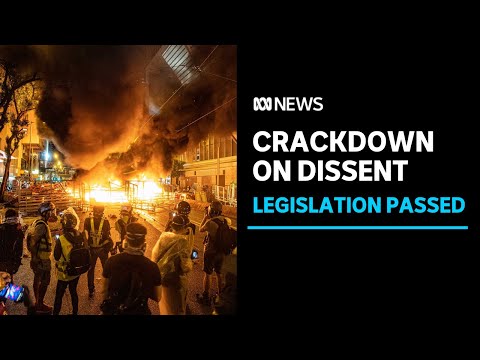
Jimmy Lai's legal fight is largely over. Hong Kong's Court of Appeal rejected all 12 appeals in the Hong Kong 47 case on February 23. Lai's lawyers confirmed March 6 he would not appeal his 20-year sentence, though he won a narrower fight when judges quashed a separate fraud conviction on February 26.
The campaign then reached further. On August 21, a security court convicted Lee Cheuk-yan and Chow Hang-tung, who led Hong Kong's Tiananmen Square vigils, of inciting subversion — the first ruling to treat commemorating the 1989 massacre as a crime. Sentencing is pending, and both face up to 10 years.
Why it matters
Beijing has criminalized mourning the Tiananmen dead and now jails activists' family members abroad; nowhere is safe from its reach.
Questions about this story
Free account needed to ask — your question is kept and asked for you right after sign-up. Answers are public.
No questions yet — be the first to ask.
Key Indicators
20
Years Sentenced
Longest prison term ever handed down under Hong Kong's National Security Law (Jimmy Lai, Feb 2026); a separate fraud conviction against Lai was later overturned on appeal
409+
People Arrested
Total arrests under the National Security Law from 2020 through July 2026, up from over 320 in February
91%
Conviction Rate
Percentage of those charged under the law who have been convicted
140th
Press Freedom Rank
Hong Kong's 2026 ranking out of 180 countries, confirmed unchanged by Reporters Without Borders in May 2026, still in its 'red zone'
1st
Family Prosecutions
First case targeting relatives of overseas activists under Article 23 (Feb 2026)
10
Years Possible, Tiananmen Vigil Case
Maximum sentence Lee Cheuk-yan and Chow Hang-tung face after their August 2026 conviction for inciting subversion over the banned Tiananmen vigils
Images from Openverse under Creative Commons licenses.
Videos from YouTube.
Voices
Curated perspectives — historical figures and your fellow readers.
Ayn Rand
(1905-1982) ·Cold War · philosophy
Fictional AI pastiche — not real quote.
"A dictatorship's promise is merely the temporary suspension of its nature. China demonstrated what every collectivist regime must ultimately do: crush those who produce value and speak truth, because the independent mind is the one thing brute force cannot manufacture or control."
0% found this insightful
Ever wondered what historical figures would say about today's headlines?
Sign up to generate historical perspectives on this story.
25 events
Latest: July 1st, 2026 · 3 months ago
Showing 8 of 25
JK to step
Tap a bar to jump to that date
Jump to
July 2026
Arrests Under Security Law Reach 409
LatestLegal
Hong Kong Free Press reported 409 people had been arrested for suspected national security offenses since the law took effect in 2020, up from 394 in April.
May 2026
Trump Raises Lai's Case With Xi, No Release Secured
Diplomatic
At a Beijing summit, Trump pressed Xi Jinping to free Lai. Xi called it 'a tough one' and gave no commitment, though he signaled more openness to releasing a detained pastor.
Press Freedom Ranking Holds at 140th
Media
Reporters Without Borders kept Hong Kong at 140th out of 180 countries in its press freedom index, citing Lai's 20-year sentence as the clearest sign of the city's decline.
March 2026
Bookshop Owner Arrested Over Lai Biography
Arrest
National security police arrested the owner of Book Punch store and three staff for selling 'The Troublemaker,' a biography of Jimmy Lai, on suspicion of sedition.
Police Gain Power to Compel Device Passwords
Legal
New national security rules make it a crime, punishable by up to a year in jail, to refuse to hand police passwords or decryption keys to phones and laptops. The rule applies to anyone in Hong Kong, including transiting travelers.
Lai's Legal Team Confirms No Appeal
Legal
Lawyers said they have 'clear and definitive instructions' not to appeal Lai's conviction or 20-year sentence in the national security case.
February 2026
Court Sentences Father of US-Based Activist in First Family-Targeting Case
Legal
Kwok Yin-sang sentenced to 8 months for attempting to access insurance funds for his daughter Anna Kwok, executive director of Hong Kong Democracy Council in Washington, D.C. This marks the first prosecution of a family member of an overseas 'absconder' under Article 23.
Court Quashes Lai's Separate Fraud Conviction
Legal
Judges overturned Lai's 2022 fraud conviction tied to an Apple Daily office lease, a rare legal win. He remains in prison on his 20-year national security sentence, and the government is weighing its own appeal.
Court Rejects All Hong Kong 47 Appeals
Legal
Hong Kong's Court of Appeal upheld convictions and jail terms for all 12 pro-democracy activists who appealed in the largest national security case to date.
China Releases National Security White Paper
Political
China's State Council issues white paper 'Hong Kong: Safeguarding China's National Security Under the Framework of One Country, Two Systems,' highlighting achievements since 2020 law, central government's responsibility, and Hong Kong's shift from 'disorder to stability.' Hong Kong Chief Executive John Lee welcomes it and pledges implementation.
Jimmy Lai Sentenced to 20 Years
Legal
Lai receives the longest sentence ever imposed under the National Security Law. Eight co-defendants, including six Apple Daily journalists, receive 6 to 10 years each. At 78, Lai would not be eligible for parole until his late 90s.
December 2025
Jimmy Lai Convicted on All Charges
Legal
Three government-appointed judges find Lai guilty of two counts of conspiracy to collude with foreign forces and one count of conspiracy to publish seditious materials. The 855-page verdict describes him as the 'mastermind' of the conspiracies.
November 2024
Jimmy Lai Takes the Witness Stand
Legal
After nearly a year of prosecution evidence, Lai begins his defense testimony. He will spend 52 days on the stand over the following months.
Hong Kong 47 Sentenced in Mass Subversion Trial
Legal
Forty-five democracy activists receive sentences totaling over 240 years. Benny Tai gets 10 years as the 'mastermind'; Joshua Wong receives 4 years and 8 months. The case is the largest national security prosecution to date.
August 2024
Stand News Editors Convicted of Sedition
Legal
Two Stand News editors become the first journalists convicted of sedition since the 1997 handover. Former editor-in-chief Chung Pui-kuen receives 21 months; Patrick Lam gets time served due to illness.
March 2024
Article 23 Security Law Takes Effect
Legal
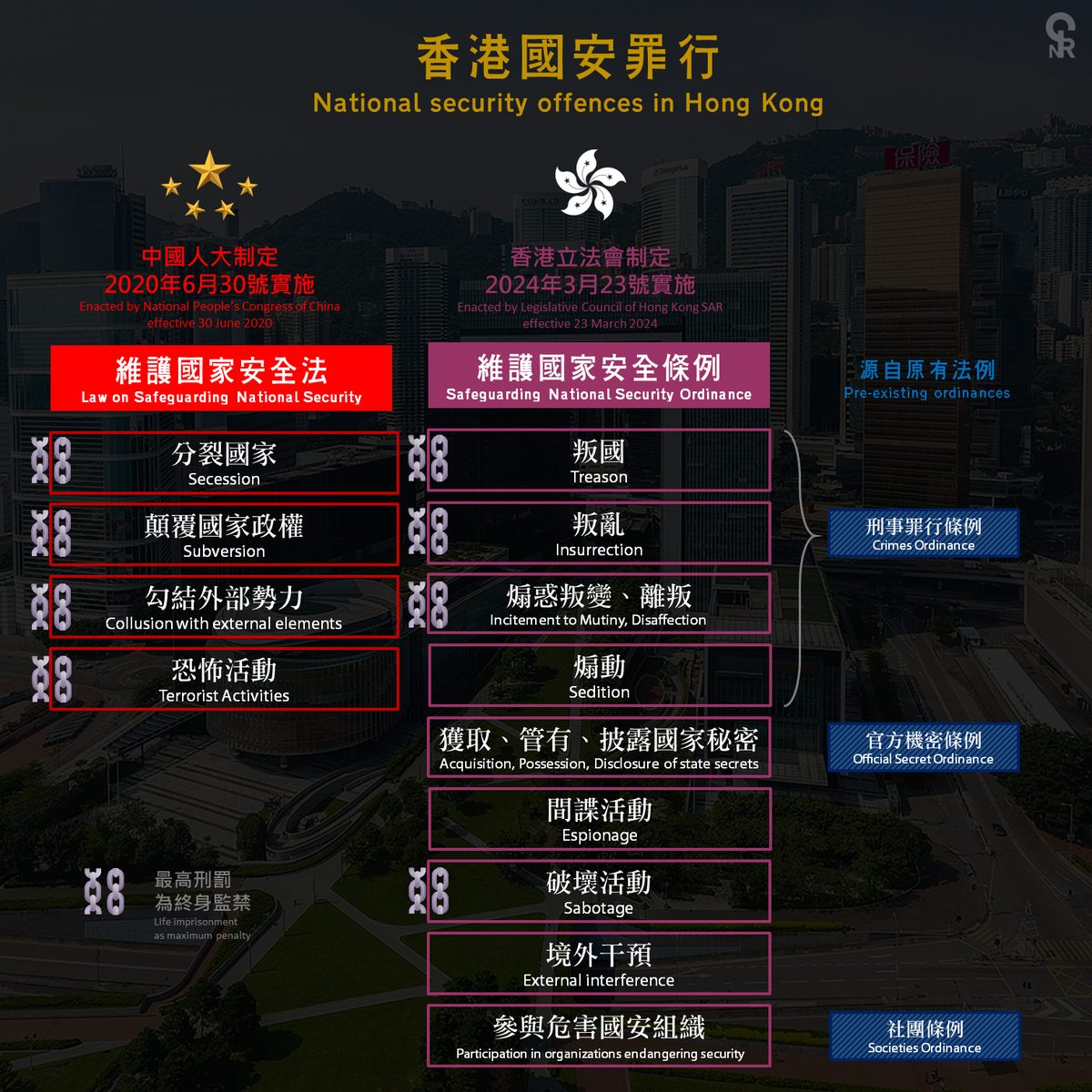
Hong Kong enacts its own domestic security legislation under Article 23 of the Basic Law, introducing new offenses including 'external interference' and crimes related to state secrets, with penalties up to life imprisonment.
December 2023
Jimmy Lai's National Security Trial Begins
Legal
After more than three years in detention, Lai's trial opens before three government-appointed judges, with no jury. He faces charges of conspiracy to collude with foreign forces and conspiracy to publish seditious materials.
December 2021
Stand News Raided and Shut Down
Media
Police raid Stand News, another pro-democracy outlet, arresting seven people including former editors. The publication closes immediately.
June 2021
Apple Daily Publishes Final Edition
Media
Apple Daily prints one million copies of its final edition—twelve times the normal run. Residents queue for hours to buy copies. The front page reads: 'Thank you Hong Kong people for your loyal support.'
Second Apple Daily Raid; Assets Frozen
Legal
Police arrest five more Apple Daily executives and freeze HK$18 million in company assets, leaving the newspaper unable to pay its 600 staff members.
January 2021
55 Pro-Democracy Figures Arrested in Dawn Raids
Arrest
Police arrest 55 people connected to an unofficial primary election held to select pro-democracy candidates. The case becomes known as the 'Hong Kong 47' after charges are filed against 47 defendants.
August 2020
Police Raid Apple Daily, Arrest Jimmy Lai
Arrest
Two hundred police officers raid Apple Daily's newsroom, arresting founder Jimmy Lai and nine others on suspicion of collusion with foreign forces. Images of officers rifling through the newsroom flash around the world.
June 2020
Beijing Imposes National Security Law
Legal
China's National People's Congress passes a sweeping security law criminalizing secession, subversion, terrorism, and 'collusion with foreign forces,' with penalties up to life imprisonment. The law bypasses Hong Kong's legislature entirely.
June 2019
Mass Protests Erupt Over Extradition Bill
Protest
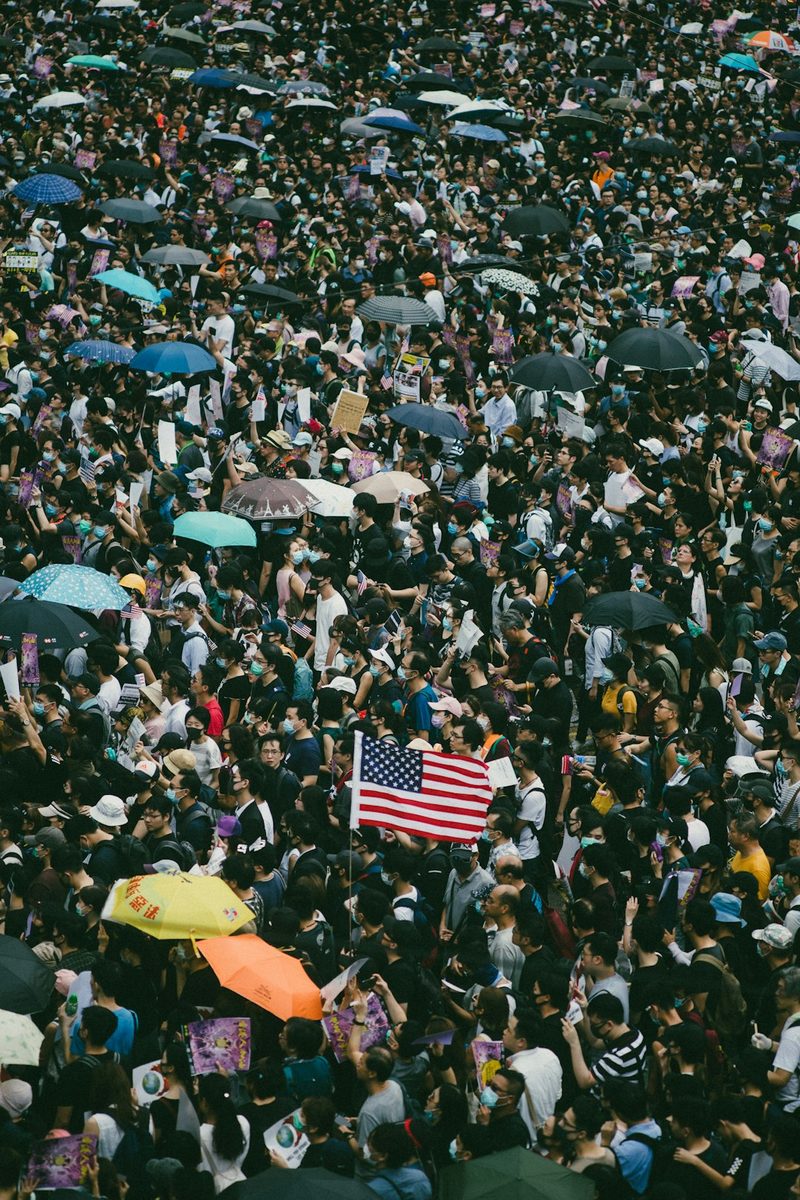
One million people march against proposed legislation allowing extradition to mainland China, triggering months of protests that would escalate into broader demands for democracy.
July 1997
Britain Returns Hong Kong to China
Political
Hong Kong becomes a Special Administrative Region of China under the 'one country, two systems' framework, with guarantees of autonomy, press freedom, and civil liberties until 2047.
Scenarios
1
Lai Dies in Prison; Hong Kong Becomes Symbol of Broken Promises
Likely
Discussed by: Human Rights Watch, Amnesty International, press freedom organizations, Lai's family members
Given Lai's age (78), reported health deterioration, and the length of his sentence, press freedom advocates consider it likely he will die in custody. His family has said he would 'die a martyr.' This outcome would cement his status as an international symbol of Beijing's crackdown, potentially fueling sustained diplomatic pressure and further damaging Hong Kong's reputation as a business hub. It would echo the death of Liu Xiaobo, the Nobel laureate who died in Chinese custody in 2017.
2
Diplomatic Deal Secures Lai's Release
Possible
Discussed by: U.S. Senators, Trump administration officials, UK Foreign Office
President Trump has said he raised Lai's case with Chinese leader Xi Jinping and is expected to visit China in coming months. Lai is a British citizen, and London has repeatedly called for his release. A negotiated release—potentially as part of broader U.S.-China or UK-China diplomatic arrangements—remains possible. However, Beijing would likely demand significant concessions, and releasing Lai would contradict the stated purpose of the National Security Law.
3
Legal Appeals Reduce Sentence But Lai Remains Imprisoned
Unlikely
Discussed by: Legal observers, Hong Kong lawyers
Lai's legal team may pursue appeals through Hong Kong's courts. While courts have occasionally reduced sentences on appeal, the National Security Law was designed to limit such outcomes, and the three judges who convicted Lai were specifically appointed by the government to hear security cases. A meaningful reduction appears unlikely given the political nature of the prosecution.
4
Crackdown Continues; More Media and Civil Society Prosecutions Follow
Likely
Discussed by: Amnesty International, foreign correspondents in Hong Kong, academic analysts
The Lai conviction and Article 23 legislation have established a legal framework for continued prosecutions. Foreign journalists, academics, NGO workers, or anyone engaging with foreign governments or media could theoretically face similar charges. Some foreign correspondents have already left Hong Kong; more departures and prosecutions could follow, completing the transformation of Hong Kong's information environment.
5
Tiananmen Vigil Leaders Sentenced to Years in Prison
Likely
Resolves by End of 2026
Discussed by: Human Rights Watch, Amnesty International, Hong Kong Alliance supporters
Lee Cheuk-yan and Chow Hang-tung face up to 10 years each at a sentencing hearing following their August 21 conviction for inciting subversion. A third defendant, Albert Ho, already pleaded guilty and awaits sentencing with them. Given the pattern in other national security cases, rights groups expect lengthy terms.
Historical Context
3 moments from history that rhyme with this story — and how they unfolded.
1 of 3
December 2009 - July 2017
Liu Xiaobo's Imprisonment and Death (2009-2017)
Chinese dissident Liu Xiaobo was sentenced to 11 years in prison in 2009 for 'inciting subversion of state power' after co-authoring Charter 08, a manifesto calling for political reform. He was awarded the Nobel Peace Prize in 2010 while imprisoned—the ceremony featured an empty chair. In 2017, Liu was diagnosed with liver cancer and released on medical parole; he died three weeks later at age 61.
Then
China blocked news of the Nobel Prize domestically and put Liu's wife under house arrest. No representative was permitted to accept the award.
Now
Liu became the first Nobel Peace Prize winner to die in state custody since 1935. His case established a pattern: prominent dissidents may die in Chinese custody despite international pressure.
Why this matters now
Like Liu, Lai is an elderly dissident facing a sentence that effectively amounts to life imprisonment. Human rights groups explicitly compare the cases, calling Lai's 20-year term a 'death sentence.' The Liu precedent suggests international outcry may not secure Lai's release.
2 of 3
June 1989
Tiananmen Square Crackdown (1989)
Chinese troops and tanks entered Beijing's Tiananmen Square to crush pro-democracy protests that had drawn over a million people. The military killed hundreds to thousands of civilians—the exact toll remains unknown and censored within China. Mass arrests followed; some participants remained imprisoned for decades.
Then
The Chinese Communist Party declared martial law, conducted mass arrests, and purged reformist officials. International governments imposed sanctions.
Now
The crackdown ended China's brief period of political opening. Discussion of the massacre remains forbidden in mainland China. The event transformed Jimmy Lai from a businessman into a pro-democracy activist.
Why this matters now
The Tiananmen massacre was the catalyzing event for Lai's political activism. He witnessed colleagues cheering the crackdown and decided to devote his resources to promoting democracy. His prosecution represents Beijing completing the suppression of Tiananmen-inspired dissent in the last territory where it was legal to commemorate the massacre.
Singapore's government arrested 22 people under the Internal Security Act, accusing them of a 'Marxist conspiracy' to overthrow the government. Those detained included lawyers, social workers, and Catholic Church lay workers. Several were held without trial for years; some were released and re-detained when they recanted forced confessions.
Then
International human rights organizations condemned the detentions. The U.S. State Department expressed concern. Several detainees later documented their treatment, including sleep deprivation and psychological pressure.
Now
Singapore maintained its internal security framework while transforming into a global financial center. The case demonstrated that authoritarian legal tools can coexist with economic prosperity—a model Beijing appears to be applying to Hong Kong.
Why this matters now
The Singapore model offers a potential template for Hong Kong's future: economic openness combined with strict political controls and security laws that silence dissent. Both used security legislation to target religious and civil society figures alongside political activists.