
Pull to refresh
Logo
Daily Brief
Following
Why Ranks Sign Up
India's Supreme Court rules trauma care is a constitutional right

India's Supreme Court rules trauma care is a constitutional right

Rule Changes

Court orders nationwide 112 emergency response and cashless treatment within three months

Today: Supreme Court rules trauma care is part of right to life

Overview

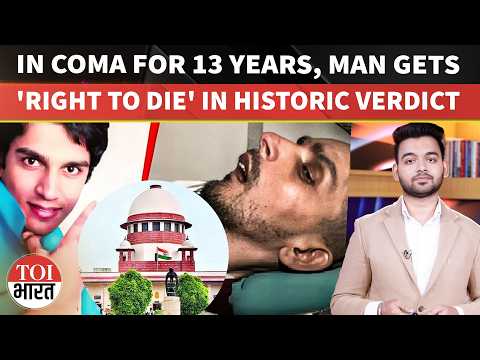
About 485 Indians die on the country's roads each day. On May 28, 2026, the Supreme Court ruled that getting them to a hospital alive is a constitutional right.

The bench gave every state and union territory three months to fold their emergency hotlines into a single 112 number, build Good Samaritan grievance systems, and switch on the PM-RAHAT cashless treatment scheme. Monthly compliance reports go straight to the court.

Why it matters

India loses roughly 180,000 people a year to road crashes. The ruling makes the missing ambulance, the closed hospital door, and the unpaid bill a court-enforceable failure.

Key Indicators

180,000
Road deaths in 2024
India recorded close to 180,000 traffic fatalities in 2024, the highest in the world.
485
Daily highway deaths (H1 2025)
National highways alone averaged 485 deaths a day in the first half of 2025.
3 months
Compliance deadline
States and union territories must finish helpline integration and PM-RAHAT rollout by August 28, 2026.
₹1.5 lakh
Cashless treatment cap
PM-RAHAT covers up to ₹1.5 lakh per victim for seven days at any empanelled hospital.
20%
Reach care in time
Only one in five accident victims currently reach medical care within the first hour.
Article 21
Constitutional anchor
The right to life clause now formally covers emergency trauma care.

Voices

Curated perspectives — historical figures and your fellow readers.

Ever wondered what historical figures would say about today's headlines?

Sign up to generate historical perspectives on this story.

Play

Exploring all sides of a story is often best achieved with Play.

Log in to play. Track your picks, climb the leaderboards. Log in Sign Up
Predict 4 ways this could play out. Contrarian picks score more — points lock when the scenario resolves. Log in to play
Higher or Lower Two numbers from this story. Guess which is bigger. 5 rounds to set a streak. Log in to play
Timeline Five events from this story — drag them oldest to newest. Log in to play
Connections Sixteen names from the news. Find the four hidden groups of four. Log in to play

People Involved

Organizations Involved

Timeline

April 2008 May 2026

10 events Latest: Today
Tap a bar to jump to that date
  1. Scheme rebranded as PM-RAHAT

    Policy

    The government formally launches the scheme as PM-RAHAT and the Rah-Veer reward for Good Samaritans.

  2. Cashless scheme goes national

    Policy

    MoRTH extends the cashless treatment scheme across India, covering up to ₹1.5 lakh per victim for seven days.

  3. PM-RAHAT pilot starts

    Policy

    The Centre launches a cashless treatment pilot for accident victims in Chandigarh and Assam.

  4. Centre issues Good Samaritan guidelines

    Policy

    The Ministry of Road Transport and Highways notifies guidelines shielding bystanders from police harassment and civil liability.

  5. Cousin's death prompts SaveLife Foundation

    Origin

    Seventeen-year-old Shivam Bajpai dies from a hit-and-run in Delhi after bystanders refuse to take him to a hospital. His cousin Piyush Tewari founds SaveLife Foundation later that year.

Historical Context

3 moments from history that rhyme with this story — and how they unfolded.

August 1997

Vishaka v. State of Rajasthan (1997)

After the gang rape of social worker Bhanwari Devi and the absence of any sexual harassment law, the Supreme Court read workplace protections into Articles 14, 19 and 21. It issued binding guidelines under the name Vishaka.

Then

Employers across India were ordered to set up internal complaints committees on the strength of the judgment alone.

Now

Parliament passed the Sexual Harassment of Women at Workplace Act in 2013, sixteen years after the court filled the gap.

Why this matters now

Vishaka is the template the court is reusing. Declare a right under Article 21, issue executive-style guidelines, leave Parliament to catch up.

April 2001

PUCL v. Union of India (Right to Food, 2001 onwards)

The People's Union for Civil Liberties asked the Supreme Court to treat starvation deaths during a drought as a violation of Article 21. The court agreed, ordered mid-day meals in every government school, and kept the case open for two decades.

Then

The mid-day meal scheme expanded to cover more than 120 million children, and ration entitlements were enforced through court monitors.

Now

The National Food Security Act was passed in 2013, codifying much of what the court had ordered.

Why this matters now

The trauma-care order copies the same continuing-mandamus design: a live case, monthly reports, court-appointed compliance scrutiny.

1985-2003

MC Mehta v. Union of India (Delhi vehicular pollution, 1985 onwards)

Lawyer M.C. Mehta filed a series of public-interest petitions on Delhi's air. The Supreme Court ordered Delhi buses, taxis and autorickshaws onto compressed natural gas, set deadlines, and held the city's transport department accountable when it missed them.

Then

Delhi became the first major city in the world with a CNG public transport fleet by 2003.

Now

The court's habit of running infrastructure rollouts from the bench became standard for environmental and welfare cases.

Why this matters now

The trauma-care directions read like an MC Mehta order. Hard deadlines, technical specifications, monthly hearings.

Sources

(7)