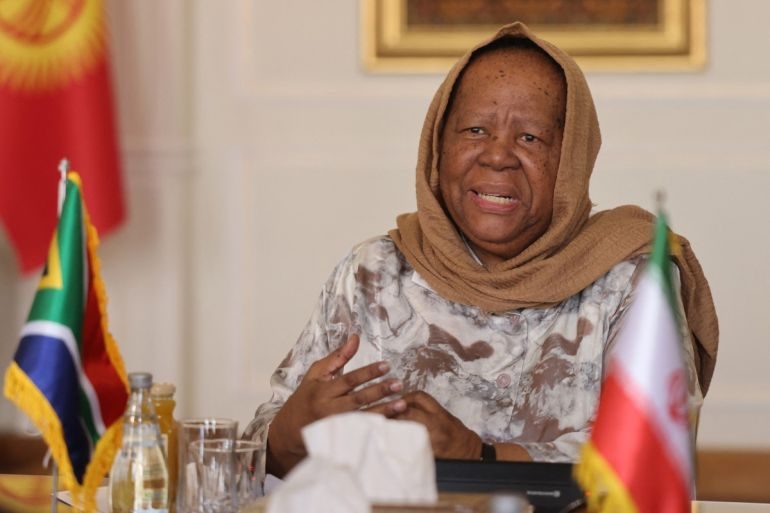
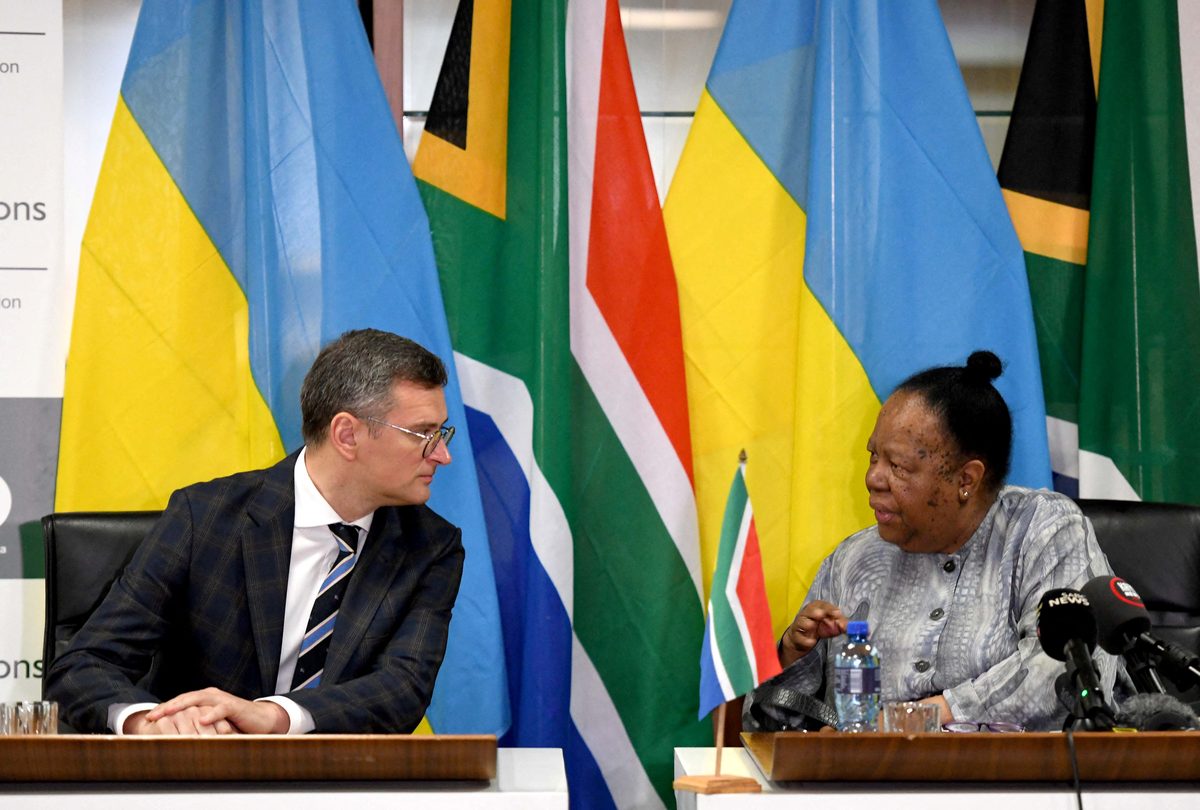
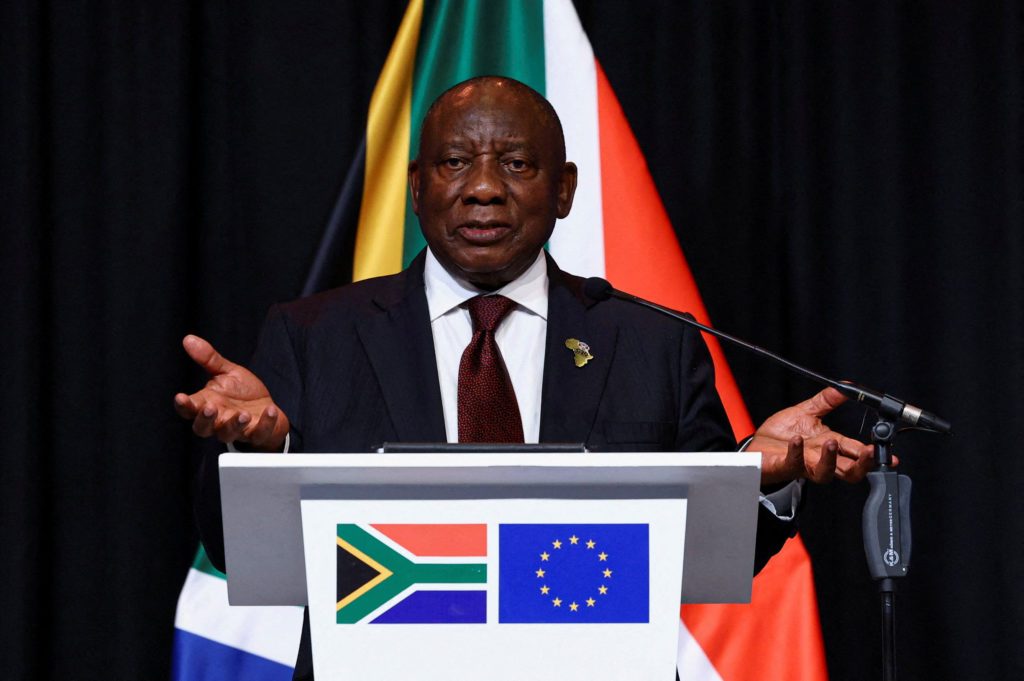
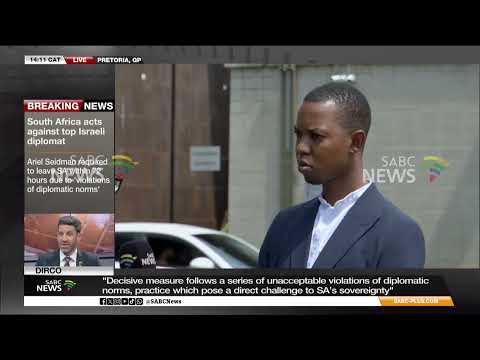
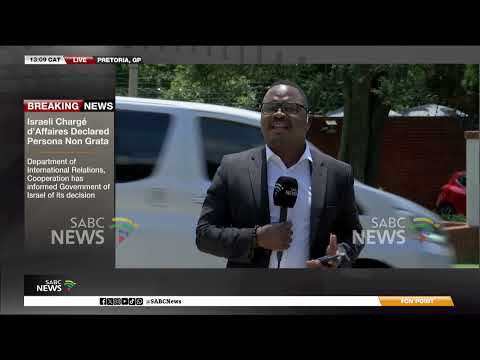
South Africa and Israel have expelled each other's top diplomats, leaving neither country with a senior representative in the other. On January 30, 2026, South Africa declared Israeli chargé d'affaires Ariel Seidman persona non grata for using embassy social media to insult President Cyril Ramaphosa. Hours later, Israel reciprocated by expelling South Africa's chargé d'affaires Shaun Byneveldt. Both were ordered to leave within 72 hours.
The mutual expulsions mark the lowest point in relations since South Africa filed a genocide case against Israel at the International Court of Justice in December 2023. The crisis threatens South Africa's preferential trade access to the United States. The Trump administration has characterized Pretoria as hostile and warned it could lose eligibility for the African Growth and Opportunity Act—putting $4 billion in exports and 93,000 jobs at risk.
Questions about this story
Free account needed to ask — your question is kept and asked for you right after sign-up. Answers are public.
No questions yet — be the first to ask.
Key Indicators
0
Senior diplomats remaining
Neither country now has an ambassador or chargé d'affaires in the other
750+
Pages of genocide evidence
South Africa's ICJ memorial submitted October 2024, with 4,000+ pages of annexes
$4B
At-risk exports
South African exports under AGOA trade preferences now threatened by U.S. review
8
Countries joining ICJ case
Belgium, Ireland, Bolivia, Belize, Brazil, Comoros, and others have joined South Africa's case
Images from Openverse under Creative Commons licenses.
Videos from YouTube.
Voices
Curated perspectives — historical figures and your fellow readers.
Jane Addams
(1860-1935) ·Progressive Era · social reform
Fictional AI pastiche — not real quote.
"How quickly diplomats resort to expulsion when dialogue becomes uncomfortable—yet it is the workers, those 93,000 whose livelihoods hang in the balance, who will bear the cost of this failure of statecraft. One wonders if those who wield the power of exclusion have ever themselves known what it means to be excluded from the means of survival."
0% found this insightful
Ever wondered what historical figures would say about today's headlines?
Sign up to generate historical perspectives on this story.
14 events
Latest: February 1st, 2026 · 8 months ago
Showing 8 of 14
JK to step
Tap a bar to jump to that date
Jump to
February 2026
Mutual Expulsions Complete Diplomatic Rupture
LatestDiplomatic
With both diplomats ordered to leave by February 2, neither country retains a senior representative in the other—the lowest point in relations since South Africa's transition from apartheid.
January 2026
South Africa Expels Israeli Chargé d'Affaires
Diplomatic
South Africa declares Ariel Seidman persona non grata for 'insulting attacks' on President Ramaphosa via social media, orders him to leave within 72 hours.
Israel Reciprocates with Expulsion
Diplomatic
Hours later, Netanyahu and Saar declare South African diplomat Shaun Byneveldt persona non grata, citing 'false attacks against Israel in the international arena.'
South Africa Hosts BRICS Naval Exercises
Military
China, Russia, and Iran send warships to South Africa for 'Will for Peace 2026' exercises, drawing criticism from the United States and South Africa's coalition partners.
December 2025
Belgium Joins ICJ Case
Legal
Belgium becomes the latest country to formally join South Africa's genocide case, following Ireland, Bolivia, Belize, Brazil, and Comoros.
October 2024
South Africa Submits 750-Page Genocide Memorial
Legal
South Africa files comprehensive evidence to the ICJ detailing alleged Israeli violations, with over 4,000 pages of supporting annexes.
September 2024
Ramaphosa Calls Israel 'Apartheid' at UN
Statement
At the UN General Assembly, Ramaphosa compares Palestinian conditions to apartheid: 'We South Africans know what apartheid looks like.'
May 2024
ICJ Orders Halt to Rafah Offensive
Legal
Court's third provisional measures order finds genocide risk has 'significantly intensified' in Rafah and orders Israel to halt military operations there.
January 2024
ICJ Issues First Provisional Measures
Legal
The court finds Palestinians face 'plausible' genocide risk, orders Israel to prevent genocidal acts and allow humanitarian aid. Does not order ceasefire.
December 2023
South Africa Files ICJ Genocide Case
Legal
South Africa files application at the International Court of Justice alleging Israel is violating the Genocide Convention in Gaza.
November 2023
Both Countries Recall Remaining Diplomats
Diplomatic
Israel recalls its ambassador after South Africa withdraws its diplomats from Tel Aviv. Ariel Seidman becomes Israel's senior representative as chargé d'affaires.
October 2023
Hamas Attacks Israel
Conflict
Hamas-led attack on southern Israel kills approximately 1,200 people and takes over 200 hostages, triggering Israeli military operations in Gaza.
April 2019
South Africa Downgrades Embassy to Liaison Office
Diplomatic
South Africa reduces its Tel Aviv embassy to a liaison office, implementing a 2017 ANC resolution expressing solidarity with Palestinians.
May 2018
South Africa Recalls Ambassador After Gaza Protests
Diplomatic
South Africa recalls Ambassador Sisa Ngombane from Israel to protest the killing of Palestinian protesters during the Great March of Return at the Gaza border fence.
Scenarios
1
South Africa Loses AGOA Trade Privileges
Likely
Discussed by: Republican members of Congress, U.S. Trade Representative Jamieson Greer, Foreign Policy analysts at the Foundation for Defense of Democracies
The Trump administration removes South Africa from the African Growth and Opportunity Act, imposing the 30% tariff rate already applied to South African goods. Four Republican congressmen have written to Trump requesting ineligibility, citing the 'vendetta against Israel' and ties to China and Iran. With AGOA's future under review and the administration already skeptical of Pretoria, the diplomatic rupture could accelerate removal. This would threaten $4 billion in exports and an estimated 93,000 South African jobs in automotive, agricultural, and manufacturing sectors.
2
Relations Stabilize at Low Level Without Full Break
Possible
Discussed by: South African foreign policy analysts, diplomatic observers at the Institute for Security Studies Africa
Both countries maintain minimal diplomatic ties—likely through their remaining embassy staff or via third-party intermediaries—without restoring senior representation. The ICJ case proceeds through 2026-2027 with Israel filing its counter-memorial in March. Neither side escalates further, recognizing that a complete diplomatic break would eliminate any remaining channel for communication. Trade and travel continue under existing frameworks, though relations remain frozen at the lowest point since apartheid.
3
ICJ Rules Against Israel, Triggering Broader Isolation
Uncertain
Discussed by: International law scholars, Middle East analysts at Al Jazeera and Middle East Eye
The International Court of Justice issues a ruling on the merits finding Israel has violated the Genocide Convention. While ICJ rulings are binding but lack enforcement mechanisms, the moral weight prompts additional countries to join South Africa's stance. European states that joined the case—Belgium, Ireland—use the ruling to justify trade restrictions or arms embargoes. Israel faces increased diplomatic isolation beyond the bilateral rupture with South Africa, though U.S. support remains unchanged.
4
Full Diplomatic Break and Embassy Closures
Possible
Discussed by: Israeli government (warning of 'additional steps'), South African opposition Democratic Alliance
Israel follows through on its warning of 'additional steps' by formally severing diplomatic relations, closing its remaining diplomatic facilities in South Africa. South Africa reciprocates. This would end formal diplomatic ties that have existed since 1948, eliminating consular services and forcing citizens of each country to seek assistance through third countries. The break would be primarily symbolic—relations are already minimal—but would mark the first complete severance between a Western-aligned democracy and Israel since South Africa's apartheid-era isolation in reverse.
Historical Context
3 moments from history that rhyme with this story — and how they unfolded.
1 of 3
1970s-1994
Israel-Apartheid South Africa Alliance (1970s-1994)
While the international community increasingly isolated South Africa's apartheid regime, Israel and South Africa forged a close military and political alliance. Defense Minister Shimon Peres led the effort, providing weapons, military advisors, and joint training. In 1976, apartheid Prime Minister John Vorster—imprisoned during World War II for pro-Nazi activities—received a state visit to Israel. The two countries cooperated against the African National Congress and the Palestine Liberation Organization, which had developed their own solidarity relationship.
Then
Israel became one of apartheid South Africa's few remaining allies, providing crucial military support as other nations imposed sanctions.
Now
The ANC never forgot. Nelson Mandela said in 1993: 'The people of South Africa will never forget the support of the state of Israel to the apartheid regime.' This history shapes the ANC's current pro-Palestinian stance.
Why this matters now
Today's rupture reverses the apartheid-era dynamic: South Africa now leads international efforts to isolate Israel, explicitly drawing on its experience of apartheid to characterize Israeli treatment of Palestinians.
2 of 3
January 2009
Venezuela-Israel Diplomatic Expulsions (2009)
During Israel's Operation Cast Lead in Gaza, Venezuelan President Hugo Chávez expelled Israeli Ambassador Shlomo Cohen and several embassy staff, calling Israel's actions 'genocide.' Israel reciprocated by expelling Venezuela's ambassador. Venezuela broke diplomatic relations entirely, becoming one of few countries to do so with Israel.
Then
Both countries operated without ambassadors. Venezuela's Jewish community faced increased tension and some emigration.
Now
Relations never recovered. Venezuela remains one of Israel's most vocal critics internationally and has never restored diplomatic ties.
Why this matters now
The Venezuela case shows how mutual expulsions can precede a complete diplomatic break. The 'genocide' framing echoes South Africa's ICJ case, and the tit-for-tat expulsion pattern matches the current crisis exactly.
3 of 3
1960-1980s
South Africa ICJ Case Against Apartheid Israel Parallels (1960s-1980s)
South Africa itself faced international legal action during apartheid. Ethiopia and Liberia brought a case at the ICJ in 1960 challenging South Africa's administration of South West Africa (Namibia). The UN General Assembly repeatedly condemned apartheid and called for sanctions. The international anti-apartheid movement used legal, diplomatic, and economic pressure to isolate the regime.
Then
The 1966 ICJ ruling disappointed apartheid opponents on technical grounds, but broader pressure continued.
Now
Sustained international isolation contributed to apartheid's end in 1994. South Africa's current leadership explicitly invokes this history, arguing the same global solidarity should support Palestinians.
Why this matters now
South Africa frames its ICJ case as applying the same moral logic that ended its own apartheid. President Ramaphosa has stated: 'We know what apartheid looks like. We will not remain silent and watch as apartheid is perpetrated against others.'