

Pull to refresh
Logo
Louisville's Can Opener bridge gets federal money for cameras and warning signs

Louisville's Can Opener bridge gets federal money for cameras and warning signs

Built World Louisville, KY local

A $2 million U.S. Transportation Department grant, matched with $1 million from the city, targets a bridge that at least 45 trucks hit during this summer's I-65 shutdown.

Overview

Updated 45 minutes ago

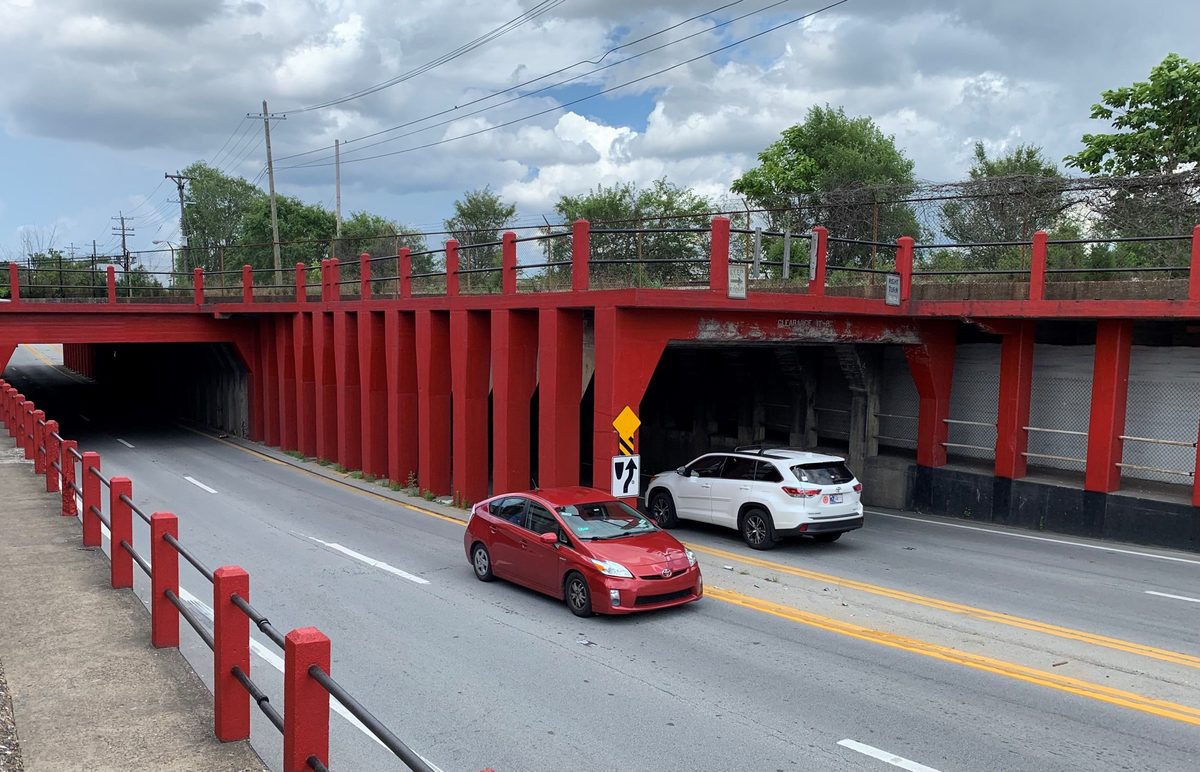
The railway bridge on South Third Street near the University of Louisville is posted at 11 feet 8 inches, and trucks keep trying to drive under it. During this summer's Interstate 65 shutdown, at least 45 of them hit it or got wedged underneath, even after the state added more than 30 warning signs.

On Nov. 17, federal and city officials announced a $2 million grant from the U.S. Department of Transportation, matched with $1 million from Louisville, to put cameras at Eastern Parkway and South Third Street. The cameras would spot overheight trucks and alert drivers with new signs before they reach the bridge, and the department wants to see whether the approach works here before pushing it to other low clearances. Installation is expected to finish next spring.

Why it matters

If cameras can stop trucks from hitting a bridge that has defeated signs for decades, USDOT plans to copy the design at low clearances nationwide.

Last Monday's email for Louisville, KY

Sent Nov 16. It carried:

Get next Monday's: one short email a week. Free. Unsubscribe in one click.

Questions about this story

Free account needed to ask — your question is kept and asked for you right after sign-up. Answers are public.

No questions yet — be the first to ask.

Key Indicators

$2M
Federal grant
Awarded by the U.S. Department of Transportation through its SMART program for cameras and signage at the bridge.
$1M
Louisville's matching share
Local money the city is putting toward the same project.
45
Trucks that hit or wedged under the bridge
Counted during roughly two months of the 2026 I-65 shutdown, by a volunteer tracking site.
11' 8"
Clearance entering from the north
The southbound approach is posted at 12 feet.
~2
Typical monthly strikes before the closure
The rate a University of Louisville engineering lecturer cited for normal traffic.

Voices

Curated perspectives — historical figures and your fellow readers.

Sign up to generate historical perspectives on this story.

People Involved

Organizations Involved

Timeline

June 2026 November 2026

4 events Latest: Today
Tap a bar to jump to that date
  1. USDOT announces $2 million for cameras and new signs

    Today Funding

    Federal and city officials said cameras at Eastern Parkway would detect overheight trucks and warn drivers; work is expected to finish next spring.

  2. At least 45 trucks hit or wedged under the bridge

    Data

    A volunteer-run tracking site counted the strikes across roughly two months of detoured interstate traffic.

  3. Kentucky adds more than 30 signs ahead of the interstate closure

    Infrastructure

    The transportation cabinet finished installing additional height warnings at Third and Eastern before I-65 detours pushed more trucks onto city streets.

  4. Strikes hit double digits in the closure's first three days

    Data

    A University of Louisville engineering lecturer tracking the bridge said normal volume was about two strikes a month.

Scenarios

1

Cameras cut strikes, and USDOT takes the design nationwide

Possible Resolves by Q3 2027

Discussed by: Assistant secretary Seval Oz, who described the project as a national test

Sensors flag overheight trucks early enough for drivers to turn off before the underpass, and the strike count drops well below the historical rate. Oz said the department would adopt the approach elsewhere if it works in Louisville, making the city the reference site for a cheap alternative to rebuilding low bridges.

2

Strikes barely move and Louisville starts pricing a rebuild

Possible Resolves by End of 2027

Discussed by: State and university transportation specialists who say signs are not reaching drivers

Drivers keep missing or ignoring the warnings, as officials say happened with each earlier layer of signage. With detection technology exhausted, the city and the railroads would face the options they have avoided: raising track for a mile in each direction, or rebuilding the road over the sewer infrastructure beneath it.

3

A serious injury at the underpass forces the road closed

Unlikely Resolves by End of 2027

Discussed by: No official has proposed closing the road; this is the pressure point implied by the crash record

Trucks that hit the bridge have their roofs peeled back, and the underpass sits at a busy campus intersection. One strike that injures someone outside the truck would shift the question from how to warn drivers to whether the road should carry trucks at all.

Historical Context

2 moments from history that rhyme with this story — and how they unfolded.

2009–2010

Louisville's Eastern Parkway corridor redesign (2009–2010)

The Kentucky Transportation Cabinet rebuilt the corridor and installed overhead electronic message boards on westbound Eastern Parkway and southbound Third Street. The boards were wired to sensors that trigger when an overheight vehicle approaches, telling the driver to turn before reaching the bridge.

Then

The electronic warnings did not stop strikes, and the state added another round of static signs in 2024.

Now

By 2026 the bridge still averaged about two strikes a month in ordinary traffic, before the interstate closure multiplied them.

Why this matters now

The new cameras are the third technology layer at the same intersection, which is why federal officials describe the project as a test rather than a solution.

2008–2019

Durham's 11-foot-8 bridge (through 2019)

A Norfolk Southern trestle over Gregson Street in Durham, North Carolina, carried the same 11-foot-8 clearance and the same reputation for peeling open box trucks. A webcam and a public crash counter made it a national curiosity, and the city ultimately lowered the road beneath it in 2019, adding roughly eight inches of clearance.

Then

Durham chose an engineering fix over additional signage, spending years on design and construction.

Now

The bridge became the standard reference for low-clearance crashes, cited whenever a city weighs warning systems against reconstruction.

Why this matters now

Louisville says raising its bridge would mean reworking track for a mile in each direction, and the sewer system under the road rules out lowering it. That is why the city is betting on detection technology.

Sources

(3)