





Pull to refresh
Logo
Luno acquires Kenya's GTXN, enters cross-border payments

Luno acquires Kenya's GTXN, enters cross-border payments

Money Moves

Cryptocurrency platform buys licensed payout rails for moving money between developed and emerging markets

Yesterday: Luno acquires GTXN

Overview

Updated Yesterday

Moving money between developed and emerging markets still runs through a chain of banks, currency brokers, and local payout agents. Luno's purchase of Kenya's GTXN collapses that chain into one regulated provider.

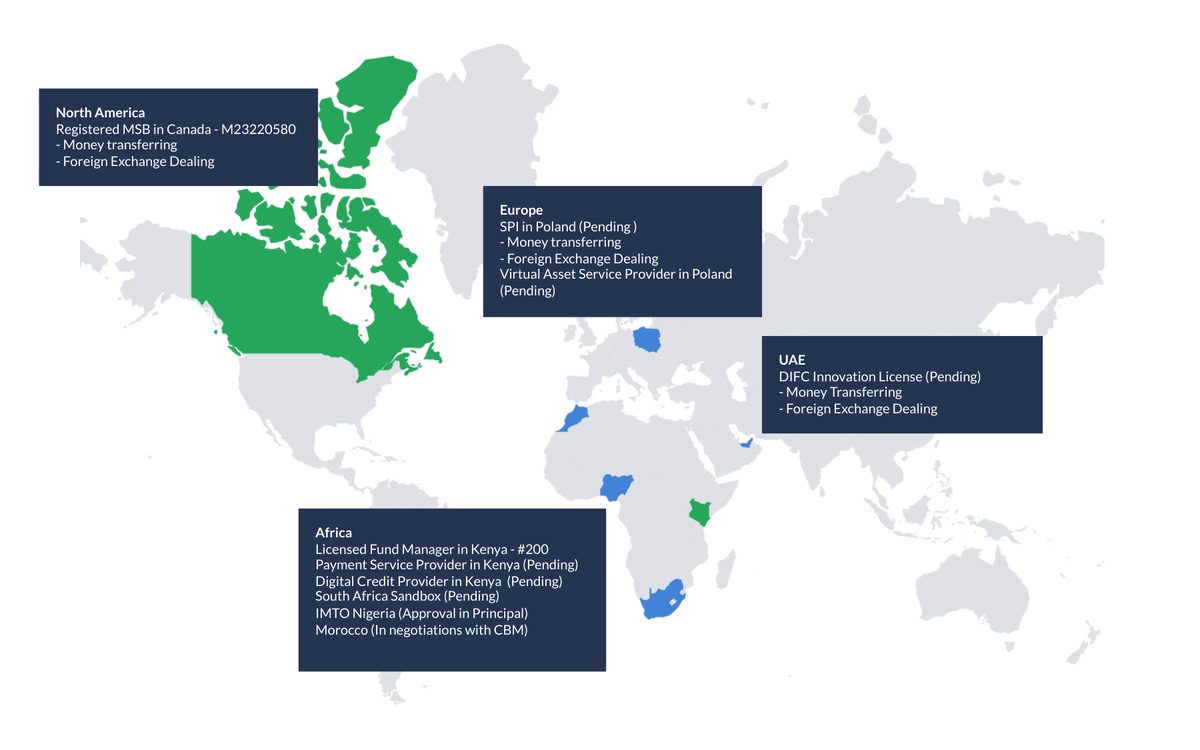
Luno, a digital asset platform with regulatory approvals across emerging markets, bought GTXN for an undisclosed sum. GTXN holds a fund manager license from Kenya's Capital Markets Authority and will now run Luno's cross-border payments. Co-founder Dan Kleinbaum stays on as chief executive.

Why it matters

If Luno's licensed rails work, African companies get cheaper, faster settlement, and one of the continent's largest crypto platforms becomes a payments utility.

Questions about this story

Free account needed to ask — your question is kept and asked for you right after sign-up. Answers are public.

No questions yet — be the first to ask.

Key Indicators

2
Dan Kleinbaum exits in six years
Beyonic was acquired in 2020, GTXN in 2026.
30 Sep 2026
Comment deadline for South Africa's draft cross-border crypto rules
National Treasury and the Reserve Bank consultation closes.

Voices

Curated perspectives — historical figures and your fellow readers.

Ever wondered what historical figures would say about today's headlines?

Sign up to generate historical perspectives on this story.

People Involved

Organizations Involved

Timeline

2020 September 2026

5 events Latest: Yesterday
Tap a bar to jump to that date
  1. Luno acquires GTXN

    Latest Acquisition

    Luno buys GTXN for an undisclosed sum; Kleinbaum remains chief executive of the acquired business.

  2. South Africa publishes draft cross-border crypto rules

    Regulatory

    National Treasury and the Reserve Bank open a consultation that may limit crypto and stablecoin use for cross-border payments.

  3. GTXN licensed by Kenya's Capital Markets Authority

    Regulatory

    The company is approved as a fund manager, adding a regulated status to its payments work.

  4. GTXN founded in Nairobi

    Founding

    Dan Kleinbaum starts the Kenyan cross-border payments and treasury company.

  5. Beyonic acquired by MFS Africa

    Acquisition

    Dan Kleinbaum's mobile-money firm is bought by the pan-African payment aggregator, now Onafriq.

Scenarios

1

Luno's payments arm scales across African corridors

Likely Resolves by Q3 2027

Discussed by: Luno chief executive James Lanigan and GTXN's launch materials

GTXN's licensed rails integrate with Luno's liquidity, letting enterprise clients pool collection, foreign exchange, and payouts into one provider. Luno adds market licences and opens new corridors beyond its current footprint, delivering the faster settlement and lower costs the deal promises.

2

South Africa's final rules restrict crypto cross-border payments

Possible Resolves by Q2 2027

Discussed by: Launch Base Africa analysis; Luno's shared position with regulated crypto asset service providers

The draft Capital Flow Management framework and Crypto Asset Manual, open for comment until 30 September 2026, would prohibit South African businesses from using crypto or stablecoins for cross-border payments. If the final rules keep that restriction, Luno's licensed route is blocked in its largest market despite the acquisition.

3

Integration stalls and GTXN stays a niche corridor provider

Possible Resolves by Q3 2027

Discussed by: Industry observers; TechMoran's coverage noting results depend on corridors, liquidity, and permissions

If Luno fails to extend licences or liquidity into additional markets, GTXN's book stays limited to existing East African corridors. The promised cost and speed gains remain narrow, and the deal becomes a modest add-on rather than a payments pivot.

Historical Context

2 moments from history that rhyme with this story — and how they unfolded.

2020

Beyonic acquired by MFS Africa (2020)

MFS Africa, now Onafriq, acquired Beyonic, a mobile-money platform Dan Kleinbaum co-founded that operated across seven African markets. The deal folded a startup's payment tools into a pan-African cross-border network.

Then

Beyonic's technology and team joined a larger aggregator, and Kleinbaum moved on to build East African FX and treasury services.

Now

It marked a wave of consolidation in African payments, where startups build local rails and larger networks buy them to extend reach.

Why this matters now

Kleinbaum's second exit follows the same pattern. He again built a licensed payments business in a hard-to-serve market and sold it to a platform needing local rails.

2010s

Correspondent bank de-risking in African corridors (2010s)

Global banks pulled back correspondent relationships from African corridors after the 2008 financial crisis, tightening compliance and risk rules. The Luno and GTXN sources describe the result: correspondent rails move slowly, corridors stay expensive and underserved.

Then

Banks withdrew from low-volume, high-risk corridors, leaving African businesses to stitch together chains of intermediaries.

Now

Non-bank payment firms and fintechs filled the gap, building licensed local rails that now handle what banks abandoned.

Why this matters now

This is the structural gap Luno's acquisition attacks. GTXN's licensed collection and payout infrastructure replaces the slow correspondent-bank chain the de-risking era left behind.

Sources

(8)