

Pull to refresh
Logo
Mexico makes digital payments mandatory in sectors it has not yet named

Mexico makes digital payments mandatory in sectors it has not yet named

Rule Changes

The Digital Economy Law took effect November 5, handing the Finance Ministry 15 business days to decide which businesses can no longer refuse cash

Overview

Updated Yesterday

Mexico's Digital Economy Law for Digital and Electronic Payments took effect on November 5. It lets the government require businesses in chosen sectors to accept only digital payments, and it does not say which sectors those are.

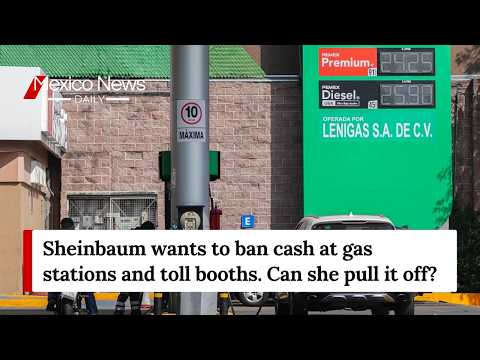
The Finance Ministry has 15 business days to publish the list. Gas stations and toll booths are the names officials have floated in press conferences; neither appears in the law's text.

Why it matters

If the ministry names gas stations and toll booths, millions of small daily cash purchases in Mexico will require a card or a phone.

Questions about this story

Free account needed to ask — your question is kept and asked for you right after sign-up. Answers are public.

No questions yet — be the first to ask.

Key Indicators

15
Business days for the Finance Ministry to name sectors
Counted from the law's entry into force on November 5, 2026.
85%
Share of transactions under 500 pesos made in cash
Figure cited by officials when presenting the proposal.
50%
Digital payment adoption target for the first year
Stated goal of the government's rollout, not a provision of the law.

Voices

Curated perspectives — historical figures and your fellow readers.

Sign up to generate historical perspectives on this story.

People Involved

Organizations Involved

Timeline

September 2026 November 2026

8 events Latest: Yesterday
Tap a bar to jump to that date
  1. Internet association backs law with caveats

    Latest Statement

    The group asks for clear criteria, public consultation and limits by amount.

  2. Digital Economy Law enters into force

    Legislation

    The law takes effect; the Finance Ministry's 15-business-day clock starts.

  3. Decree published in the Diario Oficial

    Legislation

    The law appears in the evening edition of the federal register.

  4. Officials detail scope and targets

    Statement

    Officials cite 85% cash share for purchases under 500 pesos and a 50% adoption goal.

  5. Senate approves the bill

    Legislation

    Senators pass the measure, leaving the sector list to the Finance Ministry.

  6. Chamber of Deputies approves the bill

    Legislation

    Deputies pass the Digital Economy Law, sending it to the Senate.

  7. Digital payments proposal announced

    Announcement

    Sheinbaum and federal officials present the plan at a morning press conference.

Scenarios

1

Finance Ministry names gas stations and toll booths first

Likely Resolves by Nov 30, 2026

Discussed by: Federal officials in morning press conferences; Infobae

The ministry publishes a determination listing gas stations and toll plazas among the sectors where digital payment is the only accepted form. Both were floated by officials before the law passed, though neither appears in the decree text. Operators get a transition period set by each sector's regulator.

2

Ministry names a wider list covering retail and services

Possible Resolves by Nov 30, 2026

Discussed by: Analysts at Banamex; UNAM seminar participants

The ministry uses its authority to reach beyond fuel and tolls into retail, restaurants or professional services. Banamex warned that low bank penetration, connectivity gaps and distrust of electronic payments could turn a broad mandate into exclusion for micro and small businesses.

3

Supreme Court agrees to review the delegation to the Finance Ministry

Possible Resolves by Q2 2027

Discussed by: Juvenal Lobato Díaz and other UNAM constitutional scholars

A constitutional challenge argues that Article 13 lets an administrative agency, not Congress, decide which sectors must refuse cash, and that it sets no precise criteria. The case would turn on whether the delegation is specific enough to survive review.

4

The sector list slips past the statutory deadline

Unlikely Resolves by End of 2026

Discussed by: No public prediction; inferred from the law's transitional terms

The 15-business-day window closes without a published determination, leaving the mandate unenforceable and the law's central provision dormant. The ministry retains authority to publish later, so a delay would postpone rather than cancel the mandate.

Historical Context

3 moments from history that rhyme with this story — and how they unfolded.

November 2016

India's demonetization (2016)

Prime Minister Narendra Modi announced that the two highest-denomination rupee notes would stop being legal tender at midnight, removing most of the country's currency by value from circulation overnight. Millions of people queued at banks to exchange notes, and informal employers who paid in cash could not make payroll.

Then

Cash shortages persisted for months and economic activity slowed in cash-heavy sectors.

Now

Digital payments rose sharply, then partly receded as cash returned; the episode became a reference point for the costs of forcing payment behavior by decree.

Why this matters now

Mexico is not withdrawing banknotes, but it is testing the same premise: that a legal mandate can move a cash economy faster than adoption would move on its own.

2010-2023

Sweden's shift away from cash (2010s)

Swedish banks, retailers and the Swish mobile payment system made card and phone payments the default, and cash use fell sharply without a legal ban. The country's central bank, the Riksbank, then began warning that some groups, particularly older and rural residents, were being left unable to pay.

Then

Cash became difficult to use in many shops and services.

Now

The Riksbank published reports on exclusion and began studying a central bank digital currency, the e-krona.

Why this matters now

Sweden shows the sequence Mexico is reversing: there, exclusion problems surfaced after the market moved, and prompted a policy response. Mexico is writing the mandate first.

2007 onward

M-Pesa in Kenya (2007)

Safaricom launched a mobile money service that worked on basic phones and did not require a bank account. It spread to millions of users who had no prior relationship with a bank, largely because it solved a concrete problem: sending money home safely.

Then

Mobile money became a common way to send and store small amounts.

Now

Kenya built a large digital payments base without a mandate, on infrastructure that reached people outside the banking system.

Why this matters now

It is the counterexample officials will be measured against: adoption that followed usefulness to unbanked users rather than a legal requirement to accept it.

Sources

(10)