

Pull to refresh
Logo
Daily Brief
Following
Why Ranks Sign Up
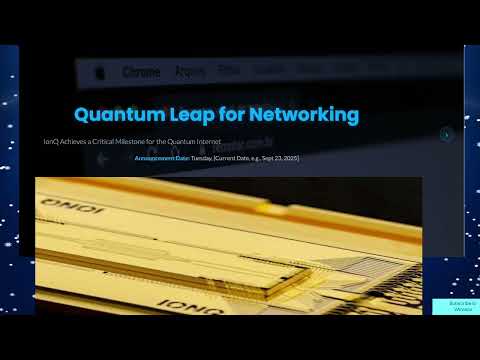
Duke and IonQ entangle three remote quantum processors over fiber

Duke and IonQ entangle three remote quantum processors over fiber

New Capabilities

A three-node trapped-ion network links separate processors with light, a building block for quantum computers that scale by networking instead of by one giant chip

2 days ago: Three remote ion processors share one state

Overview

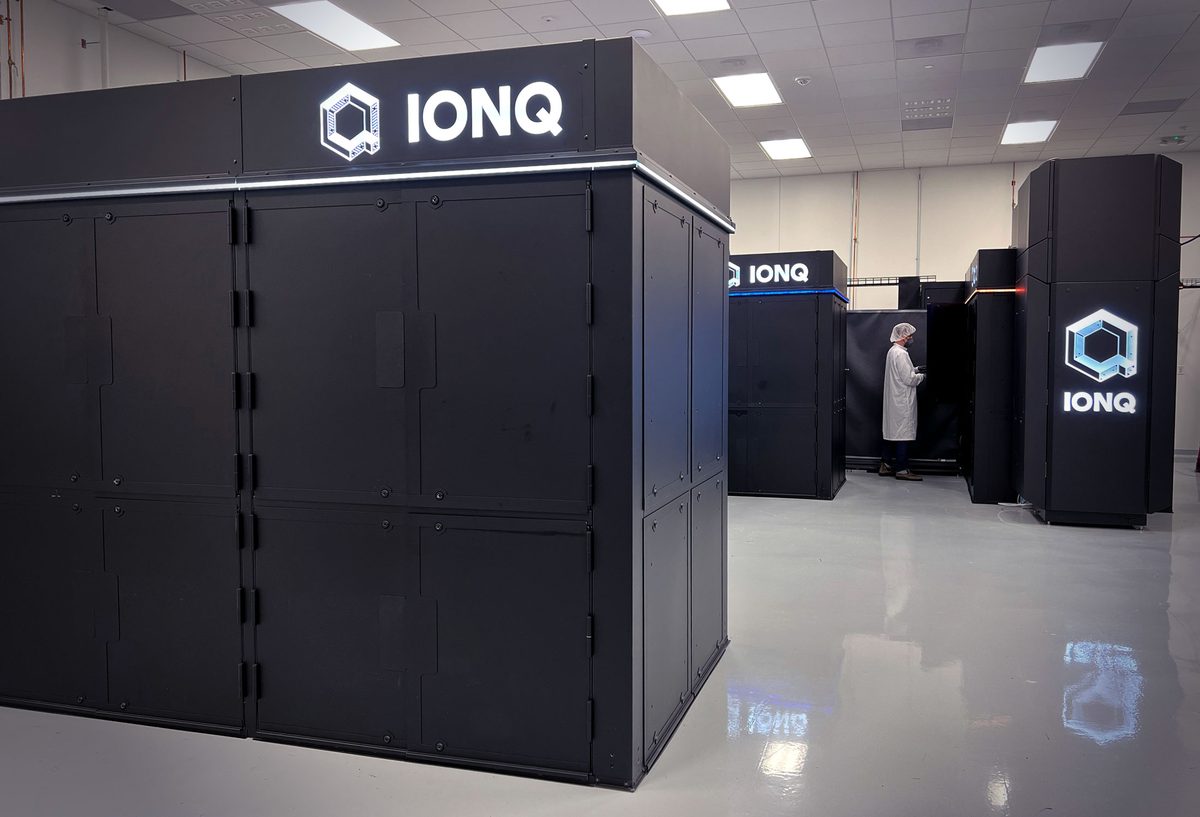
For years, building a bigger quantum computer has mostly meant cramming more qubits onto one chip. Duke University and the company IonQ just showed a different path. They wired three separate ion processors together with optical fiber and got all three to share one quantum state, with no shared chip and no logic gate at a central hub.

The shared state, called a GHZ state, held at 84 to 88 percent fidelity across modules about two meters apart. A non-locality test beat the classical limit by 27 standard deviations. The result is a working building block for 'modular' quantum machines that grow by networking processors, the way data centers grow by adding servers.

Why it matters

If quantum computers can scale by networking many small processors, useful machines arrive years sooner than waiting for one giant flawless chip.

Questions about this story

No questions yet — be the first to ask.

Key Indicators

3 nodes
Networked processors
Three individually controlled trapped-ion modules shared one entangled state.
84–88%
State fidelity
How closely the shared three-way state matched the ideal GHZ target.
27σ
Beat classical limit by
Standard deviations by which the non-locality test exceeded any classical explanation.
~2 m
Distance between modules
Modules sat about two meters apart, linked by 3-meter optical fibers.
0.095/s
Entanglement rate
Roughly one shared three-way state every ten seconds, the speed still to improve.

Voices

Curated perspectives — historical figures and your fellow readers.

Ever wondered what historical figures would say about today's headlines?

Sign up to generate historical perspectives on this story.

Play

Exploring all sides of a story is often best achieved with Play.

Log in to play. Track your picks, climb the leaderboards. Log in Sign Up
Predict 4 ways this could play out. Contrarian picks score more — points lock when the scenario resolves. Log in to play
Higher or Lower Two numbers from this story. Guess which is bigger. 5 rounds to set a streak. Log in to play
Connections Sixteen names from the news. Find the four hidden groups of four. Log in to play

People Involved

Organizations Involved

Timeline

May 2015 June 2026

3 events Latest: 2 days ago
  1. Three remote ion processors share one state

    Latest Research Result

    Duke and IonQ entangle three individually controlled trapped-ion nodes into a GHZ state at 84–88% fidelity, with no central logic gate and no post-selection.

  2. Two commercial systems linked by light

    Milestone

    IonQ and the Air Force Research Laboratory entangle two separate commercial quantum systems over a photonic interconnect, a first for networked commercial machines.

  3. IonQ founded on trapped-ion bet

    Founding

    Christopher Monroe and Jungsang Kim launch IonQ to commercialize trapped-ion quantum computing, with networking on the long-term roadmap.

Historical Context

3 moments from history that rhyme with this story — and how they unfolded.

1995

First trapped-ion quantum logic gate (1995)

At the National Institute of Standards and Technology, a team including Christopher Monroe and David Wineland used a single trapped ion to run a controlled-NOT gate, an early quantum logic operation. It showed that individual atoms could serve as controllable qubits.

Then

The result proved trapped ions could perform basic quantum logic, drawing more researchers to the platform.

Now

It seeded the trapped-ion field and Wineland's later Nobel Prize, and set the technical lineage that produced IonQ.

Why this matters now

The same people and platform behind that first gate now anchor the three-node network. This is the next rung on a thirty-year ladder.

October 2015

Loophole-free Bell test at Delft (2015)

Physicists at Delft University of Technology entangled two electrons in diamond crystals 1.3 kilometers apart and ran a Bell test that closed the main experimental loopholes at once. It was the strongest confirmation yet that entanglement defies classical physics over distance.

Then

The experiment settled decades of debate about whether earlier Bell tests had hidden flaws.

Now

It became a benchmark for rigorous tests of entanglement across remote, separately controlled systems.

Why this matters now

The Duke-IonQ test closes the detection loophole with individually addressable atoms, applying that same rigor to a three-node computing network.

October 1969

ARPANET's first node-to-node link (1969)

Engineers sent the first message between two computers on ARPANET, the network that grew into the internet. The link was crude and the system crashed mid-message, but separate machines had talked to each other.

Then

ARPANET grew from two nodes to a handful within a year as more sites joined.

Now

Networking separate computers, rather than building one giant mainframe, became the dominant way computing scaled.

Why this matters now

Modular quantum computing makes the same wager: link many small processors instead of perfecting one huge one. Moving from a two-node link to a three-node shared state echoes those first network steps.

Sources

(5)