
Pull to refresh
Logo
Montréal's Darwin bridges replace cement with recycled glass

Montréal's Darwin bridges replace cement with recycled glass

Built World

The world-first glass-powder concrete on Nuns' Island, and the standards that decide whether it spreads

Overview

Updated 14 minutes ago

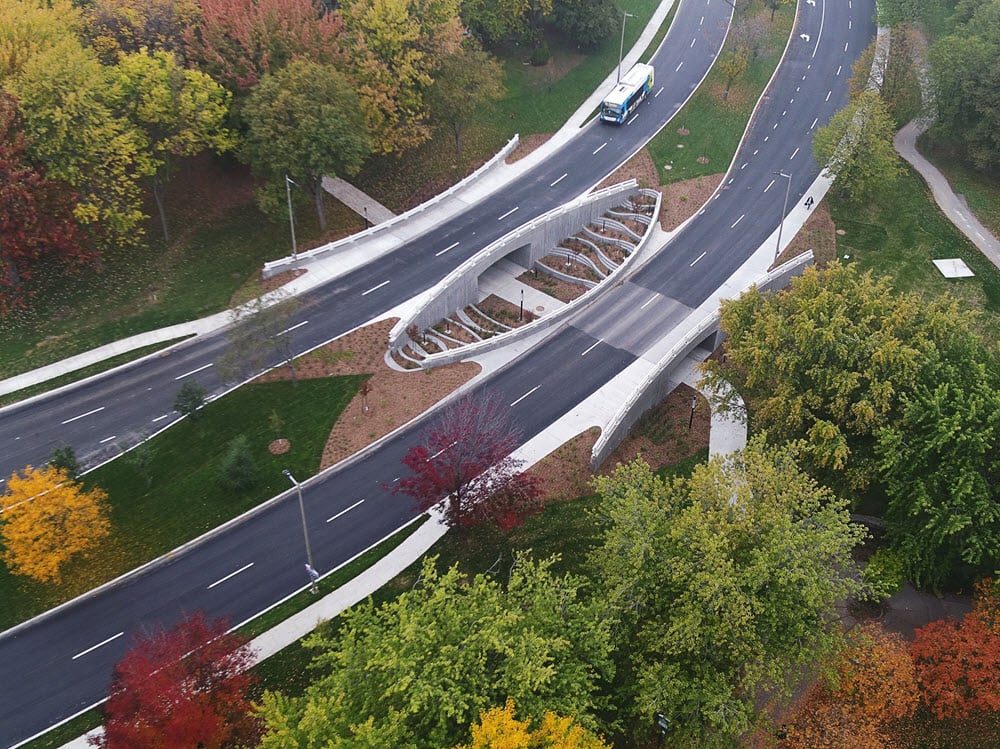
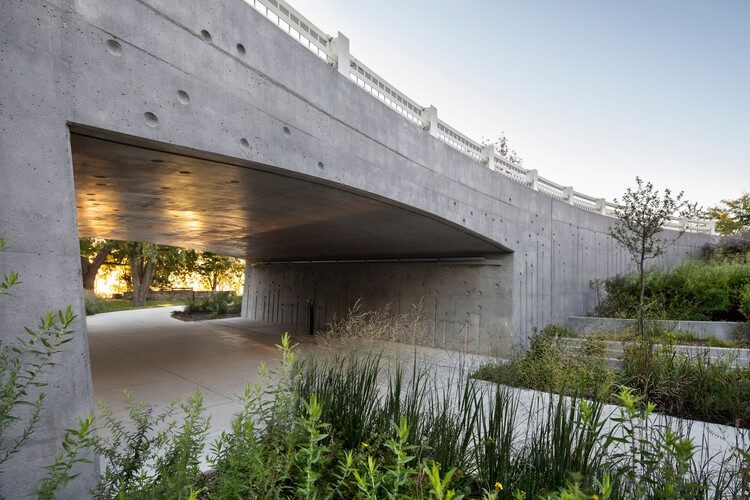
Crews on Nuns' Island poured two pedestrian bridges out of concrete in which one-tenth of the cement was finely ground recycled glass. The City of Montréal and the Université de Sherbrooke call them the first bridges in the world built that way. The glass came from about 70,000 wine bottles collected through the provincial liquor board.

The aim was durability as much as waste diversion. Glass powder reacts with the lime released as cement cures, producing a denser, less permeable concrete that the design team says should last 125 years against 75 for a conventional mix. Whether that holds depends on monitoring that runs for a decade, and on whether other engineers specify the material now that standards bodies recognize it.

Why it matters

Waste glass can replace cement in structural concrete, and cement production is a major source of greenhouse gases.

Questions about this story

Free account needed to ask — your question is kept and asked for you right after sign-up. Answers are public.

No questions yet — be the first to ask.

Key Indicators

10%
Cement replaced by glass powder
Share of the binder swapped for ground recycled glass in the bridge concrete.
40,000 kg
Recycled glass used
Roughly the glass contained in 70,000 wine bottles.
70,000
Wine bottles diverted
Bottles collected through the Société des alcools du Québec recovery program.
125 years
Design life
Projected service life of the glass-powder concrete, against 75 years for a conventional mix.
40 tonnes
Carbon dioxide avoided
Emissions from the cement that the glass powder displaced.

Voices

Curated perspectives — historical figures and your fellow readers.

Sign up to generate historical perspectives on this story.

People Involved

Organizations Involved

Timeline

2004 November 2026

10 events Latest: Yesterday
Tap a bar to jump to that date
  1. Bridges documented as first structural use of glass-powder concrete

    Latest Report

    The spans are described as holding 40,000 kg of recycled glass and carrying a 125-year design life.

  2. Field performance study published

    Research

    A peer-reviewed study reports workability, strength and durability indices above the limits set in relevant standards.

  3. Second bridge completed

    Construction

    The twin crossing opens, carrying pedestrians and cyclists under four lanes of boulevard traffic.

  4. Concrete institute awards the project

    Award

    The American Concrete Institute gives the bridges its Award of Excellence in the infrastructure category.

  5. Montréal announces the glass-powder bridges

    Announcement

    The city, the SAQ and the university announce two bridges using concrete with 10 percent ground glass.

  6. US standard for ground-glass pozzolan published

    Standards

    ASTM International issues C1866M-20, giving US suppliers a published benchmark for the material.

  7. First bridge poured on Nuns' Island

    Construction

    Crews cast the first of the twin 37-metre spans using stainless-steel reinforcement throughout.

  8. Canadian standard recognizes glass powder

    Standards

    A revision to CSA A3000 formally allows glass powder as a cement replacement in concrete.

  9. Glass powder goes into sidewalks

    Construction

    Montréal starts pouring glass-powder concrete sidewalks, the surfaces hit hardest by road salt.

  10. Glass research chair founded

    Research

    The SAQ and the Université de Sherbrooke create an industrial chair devoted to finding uses for recovered glass.

Scenarios

1

Montréal specifies glass powder for another bridge

Possible Resolves by Q2 2028

Discussed by: City engineering staff, who have said the material is now part of standard project plans and specifications for road infrastructure

Glass powder already appears in Montréal's sidewalk and road specifications. The next step is a structural contract. If city engineers write ground-glass pozzolan into a bridge or overpass tender, the material stops being a demonstration and becomes procurement. A decision either way would probably surface in tender documents before it surfaces in a press release.

2

Decade of monitoring finds the concrete meeting durability targets

Likely Resolves by End of 2031

Discussed by: Université de Sherbrooke researchers, who instrumented the bridges and have published interim field results

The bridges were instrumented at construction and are being watched for about ten years, with chloride permeability and freeze-thaw resistance as the tests that matter. The 2026 field study reported those indices above the threshold set in relevant standards. A later report confirming the trend would support the 125-year design-life claim; one that finds deterioration would undercut the case for structural use.

3

A national standards body outside North America adopts ground-glass pozzolan

Uncertain Resolves by End of 2029

Discussed by: Materials researchers and suppliers, who cite the CSA and ASTM standards as the reason companies can sell the material at all

Ground glass pozzolan is written into Canadian and US concrete standards, which is what lets a producer sell it without a research partner attached. Adoption elsewhere would widen the market and give engineers outside North America a specification to point at. The obstacle is not chemistry but the slow committee work of writing a national standard.

Historical Context

2 moments from history that rhyme with this story — and how they unfolded.

1930s-1980s

Fly ash becomes a concrete ingredient (mid-20th century)

Coal-fired power plants produced large volumes of ash that had to be disposed of at a cost. Engineers found that a portion of it could substitute for Portland cement in concrete, and utilities had an incentive to hand it over.

Then

Fly ash went into mass concrete work where heat and cost mattered.

Now

It became a routine ingredient in ready-mix concrete, with its own specifications governing how much could be used and where.

Why this matters now

Glass powder is on the same path: a waste stream that becomes ordinary once a specification exists and engineers trust the test data behind it.

1st century BCE-2nd century CE

Volcanic ash concrete in Roman harbours (1st century BCE-2nd century CE)

Roman builders mixed lime with volcanic ash for structures exposed to seawater. The amorphous silica in the ash reacted with the lime to form durable binding phases rather than relying on cement alone.

Then

Harbour walls and marine structures lasted far longer than lime-only mixes.

Now

The chemistry became a reference point for researchers designing low-cement binders.

Why this matters now

Ground glass pozzolan works through the same reaction: amorphous silica combining with portlandite from curing cement to form calcium silicate hydrate.

Sources

(9)