



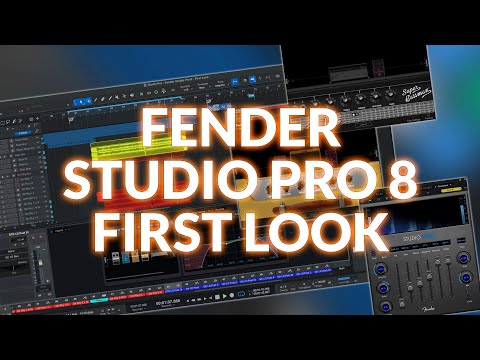

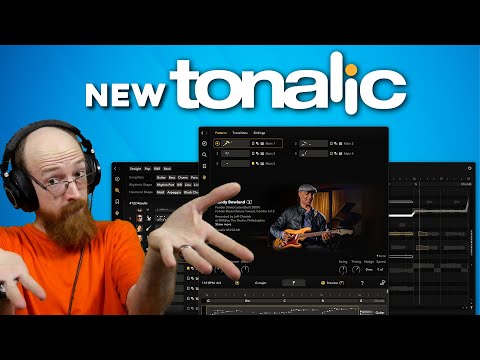

NAMM 2026 marked the moment music's biggest hardware brands stopped competing on gear alone. Fender unveiled a complete rebrand of PreSonus's Studio One DAW as 'Fender Studio Pro'—five years after acquiring the company—while Celemony announced Tonalic, which uses Melodyne's Grammy-winning polyphonic pitch technology to create an entirely new category of adaptive session-player software. Both products shipped in late January 2026 to mixed reception: Studio Pro 8 drew praise for features like improved audio-to-MIDI conversion and native Fender amp modeling, but longtime users questioned whether a guitar company's branding would undermine the DAW's professional credibility.
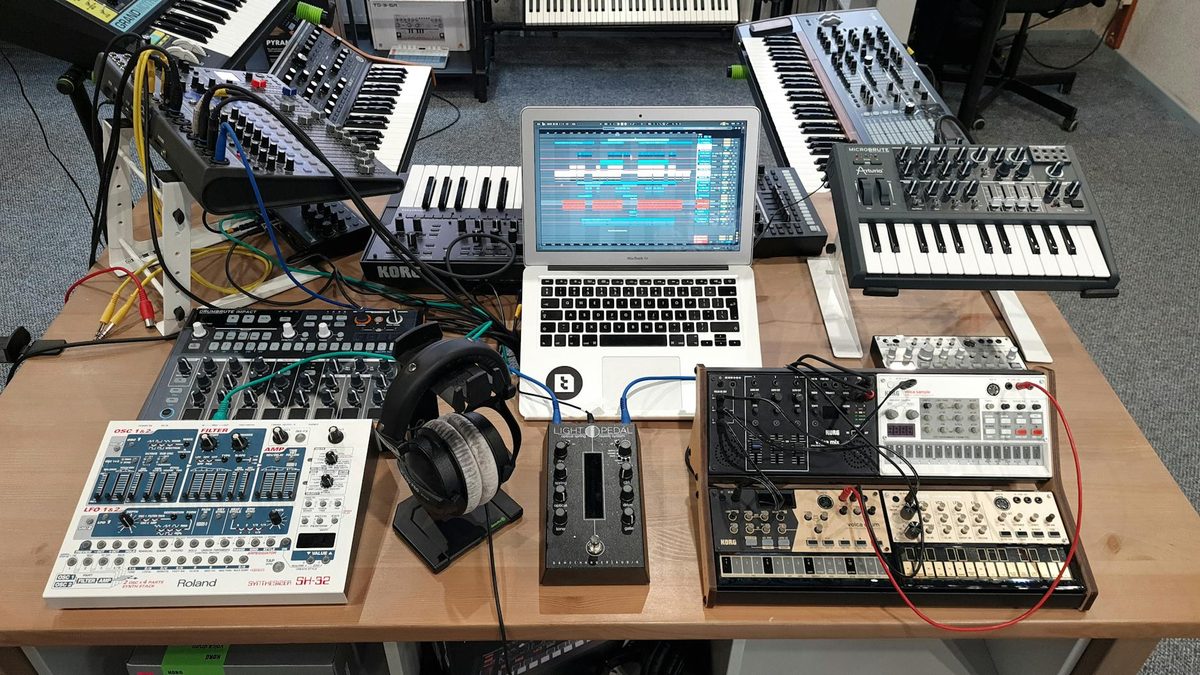
The shift signals a larger transformation: traditional instrument makers are racing to control the full creative workflow, from guitar to finished track. With Korg embedding classic synthesizer filters into audio interfaces and KRK launching monitors under Gibson's banner, the $11 billion music production equipment market is consolidating around integrated ecosystems rather than standalone products. Yet the Gibson-Cakewalk precedent—where a guitar maker acquired and later shuttered a beloved DAW—looms large in user communities. The question is whether Fender's five-year track record of Studio One development can overcome what one analyst called 'pattern recognition, not paranoia' among professional users.
Click a figure to generate their perspective on this story
Debate Arena
Two rounds, two personas, one winner. You set the crossfire.
Choose Your Battle
Watch two AI personas debate this story using real evidence
Make predictions and set the crossfire to earn XP and cred
Select Your Champions
Choose one persona for each side of the debate
DEBATE TOPIC
SIDE A (PRO)
Select debater for this side:
✓
SIDE B (CON)
Select debater for this side:
✓
Choose personas with different perspectives for a more dynamic debate
VS
Get ready to make your prediction...
Round of
Claim
Evidence
Stakes
Crossfire Answer
Closing Statement
Claim
Evidence
Stakes
Crossfire Answer
Closing Statement
Your Crossfire Question
Generating arguments...
Who's Got This Round?
Make your prediction before the referee scores
Correct predictions earn +20 XP
Evidence
40%
Logic
30%
Detail
20%
Style
10%
Round Results
Your Pick!
+20 XP
Your Pick
Not this time
Evidence (40%)
Logic (30%)
Detail (20%)
Style (10%)
Overall Score
/10
Your Pick!
+20 XP
Your Pick
Not this time
Evidence (40%)
Logic (30%)
Detail (20%)
Style (10%)
Overall Score
/10
Set the Crossfire
Pick the question both personas must answer in the final round
Crafting crossfire questions...
Choosing a question earns +10 XP crossfire bonus
🏆
Total XP Earned
Cred Change
Predictions
Debate Oracle! You called every round!
Sharp Instincts! You know your debaters!
The Coin Flip Strategist! Perfectly balanced!
The Contrarian! Bold predictions!
Inverse Genius! Try betting the opposite next time!
XP Breakdown
Base completion+20 XP
Rounds played ( rounds x 5 XP)
+ XP
Correct predictions ( correct x 20 XP)
+ XP
Crossfire bonus+10 XP
Accuracy
%
Prediction History
Round
You picked:
✓✗
Keep debating to level up your credibility and unlock achievements
People Involved
Peter Neubäcker
Founder, Celemony (Active developer at Celemony)
Arnd Kaiser
General Manager, PreSonus/Fender Studio (Leading Fender Studio integration)
Organizations Involved
FE
Fender Musical Instruments Corporation
Musical Instrument Manufacturer
Status: Expanding into integrated music production ecosystem
World's leading musical instrument manufacturer, now building end-to-end creative workflow tools through its PreSonus acquisition.
CE
Celemony Software GmbH
Music Software Developer
Status: Expanding from tools to creative instruments
Munich-based developer of Melodyne, the industry-standard polyphonic pitch correction software.
KO
Korg Inc.
Musical Instrument Manufacturer
Status: Integrating legacy synthesizer technology into modern interfaces
Japanese manufacturer bringing its classic synthesizer filter designs into USB audio interfaces.
NA
National Association of Music Merchants
Trade Association
Status: Hosting 125th anniversary show
Trade association representing the $17 billion global music products industry, hosting the world's largest music technology trade show.
GI
Gibson Brands, Inc.
Musical Instrument Manufacturer
Status: Refocused on core brands after 2018 bankruptcy
Legendary guitar manufacturer that emerged from 2018 bankruptcy after failed tech diversification, now serving as cautionary example for industry acquisitions.
Timeline
Fender Studio Pro 8 Officially Ships
Product Launch
Fender Studio Pro 8 became available for $199.99, with existing Studio One 7 users offered $99.99 upgrade pricing. Launch featured new Fender Mustang Guitar and Rumble Bass plugins with 39 guitar amps, 18 bass amps, and 125 modeled effects pedals.
Studio One Community Reacts to Fender Rebrand
Industry
User reception proved mixed: while reviewers praised improved GUI and audio-to-MIDI features, longtime Studio One users expressed concerns about brand perception and comparisons to Gibson's 2017 Cakewalk shutdown.
NAMM 2026 Concludes with Major Launches
Event
Final day featured Celemony's Tonalic plugin, Korg's microAUDIO interfaces, KRK's V Series Five monitors, and record exhibitor participation.
Celemony Tonalic Launches with Subscription Model
Product Launch
Tonalic became available via subscription at $14.90/month (Arranger edition) or $24.90/month (Studio edition), with first month promotional pricing of $1. Plugin features 7,000+ recordings from 30+ session musicians across 180 instruments.
NAMM 2026 Opens for 125th Anniversary
Event
The NAMM Show opened at Anaheim Convention Center, marking 125 years since founding and 50 years in Anaheim.
Fender Unveils Studio Ecosystem Rebrand
Product Launch
Fender announced Fender Studio brand, rebranding Studio One as Fender Studio Pro 8 with new interfaces and Motion controllers.
Fender Returns to NAMM
Event
Fender exhibited at NAMM for the first time since 2020, alongside Gibson and Marshall's return.
Korg Previews microAUDIO Concept
Product
Korg showed prototype audio interfaces with built-in analog synthesizer filters at NAMM 2025.
Fender Acquires PreSonus
Acquisition
Fender announced definitive agreement to acquire PreSonus Audio Electronics, maker of Studio One DAW and audio interfaces.
Gibson Files Bankruptcy
Industry
Gibson filed Chapter 11 bankruptcy due to debt from tech acquisitions, later acquired by KKR in November.
Gibson Shuts Down Cakewalk
Industry
Gibson discontinued Cakewalk DAW entirely, four years after acquisition—becoming a cautionary tale for music software acquisitions.
Melodyne Wins Technical Grammy
Recognition
The Recording Academy awarded Celemony a Technical Grammy for Melodyne's polyphonic pitch editing technology.
ARA Protocol Developed
Technology
Celemony and PreSonus introduced Audio Random Access, enabling deeper DAW-plugin integration.
Celemony Unveils Direct Note Access
Technology
Celemony announced DNA technology enabling individual note editing within polyphonic audio—previously thought impossible.
First Melodyne Demo at NAMM
Product Launch
Celemony publicly demonstrated Melodyne for the first time at the Winter NAMM Show.
Celemony Founded in Munich
Company
Peter Neubäcker and partners founded Celemony Software GmbH, beginning development of Melodyne pitch correction software.
Scenarios
1
Fender Studio Becomes Mainstream DAW
Discussed by: MusicRadar, Production Expert, audio industry analysts
Fender successfully leverages its massive guitarist customer base to drive DAW adoption. The simplified interface and native Fender amp plugins attract players who previously found recording software intimidating. Studio Pro 8 captures significant market share in the home recording segment while PreSonus brand maintains pro live-sound market.
2
Hardware Giants Retreat to Core Products
Discussed by: Gearnews, industry analysts comparing to Gibson's 2018 bankruptcy
Integration strategies prove more complex than anticipated. Software development demands clash with hardware company cultures. Fender's software division becomes a cost center rather than growth driver, leading to reduced investment. The Cakewalk precedent—Gibson's 2017 shutdown—repeats. Instrument makers refocus on physical products.
3
AI Tools Reshape the Competitive Landscape
Discussed by: Billboard, Hollywood Reporter, music industry forecasters
Generative AI music services like Suno and Udio evolve into professional DAW-like tools, creating new competition for traditional software. Major labels' licensing deals with AI companies legitimize these platforms. Traditional DAW makers must integrate similar capabilities or cede ground to AI-native workflows. Celemony's Tonalic represents one adaptation strategy.
4
Ecosystem Lock-In Fragments the Market
Discussed by: Sound On Sound, Production Expert, professional audio forums
Major brands successfully create closed ecosystems—Fender guitars work best with Fender Studio, etc. Interoperability decreases. Professional users resist proprietary systems while hobbyists embrace convenience. Market bifurcates between open standards for pros and integrated ecosystems for consumers.
5
Fender Branding Limits DAW's Professional Appeal
Discussed by: Production Expert, Reddit Studio One community, Medium analysis
Despite continued development, Fender's guitar-centric branding creates perception problem in professional studios. As one user noted, 'Fender Studio Pro sounds like some afterthought bundled software that you get with some digital Fender amp simulator.' Pro users migrate to competitors while hobbyist guitarists embrace ecosystem. Studio Pro becomes niche product rather than mainstream DAW contender.
Historical Context
Gibson Acquires and Abandons Cakewalk (2013-2017)
2013-2017
What Happened
Gibson acquired Cakewalk, maker of SONAR DAW software, in 2013 as part of an aggressive tech diversification strategy. The guitar maker accumulated debt acquiring audio companies including Onkyo, TEAC, KRK, and Stanton. By 2017, Gibson shut down Cakewalk entirely, leaving a loyal user base stranded.
Outcome
Short Term
Cakewalk users scrambled to alternative DAWs. Gibson's debt load contributed to May 2018 bankruptcy filing.
Long Term
The episode became shorthand for what happens when instrument companies acquire software without sustainable plans. BandLab later revived Cakewalk as a free product.
Why It's Relevant Today
Fender's PreSonus acquisition drew immediate comparisons to Gibson's failed strategy. Five years of continued Studio One development under Fender ownership suggests a different outcome, but the 2026 rebrand tests whether the integrated ecosystem approach will succeed where simple ownership failed.
Melodyne Direct Note Access Debut (2008)
2008-2009
What Happened
Celemony unveiled DNA technology at NAMM 2008, enabling manipulation of individual notes within polyphonic audio recordings. Engineers and producers had considered this mathematically impossible—extracting single notes from a piano chord or guitar strum seemed to violate fundamental audio principles.
Outcome
Short Term
Melodyne Editor with DNA shipped in 2009, winning MIPA Award for Most Innovative Product.
Long Term
DNA became industry standard for pitch correction and audio editing. Celemony received Technical Grammy in 2012. The technology enabled new workflows in professional studios and spawned imitators.
Why It's Relevant Today
Tonalic represents Celemony's first major application of DNA technology beyond editing tools. Rather than fixing recordings, Tonalic uses the same polyphonic manipulation to adapt session player performances to user arrangements—a creative instrument rather than a corrective tool.
inMusic Industry Consolidation (2001-2023)
2001-2023
What Happened
Jack O'Donnell built inMusic through systematic acquisition: Alesis (2001), Akai Professional (2005), M-Audio and AIR from Avid (2012), Denon DJ (2014), Stanton from Gibson (2020), and Moog Music (2023). The Rhode Island company accumulated many of the music industry's most storied brands under one roof.
Outcome
Short Term
inMusic became the largest portfolio of electronic music brands, spanning DJ equipment, production gear, and synthesizers.
Long Term
Demonstrated that industry consolidation could preserve rather than destroy legacy brands when managed differently than Gibson's approach.
Why It's Relevant Today
Shows an alternative consolidation model to Fender's integrated ecosystem strategy. inMusic acquired brands but largely let them operate independently, while Fender is actively merging PreSonus products into a unified Fender Studio brand.