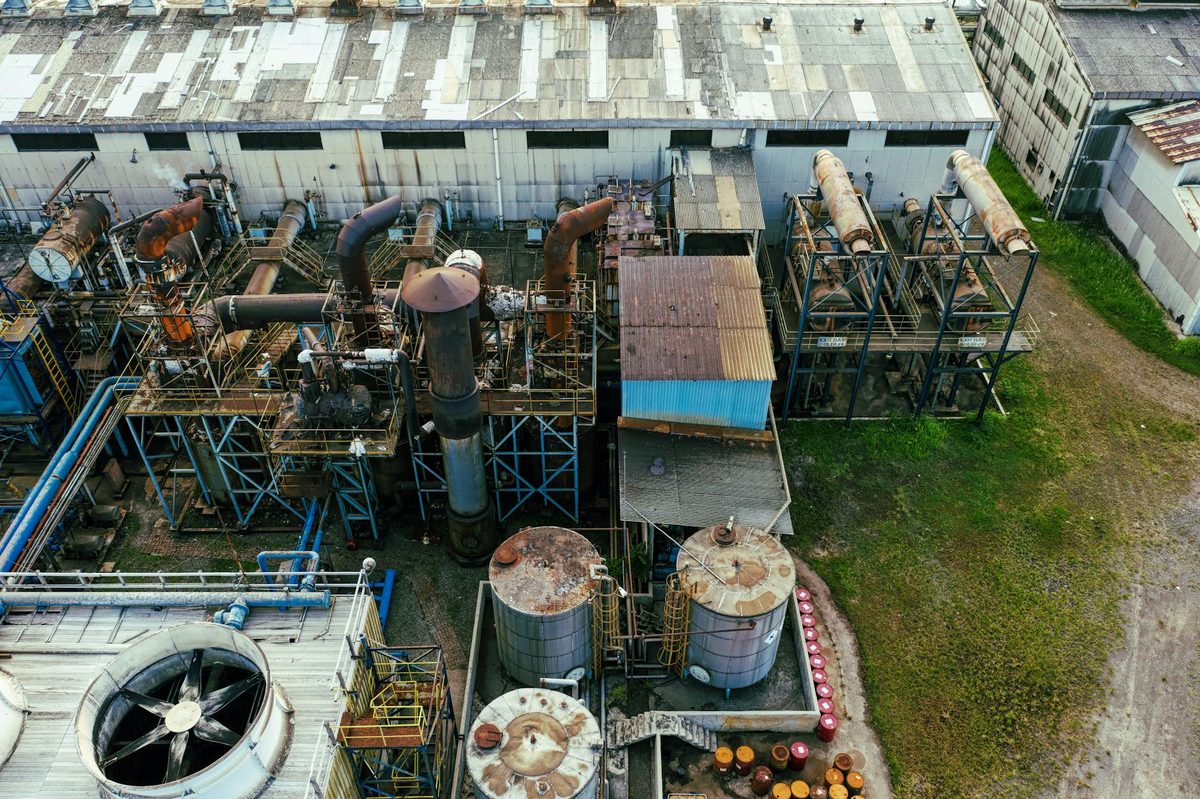
For a century, developing new materials meant years of trial and error—mixing compounds, testing formulations, discarding failures, and starting over. Now PPG, 3M, and Procter & Gamble use AI to explore millions of chemical combinations simultaneously: development timelines drop from years to weeks, and the AI surfaces solutions human chemists missed.
PPG's automotive clearcoat, developed with AI and Carnegie Mellon University, dries in five minutes under heat instead of thirty. That solved a speed-vs-quality trade-off the paint industry had accepted for decades. By late January 2026, PPG commercialized its first fully AI-developed refinish clearcoat and used AI to optimize 50 existing products for both performance and cost.
Meanwhile, 98% of manufacturers reported exploring AI for product development, up from 78% using it in at least one function the previous year. Agentic AI is accelerating: chemical companies are deploying autonomous AI agents in labs and on factory floors. Apprentice.io and Ganymede merged to build end-to-end AI-native platforms that cover R&D through commercial manufacturing.
Questions about this story
Free account needed to ask — your question is kept and asked for you right after sign-up. Answers are public.
No questions yet — be the first to ask.
Key Indicators
98%
Manufacturers exploring AI
Share of manufacturers exploring AI in 2026, though only 20% report being fully prepared for deployment
5x
Faster fragrance development
P&G's AI-powered Perfume Development Digital Suite creates new fragrances five times faster than traditional methods
10x
Data scientist productivity
P&G's AI Factory makes data scientists 10 times faster and more efficient at model development
$650B
Projected agentic AI revenue
Agentic AI expected to generate up to $650 billion in additional revenue by 2030 across industries
Images from Openverse under Creative Commons licenses.
Videos from YouTube.
Voices
Curated perspectives — historical figures and your fellow readers.
Sojourner Truth
(1797-1883) ·Abolitionist · politics
Fictional AI pastiche — not real quote.
"Well, these fine industrialists have finally learned what we knew in the cotton fields—that many minds working together find solutions faster than one master claiming all the wisdom. Though I notice their AI don't demand wages or freedom for its labor, which must suit them just fine."
0% found this insightful
Ever wondered what historical figures would say about today's headlines?
Sign up to generate historical perspectives on this story.
19 events
Latest: January 29th, 2026 · 8 months ago
Showing 8 of 19
JK to step
Tap a bar to jump to that date
Jump to
January 2026
AI Agents Democratize Computational Chemistry
LatestResearch
New multi-agent frameworks like Dreams enable scalable, high-throughput computational materials discovery, making quantum calculations accessible beyond specialized research labs.
PPG Reports Q4 Earnings, Details AI Strategy
Industry
PPG CEO Tim Knavish reveals the company has commercialized its first fully AI-developed refinish clearcoat and used AI to optimize 50 existing products, citing performance and cost benefits. Company views formulation AI as a competitive differentiator.
PPG Reports Q4 2025 Results with AI-Driven Growth
Industry
PPG reports $3.9 billion in Q4 2025 net sales with 3% organic sales growth, crediting AI-developed products for contributing to performance improvements across segments. Full-year adjusted earnings per share reached $7.58.
Manufacturers Report AI Product Development Success
Industry
PPG, 3M, and other manufacturers publicize results from AI-driven development, including faster-drying paint and algorithmically designed fragrances.
Apprentice.io Acquires Ganymede for End-to-End AI Platform
Industry
Apprentice.io acquires Ganymede to create the industry's first AI-native platform spanning R&D through commercial manufacturing, unifying laboratory and production data in real-time with agentic AI capabilities.
Survey: 98% of Manufacturers Exploring AI, Only 20% Prepared
Industry
Redwood Software survey of 300 global manufacturing professionals reveals 98% are exploring AI but only 20% report being fully prepared for deployment, with most trapped in mid-stage automation maturity.
Materials Project Reaches 650,000 Users Milestone
Research
Berkeley Lab's Materials Project, a platform enabling AI-driven materials discovery, now serves over 650,000 users and has been cited more than 32,000 times, becoming critical infrastructure for AI materials research.
3M Debuts Ask 3M AI Assistant at CES 2026
Product
3M launches Ask 3M, an AWS-powered AI assistant guiding engineers through material selection for bonding and adhesive applications, enabling digital validation before physical prototyping.
Siemens-NVIDIA Partner on Industrial AI Operating System
Industry
Siemens and NVIDIA expand partnership to build Industrial AI Operating System, aiming to create world's first fully AI-driven adaptive manufacturing sites starting with Siemens Electronics Factory in Erlangen, Germany in 2026.
Industry Survey Shows 98% of Manufacturers Exploring AI
Industry
Global manufacturing survey reveals 98% of manufacturers are exploring AI for product development, though only 20% report being fully prepared. Agentic AI adoption expected to quadruple by 2027.
Chemical Industry Adopts Agentic AI
Industry
Chemical industry increasingly deploys agentic AI in laboratories and factory floors, with big firms like BASF and Bayer leading adoption. AI agents integrate data analysis, materials modeling, simulations, and experimental planning in single adaptive workflows.
December 2025
3M Unveils AI Innovation Tool at CES 2026
Product
3M debuts AI-powered platform enabling customers to experiment, simulate, and create with 3M materials using over 300 product model combinations.
May 2025
PPG Launches AI-Developed Clearcoat
Product
PPG introduces Deltron NXT DC7020 Premium Glamour Speed Clearcoat, which dries in 5 minutes under heat versus 30 minutes for conventional products.
February 2024
3M Announces $3.5 Billion R&D Investment
Industry
3M commits to launching 1,000 new products over three years, with AI expected to reduce development timelines from 14 months to under 10.
November 2023
DeepMind Releases GNoME Materials Discovery Tool
Research
Google DeepMind publishes AI tool that discovered 2.2 million new crystal structures, equivalent to 800 years of human research.
October 2023
P&G Partners with Moodify for AI Fragrance Design
Industry
Procter & Gamble selects AI-based fragrance design software for malodor control, marking large-scale AI adoption in scent development.
August 2020
PPG Receives DOE Funding for AI Coatings Research
Research
Department of Energy awards PPG funding to model coating flow and dynamics, targeting 30% energy reduction in paint systems.
2013
Citrine Informatics Founded
Industry
Stanford graduates launch AI platform for materials and chemicals development, pioneering commercial materials informatics.
June 2011
Obama Launches Materials Genome Initiative
Policy
White House announces federal initiative to halve the 10-20 year materials development cycle using computational tools and data sharing.
Scenarios
1
AI Becomes Standard R&D Infrastructure
Likely
Discussed by: McKinsey, Deloitte manufacturing surveys, industry analysts
As adoption reaches 78% of organizations and AI development tools become commoditized, companies without AI-powered R&D fall behind competitors who can iterate products five to ten times faster. Mid-sized manufacturers either adopt platforms from providers like Citrine Informatics or partner with AI-equipped competitors. The 10-20 year materials development cycle envisioned by the Materials Genome Initiative collapses to 2-5 years for most applications.
Nearly 70% of manufacturers report data quality, contextualization, and validation as significant obstacles to AI implementation. Without standardized data formats and willingness to share failed experiment data, AI models produce unreliable predictions outside controlled laboratory settings. Progress stalls as companies struggle to scale from pilot projects to enterprise-wide deployment.
3
Autonomous Labs Transform Industrial R&D
Possible
Discussed by: Lawrence Berkeley National Laboratory, MIT researchers, World Economic Forum
Combining AI discovery tools like DeepMind's GNoME with robotic automation creates self-driving laboratories that design, synthesize, and test new materials without human intervention. Companies that build or access these facilities gain order-of-magnitude advantages in development speed. Traditional chemical and materials companies either acquire autonomous lab capabilities or become contract manufacturers for AI-native competitors.
4
Intellectual Property Disputes Emerge
Uncertain
Discussed by: Legal analysts, patent attorneys, industry publications
As AI systems generate novel formulations and materials, questions arise about inventorship and patent validity. Companies face disputes over whether AI-discovered innovations meet patent requirements for human inventorship. Regulatory frameworks lag technological change, creating uncertainty that slows commercialization of AI-generated discoveries.
Agentic AI systems move beyond analysis to autonomous action, with AI agents independently designing experiments, ordering materials, coordinating with robotic labs, and iterating formulations without human intervention. By 2027, usage of agentic systems in manufacturing quadruples as companies achieve end-to-end autonomous R&D workflows. Companies unable to deploy agentic AI face competitive disadvantages as development cycles compress from weeks to days.
6
End-to-End AI Platforms Consolidate Industry
Likely
Discussed by: Apprentice.io executives, manufacturing technology analysts, life sciences industry observers
Unified AI-native platforms that span the entire product lifecycle from R&D through commercial manufacturing emerge as competitive necessities. Companies unable to build or acquire end-to-end platforms become dependent on platform providers or lose competitiveness to vertically integrated competitors. The fragmentation between laboratory informatics, process development, and manufacturing execution systems collapses into single platforms with continuous digital threads from instrument data to production intelligence.
Historical Context
3 moments from history that rhyme with this story — and how they unfolded.
1 of 3
1990-2003
Human Genome Project (1990-2003)
A $3 billion international effort to sequence all 3 billion base pairs of human DNA. The project, coordinated by the National Institutes of Health and Department of Energy, took 13 years and involved thousands of scientists across 20 institutions. Initial estimates projected completion would take 15 years.
Then
Project completed two years ahead of schedule and under budget due to advances in automated sequencing technology.
Now
Established the template for large-scale, data-driven biological research. The Materials Genome Initiative explicitly modeled itself on this precedent, aiming to do for materials what genome sequencing did for biology.
Why this matters now
The Materials Genome Initiative, launched in 2011, borrowed the genome project's name and approach—using computation and data sharing to accelerate discovery. Current AI tools represent the fulfillment of that vision.
2 of 3
1980-1999
Computer-Aided Drug Design Emergence (1980s-1990s)
Pharmaceutical companies began using computational chemistry to model drug-receptor interactions, moving from pure trial-and-error synthesis. Early successes included HIV protease inhibitors designed using structural biology data. Merck, Pfizer, and others invested heavily in computational infrastructure.
Then
Reduced early-stage screening costs by identifying promising candidates before synthesis.
Now
Created the foundation for modern drug discovery pipelines, though development timelines remained lengthy at 10-15 years and costs rose to $2.6 billion per approved drug by 2013.
Why this matters now
Materials AI follows a similar trajectory—computational tools first augment human intuition, then increasingly guide discovery. The persistence of long drug development timelines despite computational tools offers a cautionary parallel for materials development expectations.
3 of 3
1950-1990
Toyota Production System and Lean Manufacturing (1950s-1990s)
Toyota developed a systematic approach to eliminating waste and improving quality in manufacturing, including just-in-time production and continuous improvement. American manufacturers initially dismissed these methods as culturally specific. The MIT International Motor Vehicle Program studied Toyota's system and published 'The Machine That Changed the World' in 1990.
Then
Toyota achieved higher quality and lower costs than American competitors, gaining market share throughout the 1980s.
Now
Lean manufacturing became standard practice globally, transforming not just automotive but aerospace, electronics, and healthcare industries.
Why this matters now
AI-driven product development may follow a similar adoption curve—early adopters gain competitive advantage while skeptics dismiss the approach, followed by industry-wide transformation once results become undeniable.