Anchor

Nasdaq invests $100M in Kraken parent Payward to build tokenized stock trading
Money MovesReported $21B valuation as Nasdaq Equity Tokens target a Q2 2027 launch
Yesterday: Nasdaq Ventures invests $100M in PaywardNew here? Follow stories to track developments over time. Create a free account to get updates when stories you care about change.
Overview
Updated YesterdayA stock market is investing in a crypto exchange so its own listed shares can trade on blockchains. Nasdaq's venture arm committed $100 million to Payward, parent of the Kraken exchange, backing a framework called Nasdaq Equity Tokens that would put publicly listed stocks on round-the-clock blockchain rails.
The companies first partnered in March. Bloomberg reports the investment values Payward at $21 billion, though neither company confirmed that figure. Trading of the tokenized stocks is scheduled to start in the second quarter of 2027.
Why it matters
If Nasdaq's tokenized rails launch, listed stocks can trade around the clock on blockchains — and the exchange that owns the rails keeps control of the next cycle of market infrastructure.
Questions about this story
Free account needed to ask — your question is kept and asked for you right after sign-up. Answers are public.
No questions yet — be the first to ask.
Key Indicators
$100M
Nasdaq Ventures investment in Payward
Committed via Nasdaq's venture arm, deepening a tokenized-equities partnership first struck in March 2026.
$21B
Payward valuation per Bloomberg sourcing
Reported figure neither Nasdaq nor Payward confirmed; earlier 2026 marks ranged from $13.3B to $20B.
Q2 2027
Nasdaq Equity Tokens launch target
Live trading expected on Payward's xStocks platform, moved from an earlier Q1 2027 target.
$508M
Payward Q2 2026 adjusted revenue
Up 17% year over year, with 6.6 million funded accounts and $40 billion in assets on its platforms.
$13.3B
Valuation implied by Deutsche Börse's April stake
Deutsche Börse paid $200M for 1.5% of Payward in April 2026, a figure a third below the reported $21B.
Related Media

Nasdaq Headquarters
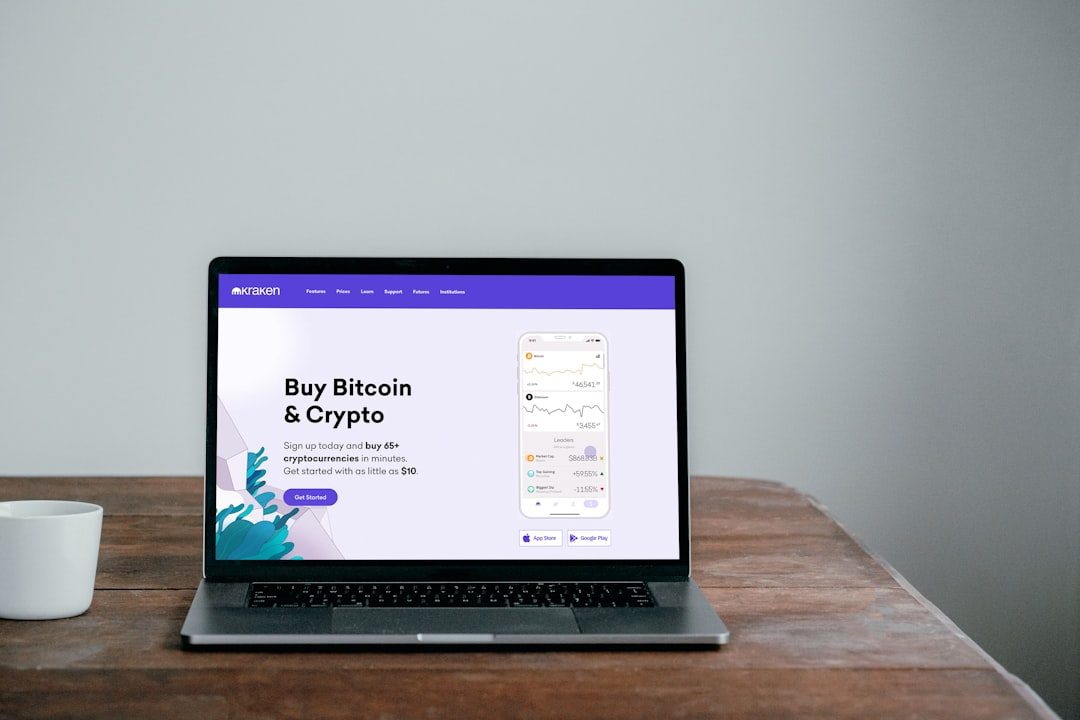
Buy stocks & crypto | Kraken
Close-up view of Bitcoin coins on a stock market chart background representing cryptocurrency trading.

726 views
4:45
Nasdaq Invests $100M in Kraken Parent Payward
CoinDesk
Images from Openverse under Creative Commons licenses. Videos from YouTube.
Voices
Curated perspectives — historical figures and your fellow readers.
Play
Exploring all sides of a story is often best achieved with Play.
Most of these play right now — no account needed. Sign up to save scores, keep a streak, and unlock Debate and Predict.
Log in
Sign Up
Higher or Lower
A number from this story, against one from elsewhere in the news — guess which is bigger, then keep the chain going. 5 rounds, 3 strikes; a miss costs a strike and resets your streak.
Example
Anchor
EU tariff revenue
$52B
Big for this kind of number
Mystery
Pentagon AI contract
?
Round 1
Streak: 0
Mystery
?
Keyboard: ↓/L lower · ↑/H higher
0 pts
Best streak: 0 · Rounds: 0
0 points — sign up to put that on the leaderboard.
Now try on this story
Connections
Sixteen names from the news. Find the four hidden groups of four. Four mistakes max.
Loading today's puzzle…
0/4 groups
Mistakes
Sign up to keep a daily streak — a new puzzle lands every day.
Now try on this story
Exit debate?
Your progress in this debate will be lost.
How it works
- 1 Two AI personas square off on this story.
- 2 You predict who'll win each round — correct picks earn XP.
- 3 One crossfire question is yours to fire. Pick it carefully.
Couldn't generate a topic
Select Your Champions
Choose one persona for each side of the debate
DEBATE TOPIC
Choose personas with different perspectives for a more dynamic debate.
SIDE A (PRO)
Select debater for this side:
No debate personas available right now.
SIDE B (CON)
Select debater for this side:
No debate personas available right now.
VS
Get ready to make your prediction...
Round of
Claim
Evidence
Stakes
Crossfire Answer
Closing Statement
Claim
Evidence
Stakes
Crossfire Answer
Closing Statement
Your Crossfire Question
Generating arguments...
Who's Got This Round?
Make your prediction before the referee scores
The referee scores both sides on
Correct predictions earn +20 XP
· Press 1 or 2 to pick
Evidence
40%
Logic
30%
Detail
20%
Style
10%
Round Results
Your Pick
Not this time
(%)
Overall Score
/10
Your Pick
Not this time
(%)
Overall Score
/10
Set the Crossfire
Pick the question both personas must answer in the final round
Crafting crossfire questions...
Choosing a question earns +10 XP crossfire bonus
🏆
Total XP Earned
Cred Change
Predictions
Debate Oracle! You called every round!
Sharp Instincts! You know your debaters!
The Coin Flip Strategist! Perfectly balanced!
The Contrarian! Bold predictions!
Inverse Genius! Try betting the opposite next time!
XP Breakdown
Base completion
+20 XP
Rounds played ( rounds x 5 XP)
+ XP
Correct predictions ( correct x 20 XP)
+ XP
Crossfire bonus
+10 XP
Accuracy
%
Prediction History
Round
You picked:
✓
✗
Now try on this story
Keep debating to level up your credibility and unlock achievements
People Involved
Organizations Involved
The Nasdaq Stock Market LLC
Stock exchange operator
Investor and infrastructure partner
The world's first fully electronic stock market, now building tokenized equity rails.
Payward
Cryptocurrency and financial infrastructure company
Parent of Kraken; recipient of $100M Nasdaq investment
Private company whose Kraken exchange is one of the largest crypto platforms.
Deutsche Börse
German stock exchange operator
Existing Payward investor
European exchange group that took a $200M stake in Payward in April 2026.
Timeline
March 2026 September 2026
4 events
Latest: Yesterday
Tap a bar to jump to that date
-
Nasdaq Ventures invests $100M in Payward
Latest InvestmentNasdaq committed $100 million, deepening the tokenized-equities partnership and adding a market surveillance agreement across Payward's venues.
-
London Stock Exchange brings top London stocks to xStocks
PartnershipPayward's LSE deal will put the 100 largest London-listed companies into the xStocks framework for eligible international investors.
-
Deutsche Börse takes $200M stake in Payward
InvestmentThe German exchange bought 1.5% of Payward at an implied valuation of $13.3 billion, becoming the first major exchange on its shareholder register.
-
Nasdaq and Payward unveil tokenized equity framework
PartnershipThe companies announced Nasdaq Equity Tokens plus a framework linking Nasdaq's regulated infrastructure to Payward's xStocks platform.
Historical Context
3 moments from history that rhyme with this story — and how they unfolded.
February 1971
Nasdaq's founding (1971)
Nasdaq launched as the world's first fully electronic stock market, replacing phone calls and floor shouts with a price-quoting computer network. Stock exchanges had worked the same way for two centuries.
Then
Electronic trading won out over floor-based markets across the globe within two decades.
Now
The exchanges that built the new rails kept control; those that resisted lost share or were bought.
Why this matters now
Nasdaq itself was the disruptive new rail. Now it is trying to build the next one so blockchain trading doesn't bypass it the way electronic trading bypassed floor markets.
March 2024
BlackRock's BUIDL tokenized fund (2024)
BlackRock launched BUIDL, a tokenized money market fund, working through regulators rather than around them. The fund grew past $1 billion in assets within months.
Then
BUIDL proved institutional demand for tokenized assets is real and that a mainstream manager can run one within securities law.
Now
It anchored a shift toward putting real-world assets on blockchains, from Treasuries to now equities.
Why this matters now
BUIDL showed the playbook Nasdaq is now following: build regulated, issuer-protecting rails and let the tokens trade where buyers already are.
1990s-2000s
Electronification of equity trading (1990s-2000s)
Exchanges spent two decades moving from open-floor auctions to electronic matching engines, squeezed by ECNs and new entrants that moved first. NYSE's hybrid market and decimalization in 2001 marked the end of the old floor era.
Then
Firms that built electronic infrastructure early, like Nasdaq and the ECNs, gained share and pricing power.
Now
Infrastructure transitions reward whoever owns the rails; the payoff now is settlement speed, not seat on an exchange floor.
Why this matters now
Blockchain settlement is that kind of transition, and Nasdaq, Deutsche Börse, and LSE are all buying in rather than getting displaced.
Sources
(8)Related Stories
Crypto companies race to public markets as industry sheds post-FTX stigma
Money Moves
Updated May 30
ICE moves to acquire bond-trading platform MarketAxess
Money Moves
Updated Aug 12
Blockchain advisory firm Open World acquires Nasdaq shell through VerifyMe merger
Money Moves
Updated May 29
Securitize goes public on the NYSE via SPAC merger
Money Moves
Updated Jul 1
Crypto exchanges race to build out options trading
New Capabilities
Updated Jul 20
SoftBank lists PayPay on Nasdaq in largest Japanese company U.S. IPO in a decade
Money Moves
Updated May 30