


Pull to refresh
Logo
Daily Brief
Following
Why Sign Up
Construction software giants race to unify a fragmented industry through billion-dollar acquisitions

Construction software giants race to unify a fragmented industry through billion-dollar acquisitions

Money Moves
By Newzino Staff |

Nemetschek's $2.4 billion purchase of HCSS marks the latest — and largest — move in a wave of deals reshaping how infrastructure gets built

2 days ago: Nemetschek stock drops 5%, UBS downgrades to Sell

Overview

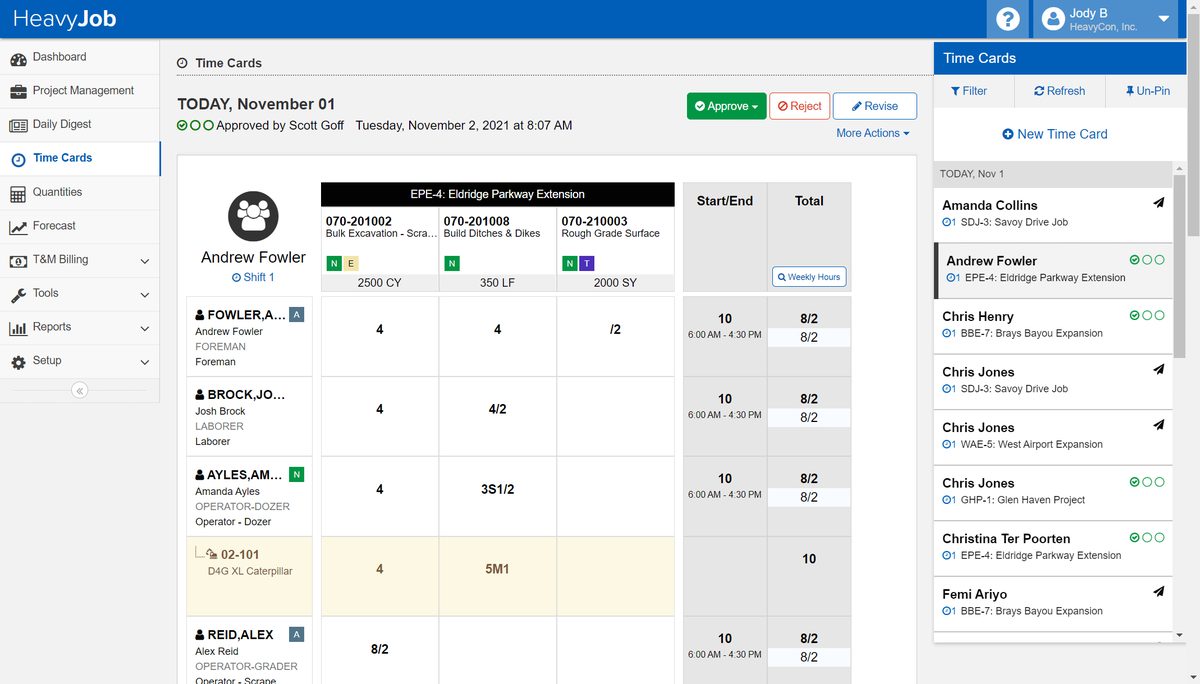
Nemetschek, the Munich-based company behind construction software brands like Bluebeam and Graphisoft, agreed on April 13 to buy Heavy Construction Systems Specialists (HCSS) for $2.4 billion — the largest acquisition in the company's six-decade history. HCSS dominates the niche market for heavy civil construction software in North America, serving more than 4,000 contractors who build roads, bridges, and pipelines. The deal lands HCSS in Nemetschek's Build & Construct segment alongside Bluebeam and GoCanvas, which Nemetschek bought for $770 million less than two years ago.

Why it matters

The companies building your roads and bridges are about to run on software controlled by a shrinking number of platform owners.

Key Indicators

$2.4B
Deal value
The largest acquisition in Nemetschek's 63-year history, roughly three times the price of its previous largest deal
20x+
EBITDA multiple
Nemetschek is paying more than 20 times HCSS's 2025 earnings before interest, taxes, depreciation, and amortization
4,000+
HCSS contractor customers
Heavy civil contractors across North America, from small firms to companies generating billions in annual revenue
$12B
Expanded addressable market by 2028
The estimated total addressable market for Nemetschek's Build & Construct segment after the acquisition closes
-5%
Stock price reaction
Nemetschek shares fell on the announcement as investors questioned the premium valuation and integration risk
28%
Thoma Bravo's retained stake
The private equity firm will keep a minority share in the Build & Construct segment rather than fully exiting

Interactive

Exploring all sides of a story is often best achieved with Play.

Ever wondered what historical figures would say about today's headlines?

Sign up to generate historical perspectives on this story.

Sign Up

Debate Arena

Two rounds, two personas, one winner. You set the crossfire.

People Involved

Organizations Involved

Timeline

  1. Nemetschek stock drops 5%, UBS downgrades to Sell

    Market Reaction

    Shares fell on investor concerns about the premium valuation and integration risk. UBS downgraded Nemetschek to Sell, citing near-term earnings drag and execution challenges.

  2. Nemetschek announces $2.4 billion HCSS acquisition

    Acquisition

    Nemetschek signed a definitive agreement to acquire HCSS from Thoma Bravo for more than EUR 2 billion ($2.4 billion), its largest-ever deal. Thoma Bravo will retain a 28% minority stake in the combined Build & Construct segment.

  3. Trimble acquires Document Crunch for AI contract analysis

    Acquisition

    Trimble announced its acquisition of Document Crunch, an AI-powered contract risk management tool, continuing its own platform expansion.

  4. Procore acquires Datagrid for AI-powered data integration

    Acquisition

    Construction management platform Procore acquired Datagrid, signaling the broader industry trend toward AI-native capabilities through acquisitions.

  5. Nemetschek acquires Firmus AI

    Acquisition

    Nemetschek acquired artificial intelligence startup Firmus AI through its Bluebeam subsidiary, adding preconstruction design review and risk analysis capabilities.

  6. Nemetschek posts record 2024 results

    Financial

    Nemetschek reported 2025 revenue of EUR 1.19 billion, up 22.6% year over year, with subscription revenue growing 55.6%.

  7. Nemetschek buys GoCanvas for $770 million

    Acquisition

    Nemetschek acquired field worker collaboration platform GoCanvas from K1 Investment Management, adding 300,000+ active users to its Build & Construct segment.

  8. Trimble acquires B2W Software, HCSS's main rival

    Acquisition

    Trimble paid roughly $320 million for B2W Software, the second-largest heavy civil construction software provider in North America and HCSS's primary competitor.

  9. Thoma Bravo acquires HCSS

    Acquisition

    Private equity firm Thoma Bravo bought HCSS from its founder-led ownership structure. Financial terms were not disclosed.

  10. Nemetschek buys Bluebeam, enters U.S. market

    Acquisition

    Nemetschek acquired Bluebeam, a PDF-based construction collaboration tool, for $100 million — establishing a major U.S. foothold that would become the foundation for its Build segment.

Scenarios

1

Nemetschek builds dominant construction platform, validates premium price

Discussed by: mwb Research (reiterated Buy rating), Nemetschek management, Thoma Bravo

HCSS integrates smoothly into the Build & Construct segment, cross-selling between Bluebeam's 2.5 million users and HCSS's 4,000 contractor customers drives accelerating growth, and AI-powered workflow connections between design and field execution create genuine switching costs. Nemetschek's Build segment grows toward the projected $12 billion addressable market, justifying the 20x-plus EBITDA multiple. Thoma Bravo's retained 28% stake appreciates significantly.

2

Integration stalls, premium erodes shareholder value

Discussed by: UBS (downgraded to Sell), skeptical institutional investors who sold Nemetschek shares on announcement

Nemetschek struggles to integrate a Texas-based, founder-culture company into its Munich-headquartered portfolio of 13 independent brands. The 28% minority stake held by Thoma Bravo creates governance friction. Key HCSS talent departs. Meanwhile, Trimble's B2W platform gains ground with heavy civil contractors, and the deal's debt load constrains Nemetschek's ability to make further acquisitions. The 20x EBITDA multiple looks increasingly generous as growth slows.

3

Construction software consolidation triggers antitrust scrutiny

Discussed by: Industry analysts at Verdantix, BuiltWorlds, and AEC Magazine tracking consolidation trends

As Nemetschek, Trimble, Autodesk, and Bentley Systems absorb an increasing share of construction software through acquisitions, regulators begin examining whether the industry is becoming too concentrated. With Nemetschek owning HCSS and Trimble owning B2W, the two companies effectively control the heavy civil construction software market in North America. Regulatory bodies — particularly in the European Union, where Nemetschek is headquartered — could slow or condition future deals, reshaping how the industry consolidates.

4

Infrastructure spending boom validates the bet, rivals scramble

Discussed by: Nemetschek management citing 'structural growth drivers,' Bricks & Bytes analysis calling the deal 'the biggest signal in ConTech'

Government infrastructure spending programs in the United States, Europe, and globally drive sustained demand growth for heavy civil construction software. HCSS's customer base expands as contractors digitize to manage larger project volumes, and the integrated Nemetschek platform becomes the standard workflow from design through field execution. Competitors without a heavy civil software offering — particularly Autodesk and Procore — are forced into their own expensive acquisitions to keep pace.

Historical Context

Autodesk acquires Revit Technology (2002)

April 2002

What Happened

Autodesk paid $133 million for Revit Technology, a small firm with a building information modeling (BIM) tool that let architects design in 3D with embedded data about materials, costs, and schedules. At the time, most architects still drew in 2D using AutoCAD. The acquisition was considered expensive for a product with limited market share.

Outcome

Short Term

Industry observers questioned whether BIM would catch on. Autodesk spent years developing and marketing the platform while competitors dismissed it.

Long Term

Revit became the global standard for architectural design, generating billions in recurring revenue and locking an entire profession into Autodesk's ecosystem. The $133 million price proved to be one of the most consequential bets in enterprise software history.

Why It's Relevant Today

Nemetschek is making a similar bet — paying a premium to own the dominant tool in a specific construction niche (heavy civil) before the market fully digitizes. Like Revit, HCSS has the potential to define its category. The question is whether heavy civil software has the same platform lock-in dynamics that architectural BIM did.

Trimble acquires B2W Software (2022)

September 2022

What Happened

Trimble paid roughly $320 million for B2W Software, HCSS's closest competitor in the heavy civil construction software market. The deal gave Trimble estimating, operations, and equipment management tools purpose-built for highway, bridge, and pipeline contractors.

Outcome

Short Term

Trimble integrated B2W into its civil construction division, creating a more complete offering for infrastructure contractors alongside its hardware (GPS, surveying) and Viewpoint project management software.

Long Term

The acquisition effectively split the heavy civil software market between two camps — B2W under Trimble and the still-independent HCSS — setting up the competitive dynamic that led directly to Nemetschek's purchase.

Why It's Relevant Today

This is the deal that forced Nemetschek's hand. Once Trimble owned HCSS's primary competitor, Nemetschek's choice narrowed: acquire HCSS or cede the heavy civil market entirely. The four-year gap between Trimble's $320 million deal and Nemetschek's $2.4 billion purchase shows how quickly valuations in construction software have escalated.

Hexagon acquires Intergraph (2010)

July-December 2010

What Happened

Swedish measurement technology company Hexagon paid $2.1 billion for Intergraph, an American engineering and geospatial software company. The deal was the largest in the architecture, engineering, and construction software sector at the time, and it transformed Hexagon from a hardware-focused metrology company into a software-heavy platform player.

Outcome

Short Term

Analysts questioned whether Hexagon could integrate a culturally different American software company. The deal took months to close as Hexagon structured the financing.

Long Term

The acquisition proved transformative. Hexagon's revenue and margins expanded dramatically, and the Intergraph software portfolio became the foundation for Hexagon's Smart Digital Reality division. The deal is now considered a landmark in AEC software consolidation.

Why It's Relevant Today

The parallels are striking: a European industrial technology company paying a premium to acquire a large American software business, with analysts questioning whether the cultural and operational integration could work. Hexagon's success with Intergraph is the bull case for Nemetschek-HCSS; its integration challenges are the cautionary tale.

Sources

(12)