

Pull to refresh
Logo
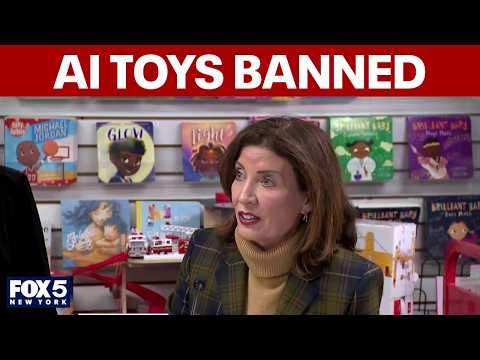
New York pauses sales of AI chatbot toys for five years

New York pauses sales of AI chatbot toys for five years

Rule Changes

The ban starts February 22, after the holiday season, with $15,000-a-day penalties and a state study attached

Overview

Updated 26 minutes ago

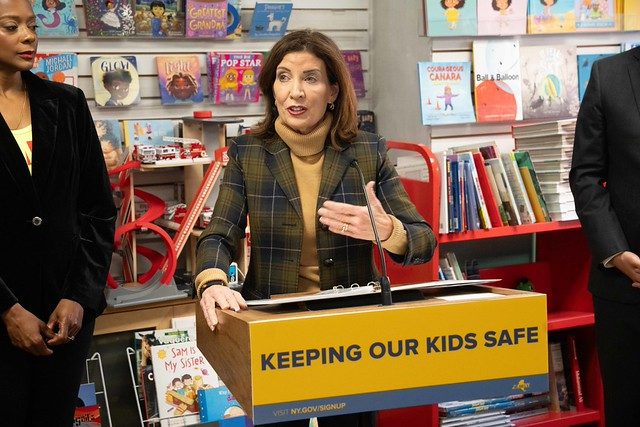
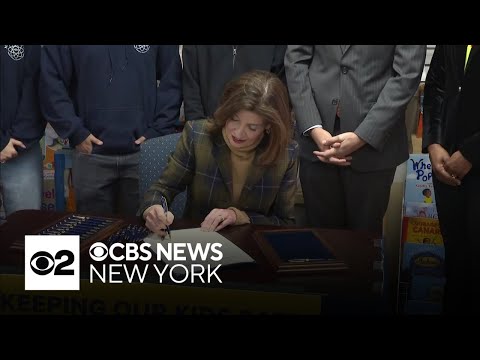
New York parents can still buy a talking teddy bear that remembers their child's name this holiday season. Starting February 22, stores in the state cannot sell it. Governor Kathy Hochul signed a five-year moratorium on November 24 covering toys with built-in AI chatbots: stuffed animals, dolls and robots that connect to the internet to hold conversations with children.

The law covers manufacturing, distribution and sale, and the attorney general can seek $15,000 per violation per day. It also orders a study from four state agencies on emotional attachment, data collection and how the toys respond when a child signals danger. California passed a four-year version first, and Pennsylvania is weighing one.

Why it matters

A state has now banned an entire product category over AI risk, with fines that reach $105,000 a week per violation.

Questions about this story

Free account needed to ask — your question is kept and asked for you right after sign-up. Answers are public.

No questions yet — be the first to ask.

Key Indicators

5 years
Length of the moratorium
The pause runs from the effective date and expires after five years unless lawmakers renew it.
$15,000
Maximum civil penalty per violation, per day
The attorney general enforces the fine against manufacturers, sellers or chatbot operators.
90 days
Gap between signing and enforcement
The ban takes effect February 22, 2027, so this holiday season is unaffected.
12
Oldest child age covered by the toy definition
New York borrowed the federal definition of a children's toy: a product meant for a child 12 or younger.
4 years
Length of California's parallel moratorium
California acted first; New York's version runs a year longer.

Voices

Curated perspectives — historical figures and your fellow readers.

Sign up to generate historical perspectives on this story.

People Involved

Organizations Involved

Timeline

June 2026 February 2027

4 events Latest: Yesterday
Tap a bar to jump to that date
  1. Assembly passes its companion bill

    Legislation

    A.11144B passes and is substituted for the Senate version, sending it to the governor.

  2. State Senate passes the moratorium

    Legislation

    S.9408A clears the Senate and moves to the Assembly.

Scenarios

1

Pennsylvania becomes the third state to pause AI toy sales

Possible Resolves by Q2 2028

Discussed by: WXXI News and The Guardian, both reporting that Pennsylvania is considering its own moratorium

Pennsylvania lawmakers have been weighing a moratorium modeled on California's and New York's. If it passes, three of the four most populous states would have closed the category to new sales, which would push toy makers toward designing chatbots out of children's products nationally rather than building state-by-state compliance.

2

Congress passes a study instead of a ban

Possible Resolves by End of 2027

Discussed by: The Toy Association, which says federal legislation was changed to a study approach after talks with the group

The toy industry's preferred outcome. Federal legislation would commission research on AI companion toys without prohibiting sales, giving manufacturers a single national standard and undercutting state moratoriums as the model for regulation. The association says this shift has already happened in a federal bill; passage would confirm it.

3

Attorney General files the first enforcement case

Uncertain Resolves by Q2 2028

Discussed by: FOX 5 New York, which noted it is unclear how or whether the state will inspect toy stores

The penalty is only real if someone tests it. A case would most likely start with a manufacturer or a large online seller rather than a brick-and-mortar retailer, because the statute covers distribution as well as sale. Enforcement would also settle the open question of what counts as an "AI companion" in a toy that only partially meets the statutory definition.

Historical Context

3 moments from history that rhyme with this story — and how they unfolded.

2026

California's AI toy moratorium (2026)

California placed a four-year moratorium on the sale and manufacture of toys with AI companions, becoming the first state to close the category. New York followed with a five-year version months later.

Then

Toy makers faced a growing patchwork of state rules covering the same products.

Now

Two large states now define the compliance floor for any children's product with a conversational AI feature.

Why this matters now

New York's law is a longer copy of California's, and the pair is the template Pennsylvania is now considering.

August 2008

Consumer Product Safety Improvement Act (2008)

Congress set federal lead and phthalate limits on children's products after a run of imported toy recalls, and wrote a legal definition of a "children's toy" as a product intended for a child 12 or younger.

Then

Manufacturers had to test and certify products before sale, and recalls became routine.

Now

The age-12 definition became the standard reference point for children's product law in the United States.

Why this matters now

New York did not write its own definition. It imported the 2008 federal one, which narrows the room to argue over what counts as a covered toy.

1998

Children's Online Privacy Protection Act (1998)

Federal law began requiring verifiable parental consent before companies collect personal data from children under 13, and set rules for how that data can be used and deleted.

Then

Websites aimed at children had to change how they registered users and stored information.

Now

It remains the baseline privacy obligation for any product that talks to a child, including toys that record voice or scan faces.

Why this matters now

The state study is explicitly directed to assess how chatbot toy data practices square with this law and New York's own child data statute, which is part of why the report has to come before the ban can be lifted.

Sources

(11)