
Pull to refresh
Logo
Brownsville lottery offers 18 apartments at 80 percent of area median income

Brownsville lottery offers 18 apartments at 80 percent of area median income

Built World New York, NY local

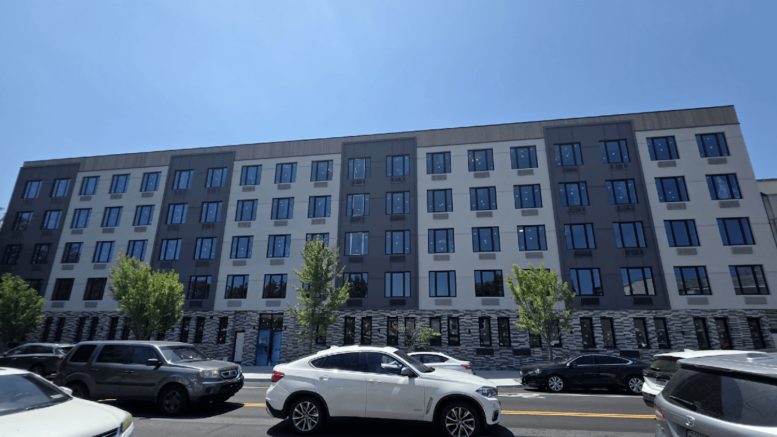
A six-story building at 492 Thomas S. Boyland Street holds 87 apartments; 18 enter the city's random-draw lottery with rents from $1,770 to $2,542.

Overview

Updated 2 hours ago

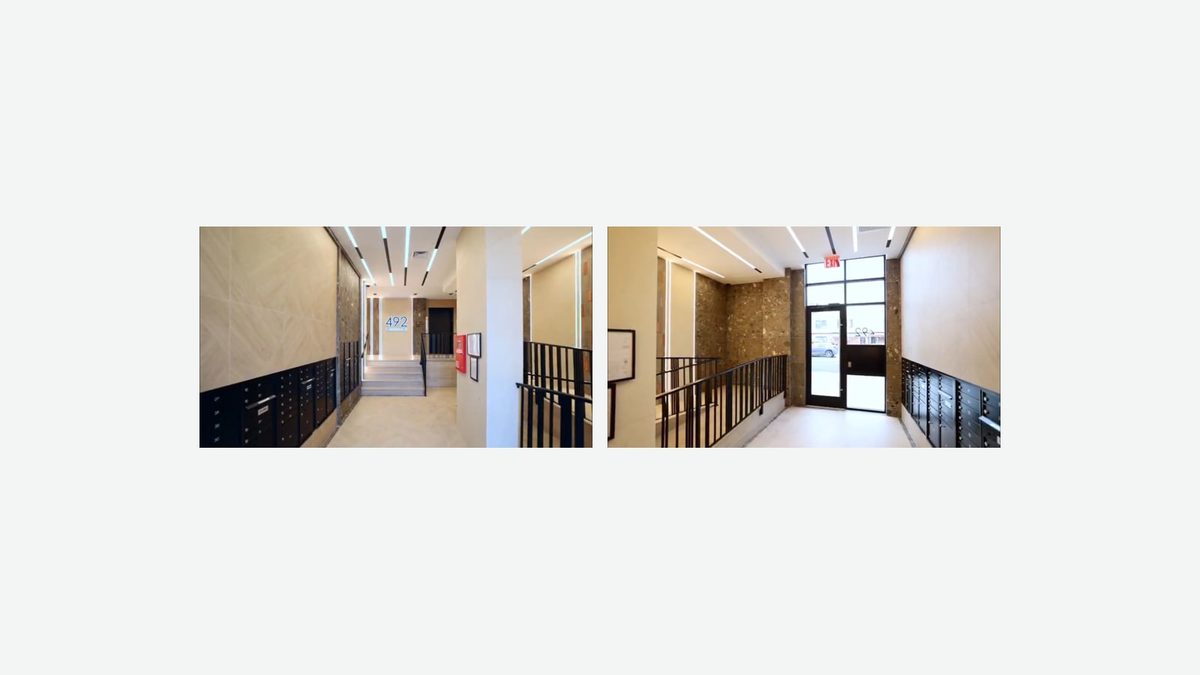
New York City is taking applications for 18 apartments at 492 Thomas S. Boyland Street in Brownsville, a six-story building with 87 units. Rents run $1,770 for a studio, $2,198 for a one-bedroom and $2,542 for a two-bedroom.

All 18 units are set at 80 percent of the area median income, with eligible incomes from $67,955 to $146,560 depending on household size. Applications close November 19, and every complete one draws a random log number, so applying early gains nothing.

Why it matters

One random draw decides 18 apartments; early applications gain nothing and income bands decide who may enter.

Last Monday's email for New York, NY

Sent Nov 2. It carried:

Get next Monday's: one short email a week. Free. Unsubscribe in one click.

Questions about this story

Free account needed to ask — your question is kept and asked for you right after sign-up. Answers are public.

No questions yet — be the first to ask.

Key Indicators

18
Apartments in the lottery
Units listed on NYC Housing Connect for this building.
87
Apartments in the building
Total dwelling units, per the Department of Buildings permit and certificate of occupancy.
21%
Share of units in the lottery
18 of 87 apartments, rounded; the remainder are not part of this listing.
80%
Area median income level
The single income tier the 18 units are set at.
$1,770
Lowest monthly rent
Studio rent; the two-bedrooms top out at $2,542.
$146,560
Highest eligible income
Upper limit for a two-bedroom household; the floor is $67,955 for a studio.

Voices

Curated perspectives — historical figures and your fellow readers.

Sign up to generate historical perspectives on this story.

Organizations Involved

Timeline

March 2022 November 2026

5 events Latest: Today
Tap a bar to jump to that date
  1. Application deadline

    Upcoming Deadline

    Online and postmarked applications must be submitted by this date.

  2. Lottery opens for 18 apartments

    Today Housing

    Eighteen units at 80 percent of area median income are listed on NYC Housing Connect.

  3. Certificate of occupancy issued

    Construction

    The Department of Buildings signs off on 87 dwelling units at the address.

  4. Permit filed for 87-unit building

    Construction

    Filing describes a proposed six-story residential building with 87 dwelling units.

  5. Lot changes hands

    Property

    A deed transfers Brooklyn block 3518, lot 46 to Thomboy Facilities LLC; it is recorded September 30, 2022.

Scenarios

1

All 18 lottery apartments lease from this draw

Likely Resolves by Q2 2027

Discussed by: The structure of the listing itself: a single 80 percent AMI tier with rents below comparable new construction in the neighborhood

The marketing agent works through log numbers in order, verifies incomes and household sizes, and fills the 18 units before the building's first lease-up year ends. No second listing is needed.

2

A second lottery opens at the building for unfilled units

Unlikely Resolves by Q2 2027

Discussed by: Comparable Brownsville listings, including 926 Mother Gaston Boulevard, where only five of 24 units went to lottery this October

If the draw produces too few eligible applicants within the income bands, or enough selected households fail document review, the agent or owner re-lists the remainder on Housing Connect. That would signal the 80 percent AMI band is a poor match for the applicant pool.

3

Brownsville's late-2026 lotteries all close on their posted deadlines

Possible Resolves by Nov 20, 2026

Discussed by: Published deadline dates for 492 Thomas S. Boyland Street (November 19), 926 Mother Gaston Boulevard (November 10) and 2102 Union Street

The cluster of Brownsville listings published in October and November closes on schedule with no extensions. Extensions are the visible signal that a listing is undersubscribed; a clean run means demand met the supply at these income levels.

Historical Context

2 moments from history that rhyme with this story — and how they unfolded.

August 1974

Section 8 rental assistance becomes law (1974)

The Housing and Community Development Act of 1974 created the Section 8 program, which paid a portion of rent directly to private landlords instead of building and owning public housing. It repositioned the federal government as a rent subsidizer rather than only a landlord.

Then

Vouchers and project-based subsidy contracts expanded through the late 1970s and 1980s.

Now

Section 8 became the country's main rental assistance vehicle, administered locally by housing authorities, and voucher holders are commonly exempt from lottery minimum-income rules.

Why this matters now

Listing analysis notes that voucher holders do not face the $67,955 minimum income at this building, a direct consequence of how the 1974 program was designed.

October 1986

Low-Income Housing Tax Credit created (1986)

The Tax Reform Act of 1986 created a federal tax credit for investors in rent-restricted housing, allocated to states by population. Developers compete for credits and agree to keep a share of units affordable for decades in exchange.

Then

The first credits were allocated in 1987 to a small number of developments.

Now

It became the largest federal program for producing affordable rental housing, and its share-of-building structure became the standard shape of new affordable units.

Why this matters now

It explains why income-restricted apartments usually arrive as a slice of a larger, conventionally financed building rather than a standalone project, the shape visible here at 18 of 87 units.

Sources

(3)