
Pull to refresh
Logo
Okta adds runtime gateway and kill switch for AI agent governance

Okta adds runtime gateway and kill switch for AI agent governance

New Capabilities

New tools register agents as identities, govern their connections, and revoke rogue access instantly

Today: Oktane 2026: new agent governance tools announced

Overview

Updated 1 hour ago

When an employee leaves your company, the AI assistant they connected to your customer database doesn't stop working. It keeps running with its tokens, invisible and unmanaged. Okta announced Tuesday that it's closing this gap with new tools to govern AI agents the way it governs human employees.

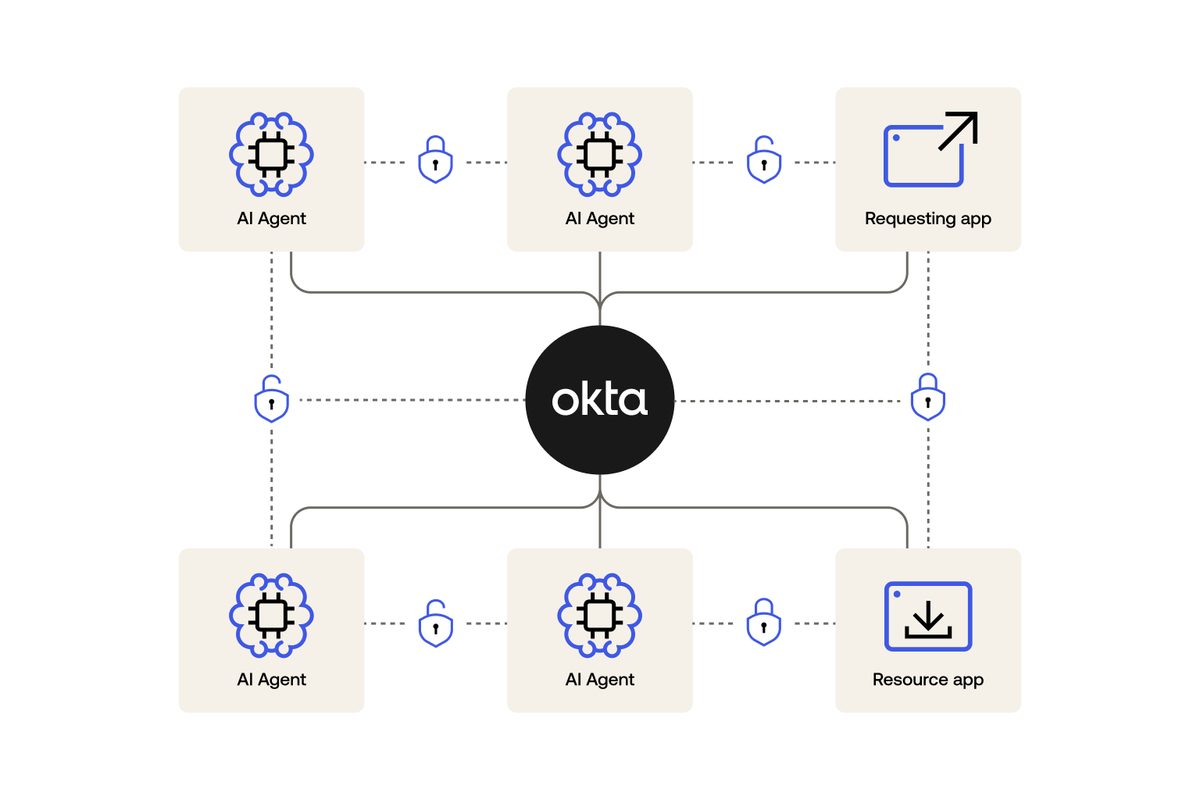
The tools register agents as first-class identities, control which apps and other agents they can touch, log every tool call at runtime, and let administrators revoke access in an instant. Three capabilities are generally available now. Four more land in the coming quarters.

Why it matters

AI agents multiply inside enterprises faster than teams can track them; without identity governance, each is an unmanaged door into corporate data.

Questions about this story

Free account needed to ask — your question is kept and asked for you right after sign-up. Answers are public.

No questions yet — be the first to ask.

Key Indicators

12
Blueprint Alliance founding members
Okta plus AWS, CrowdStrike, Databricks, Docker, Google Cloud, and others.
3
Capabilities generally available today
Agent SSO, agent-to-agent connections, and resource access certifications.
2
Capabilities planned for Q3
Agent Gateway and Shadow AI Agent Discovery for Endpoints.
2
Capabilities planned for Q4
Configuration Designer and the expanded Kill Switch at the gateway.

Voices

Curated perspectives — historical figures and your fellow readers.

Ever wondered what historical figures would say about today's headlines?

Sign up to generate historical perspectives on this story.

People Involved

Organizations Involved

Timeline

June 2025 September 2026

3 events Latest: Today
  1. Oktane 2026: new agent governance tools announced

    Today Product Launch

    Agent SSO, agent-to-agent connections, and resource certifications go GA; gateway and endpoint discovery planned.

  2. Secure agentic enterprise blueprint introduced

    Framework

    Okta publishes reference architecture for securing AI agents as first-class identities.

  3. Okta debuts Cross App Access

    Product Launch

    Feature that swaps non-expiring API keys for short-lived, identity-governed tokens.

Scenarios

1

Agent Gateway reaches GA and becomes the default runtime control point

Likely Resolves by Oct 31, 2026

Discussed by: Okta's own roadmap; industry analysts tracking the agentic AI security market

Okta ships Agent Gateway and Shadow AI Agent Discovery for Endpoints by the end of the current quarter, meeting its stated timeline. The gateway sits in the execution path between agent and tool call, enforcing policy and logging every interaction. Discovery surfaces unmanaged agents on employee endpoints. Early adopters in regulated industries deploy both, and the gateway becomes a reference point for runtime agent control.

2

Blueprint Alliance publishes an open agent identity standard

Possible Resolves by Q2 2027

Discussed by: Alliance founding members including AWS, Salesforce, and Google Cloud

The coalition releases its expanded reference architecture as a public, vendor-neutral specification. At least one company outside the founding group implements it in a commercial product. Non-competing standards such as OAuth 2.0 and OIDC served as the backbone for human identity; the Alliance aims to build something similar for machine and agent identity.

3

Microsoft Entra ships a competing agent governance stack

Possible Resolves by Jan 31, 2027

Discussed by: Industry analysts (Gartner, Forrester) and identity market observers

Microsoft, the main rival absent from the Blueprint Alliance, integrates agent identity governance into Entra ID. The offering competes directly with Okta's Agent Gateway and Kill Switch for enterprises that already run Microsoft identity infrastructure. The market fragments between Okta's independent platform and Microsoft's bundled stack, and analyst reports describe the two as head-to-head options for agent lifecycle governance.

Historical Context

3 moments from history that rhyme with this story — and how they unfolded.

2009-2015

Enterprise cloud identity shift (2009-2015)

When companies adopted Salesforce, Google Apps, and other SaaS tools, IT departments lost the ability to see who accessed what. Okta was founded in 2009 to build a single directory across these applications, where before each app had its own login and user list.

Then

SAML and later OpenID Connect became the standards for cloud identity, and Okta became the dominant independent identity provider.

Now

Identity moved from a per-application problem to a centralized control plane. That is the same model Okta now applies to AI agents.

Why this matters now

AI agents are today's SaaS apps: proliferating fast, tied to scattered credentials, and invisible until something goes wrong.

2011-2016

BYOD and mobile device management (2011-2016)

Employees connected personal phones and laptops to corporate networks without IT approval, creating a wave of shadow IT. Vendors such as AirWatch and MobileIron shipped discovery, enrollment, and policy enforcement tools that could inventory every device and enforce passcodes, encryption, and remote wipes.

Then

Companies could see every unmanaged endpoint on their network and force them into compliance.

Now

Discovering and governing unmanaged endpoints became standard practice in enterprise security.

Why this matters now

Shadow AI Agent Discovery for Endpoints applies the same discovery-and-enroll logic to AI agents running on employee machines.

2012-2017

API keys to OAuth short-lived tokens (2012 onward)

Developers shared non-expiring API keys in code and config files, leaving standing access that rarely got revoked. OAuth 2.0 replaced this with delegated, scoped tokens that expire, and services moved away from permanent credentials.

Then

A compromise no longer meant permanent access, because tokens carried limited scopes and short lifetimes.

Now

Short-lived, scoped credentials became the baseline for machine-to-machine security.

Why this matters now

Agent SSO does the same for AI agents, swapping standing keys for identity-governed tokens that expire.

Sources

(5)