

Pull to refresh
Logo
Daily Brief
Following
Why
Multi-node PI3K inhibition reaches clinical testing

Multi-node PI3K inhibition reaches clinical testing

New Capabilities
By Newzino Staff |

Forty Years After Pathway Discovery, New Combination Strategy Advances to Phase 2

4 days ago: Sensei Acquires Faeth, Raises $200 Million

Overview

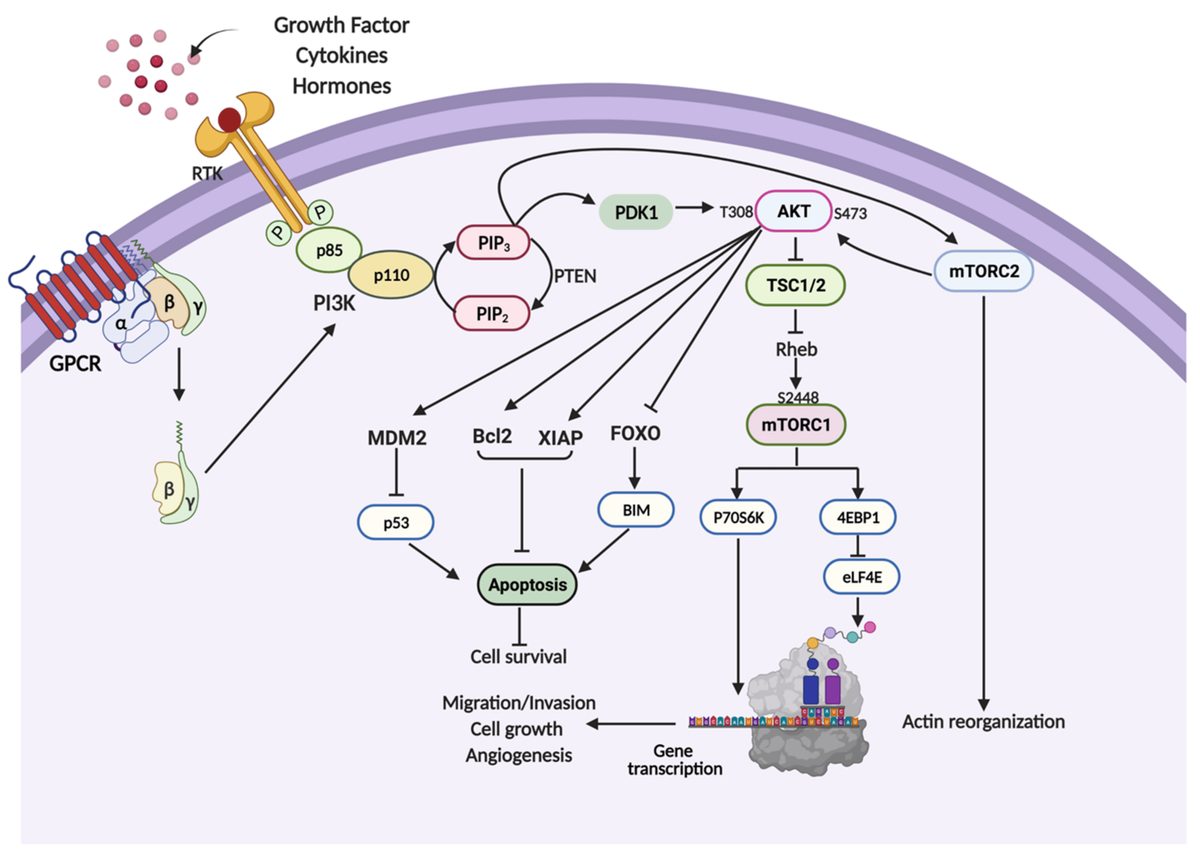
Lewis Cantley discovered the PI3K enzyme in 1985. Four decades later, a combination therapy targeting multiple nodes of the pathway he uncovered just demonstrated an 80% response rate in endometrial cancer patients—triple the historical rate with chemotherapy alone. Sensei Biotherapeutics acquired Faeth Therapeutics and raised $200 million to push this approach through pivotal trials.

The acquisition represents both a clinical milestone and a corporate rescue. Sensei had just discontinued its lead cancer drug and announced a strategic review in October 2025. Faeth's PIKTOR program—combining two drugs to block PI3K, mTORC1, and mTORC2 simultaneously—gives the combined company a clinical-stage asset with Phase 2 data expected by year-end 2026. If results hold, PIKTOR could address a pathway implicated in up to 80% of cancers that has largely resisted single-drug approaches.

Key Indicators

80%
Overall Response Rate
Phase 1b response rate in endometrial cancer, compared to 25-30% for chemotherapy alone
$200M
New Capital Raised
Private placement from RA Capital, Vivo Capital, and Cormorant Asset Management
11 mo
Median Progression-Free Survival
Phase 1b endometrial cancer patients; historical benchmark is 3-4 months
~80%
Cancers with PI3K Alterations
Proportion of cancers with genetic changes that could activate the PI3K pathway

Interactive

Exploring all sides of a story is often best achieved with Play.

Ever wondered what historical figures would say about today's headlines?

Sign up to generate historical perspectives on this story.

Sign Up

Debate Arena

Two rounds, two personas, one winner. You set the crossfire.

People Involved

Lewis C. Cantley
Lewis C. Cantley
Scientific Founder, Faeth Therapeutics; Discoverer of PI3K (Scientific advisor to combined company)
Anand Parikh
Anand Parikh
Co-Founder of Faeth Therapeutics; Chief Operating Officer and Director, Sensei Biotherapeutics (Leading combined company's PIKTOR program as COO)
John Celebi
John Celebi
President and CEO, Sensei Biotherapeutics (Leading combined company post-acquisition)

Organizations Involved

Sensei Biotherapeutics
Public Biotechnology Company
Status: Acquiring entity; now advancing PIKTOR program

Nasdaq-listed oncology company that pivoted from immunotherapy development to metabolic cancer therapy through the Faeth acquisition.

Faeth Therapeutics
Faeth Therapeutics
Private Biotechnology Company (Acquired)
Status: Acquired by Sensei Biotherapeutics

Clinical-stage company developing multi-node therapies targeting tumor metabolism and the PI3K pathway.

RA Capital Management
Healthcare Investment Firm
Status: Lead investor in $200M private placement

Boston-based investment firm specializing in evidence-based investing in healthcare and life sciences companies.

Timeline

  1. Sensei Acquires Faeth, Raises $200 Million

    Merger

    Sensei Biotherapeutics closes stock-for-stock acquisition of Faeth Therapeutics and concurrent $200 million private placement from RA Capital, Vivo Capital, and Cormorant Asset Management. The combined company will advance PIKTOR toward Phase 2 data in endometrial cancer and Phase 1b initiation in breast cancer by year-end 2026.

  2. Sensei Discontinues Lead Drug, Begins Strategic Review

    Corporate

    Sensei Biotherapeutics halts development of immunotherapy solnerstotug, cuts 65% of workforce, and announces strategic review considering sale, merger, or wind-down.

  3. Faeth Announces $92 Million Total Funding

    Financing

    Faeth closes a $25 million strategic round, bringing total capital raised to $92 million across three funding rounds.

  4. Phase 2 Trial Launches

    Clinical Trial

    Faeth and The GOG Foundation initiate a Phase 2 trial (GOG-3111) evaluating PIKTOR plus paclitaxel in patients with advanced or recurrent endometrial cancer.

  5. Phase 1b Results Show 80% Response Rate

    Clinical Data

    Faeth announces Phase 1b results for PIKTOR plus paclitaxel in endometrial cancer: 80% overall response rate and 11-month median progression-free survival, versus 3-4 months historically with chemotherapy alone.

  6. Faeth Therapeutics Founded

    Company Formation

    Lewis Cantley, Oliver Maddocks, and Anand Parikh launch Faeth to pursue multi-node PI3K pathway inhibition, hypothesizing that blocking multiple signaling nodes simultaneously could overcome the resistance and toxicity problems plaguing single-target drugs.

  7. Alpelisib Becomes First PI3K Inhibitor for Breast Cancer

    FDA Approval

    The FDA approves alpelisib (Piqray) for PIK3CA-mutated, hormone receptor-positive, HER2-negative advanced breast cancer. The drug demonstrates efficacy but carries significant toxicity including hyperglycemia in over 35% of patients.

  8. First PI3K Pathway Drug Approved for Cancer

    FDA Approval

    The FDA approves everolimus (Afinitor) in combination with exemestane for hormone receptor-positive, HER2-negative advanced breast cancer, marking the first approved drug targeting the PI3K/mTOR pathway.

  9. PI3K Enzyme Discovered

    Scientific Discovery

    Lewis Cantley and colleagues at Tufts University discover phosphoinositide-3-kinase (PI3K), a finding initially met with skepticism that would later prove central to cancer biology.

Scenarios

1

Phase 2 Confirms 80% Response Rate, FDA Breakthrough Designation Follows

Discussed by: Endpoints News, biotech analysts tracking endometrial cancer drug development

The ongoing Phase 2 trial replicates the Phase 1b response rate in a larger patient population. With endometrial cancer representing an underserved market and results dramatically exceeding chemotherapy benchmarks, the FDA grants Breakthrough Therapy Designation, accelerating regulatory review. Sensei's stock price increases substantially, and the company raises additional capital to fund a Phase 3 registration trial.

2

Phase 2 Shows Diminished Efficacy; Development Continues in Smaller Population

Discussed by: Oncology researchers publishing on PI3K pathway resistance mechanisms

Phase 2 results show a response rate closer to 50%—still better than chemotherapy alone but below the Phase 1b signal that drove the acquisition. Analysis reveals the combination works best in a molecularly-defined subset of patients. Sensei pivots to a biomarker-selected strategy, narrowing the patient population but maintaining a viable path to approval in a precision oncology indication.

3

Toxicity Concerns Emerge in Larger Trial, Program Restructured

Discussed by: Clinical oncologists and FDA reviewers who have monitored PI3K inhibitor safety issues historically

Multi-node pathway inhibition produces cumulative toxicity—hyperglycemia, rash, and diarrhea—that proves more difficult to manage than single-agent approaches. Patient discontinuation rates increase, and the Phase 1b breast cancer trial is delayed while Sensei develops optimized dosing schedules or adds the insulin-suppressing diet intervention more systematically.

4

Major Pharmaceutical Acquisition Before Phase 3

Discussed by: BioPharma M&A analysts, noting increased interest in differentiated oncology assets

Positive Phase 2 data attracts acquisition interest from large pharmaceutical companies seeking to expand oncology portfolios. With the PI3K pathway implicated in 80% of cancers and PIKTOR demonstrating a differentiated multi-node mechanism, a major pharma acquires Sensei to secure global development and commercialization rights, providing shareholders with a substantial premium.

Historical Context

Alpelisib FDA Approval (2019)

May 2019

What Happened

The FDA approved alpelisib (Piqray), the first PI3K inhibitor for breast cancer, based on the SOLAR-1 trial showing improved progression-free survival in PIK3CA-mutated patients. However, over 35% of patients experienced grade 3-4 hyperglycemia, and many required dose reductions or discontinuation.

Outcome

Short Term

Alpelisib became standard of care for PIK3CA-mutated breast cancer but with significant safety management requirements.

Long Term

The approval validated PI3K as a therapeutic target while highlighting that single-node inhibition triggers compensatory pathway activation and substantial toxicity. This set the stage for multi-node approaches like PIKTOR.

Why It's Relevant Today

PIKTOR's multi-node strategy specifically addresses alpelisib's limitations—targeting PI3K-alpha, mTORC1, and mTORC2 simultaneously to prevent pathway escape while using dietary intervention to manage metabolic side effects.

First-Generation PI3K Inhibitor Failures (2010s)

2010-2018

What Happened

Multiple PI3K inhibitors including pictilisib, buparlisib, and taselisib failed in Phase 3 trials for solid tumors. Pictilisib's Phase 2 FERGIE trial showed no significant progression-free survival improvement, attributed to toxicity-limited dosing. Buparlisib's development was halted due to psychiatric and hepatic toxicity.

Outcome

Short Term

Several major pharmaceutical companies abandoned PI3K programs, writing off billions in development costs.

Long Term

The failures established that pan-PI3K inhibition was too toxic and that single isoform-selective inhibitors faced resistance from compensatory pathway activation. This shaped the scientific rationale for Faeth's multi-node approach.

Why It's Relevant Today

The history of PI3K inhibitor failures explains both why the pathway remains undertreated despite its central role in cancer and why Faeth's 80% response rate represents a potentially significant advance over prior approaches.

Vertex/Aurora Kinase Combination Strategy (2000s-2010s)

2005-2015

What Happened

After single-target kinase inhibitors showed limited durability in cancer, researchers explored rational combinations blocking multiple signaling nodes. Early combination studies in chronic myeloid leukemia and melanoma demonstrated that hitting pathways at multiple points could prevent resistance emergence.

Outcome

Short Term

Combination targeted therapy became standard in several cancers, including BRAF/MEK inhibition in melanoma.

Long Term

The approach validated the concept that cancer signaling pathways require multi-node blockade to achieve durable responses, providing scientific precedent for PIKTOR's strategy.

Why It's Relevant Today

PIKTOR follows the multi-node inhibition playbook that proved successful in other pathways, applying it to PI3K/mTOR—a pathway that has resisted single-target approaches for two decades.

11 Sources: