


Pull to refresh
Logo
Ontario's physician regulator pauses safer supply prescribing rules

Ontario's physician regulator pauses safer supply prescribing rules

Rule Changes

A legal challenge filed days before the compliance date halted enforcement of rules on supervised doses, mandatory addiction treatment and monthly in-person visits

Overview

Updated 1 hour ago

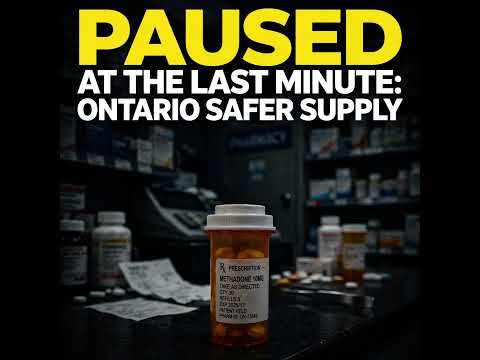
The College of Physicians and Surgeons of Ontario spent a month preparing doctors for new limits on safer supply opioid prescriptions, with a compliance date of November 16, 2026. Two days before it arrived, the college was served with a legal challenge and a motion for an immediate injunction. It paused enforcement rather than defend the rules on that timetable.

The amendments govern the mechanics of daily life for people prescribed drugs like hydromorphone as an alternative to street opioids. Doses would have to be swallowed under supervision at a pharmacy, patients would also have to be on methadone or Suboxone, and a doctor would have to see them in person at least monthly. The college says the point is to stop prescribed opioids reaching the black market. Addictions physicians say witnessed dosing every few hours is unworkable for anyone with a job or a long drive.

Why it matters

For patients on prescribed opioids, the difference between a take-home dose and a witnessed one can decide whether they keep a job.

Questions about this story

Free account needed to ask — your question is kept and asked for you right after sign-up. Answers are public.

No questions yet — be the first to ask.

Key Indicators

3
Requirements paused
Safer supply only with opioid agonist therapy, no take-home doses, and monthly in-person assessment.
700+
Signatories on the open letter
Physicians, health workers and community members who asked the college to pause before the rules took effect.
8 weeks
Taper window dropped before the vote
An earlier draft capped safer supply at eight weeks during the switch to opioid agonist therapy; the board removed the limit.

Voices

Curated perspectives — historical figures and your fellow readers.

Sign up to generate historical perspectives on this story.

People Involved

Organizations Involved

Timeline

October 2026 November 2026

6 events Latest: Today
Tap a bar to jump to that date
  1. Compliance date passes with the rules unenforced

    Today Policy

    The transition deadline arrives, but the college is not enforcing the three amendments.

  2. Clinicians' open letter passes 700 signatures

    Statement

    Ontario Substance Use Healthcare Providers asks the college to pause and consult before enforcing.

  3. College board approves safer supply limits

    Policy

    CPSO's board votes for three amendments at a special meeting, with compliance expected by November 16.

  4. Board drops the eight-week taper limit

    Policy

    After feedback, the board removes the cap on how long safer supply can run alongside opioid agonist therapy.

  5. Research network publishes evidence brief

    Research

    The Ontario Drug Policy Research Network compares the amendments with published evidence on safer supply.

Scenarios

1

Court grants the injunction and the college withdraws the amendments

Unlikely Resolves by Apr 30, 2027

Discussed by: The applicants behind the legal challenge; clinician groups that signed the open letter

A judge in Ontario Superior Court finds the college exceeded its authority or failed to consult adequately, and orders enforcement stopped for longer than the college's voluntary pause. The college would then have to redraft the expectations through a formal consultation, which would likely narrow or remove the ban on take-home doses.

2

College revises the rules and drops the supervised-dose requirement

Likely Resolves by Q2 2027

Discussed by: Addiction medicine physicians and the Ontario Drug Policy Research Network, whose feedback targeted the no-carries provision

CPSO keeps the requirement that safer supply be prescribed alongside opioid agonist therapy and the monthly in-person assessment, but rewrites the prescription rules to allow some take-home doses. This is the path regulators usually take when a rule meets a courtroom and a clinician revolt at the same time, and it would let the college claim the diversion safeguards survived.

3

College defends the amendments and enforcement resumes as written

Possible Resolves by Q2 2027

Discussed by: The college's public statements and its board chair, who cited police reports of diversion

CPSO files its response, the injunction motion fails, and the three requirements take effect on a new date. Physicians would then taper or discharge patients who cannot meet a supervised-dosing schedule, and the practical effect would land hardest in rural Ontario where pharmacies are far apart.

Historical Context

2 moments from history that rhyme with this story — and how they unfolded.

March 2016

CDC opioid prescribing guideline (2016)

The US Centers for Disease Control and Prevention issued a guideline urging caution on long-term opioids for chronic pain, with dose thresholds doctors were told to justify. States, insurers and pharmacy chains turned the thresholds into hard limits that the guideline had not written.

Then

Prescribing fell sharply. Patients on high doses were tapered quickly or cut off, and pain patients reported withdrawal and untreated pain.

Now

The agency revised the guideline in 2022, removing numerical dose limits and stating that tapering should be individualized and never forced.

Why this matters now

The same pattern is in play here: a regulator writes a rule aimed at misuse, and the patients already on the medication absorb the disruption first.

September 2011

Insite and the Supreme Court of Canada (2011)

Vancouver's supervised injection site opened in 2003 under a federal exemption. The federal government refused to renew it, and the operators went to court. The Supreme Court of Canada ruled 9-0 that the refusal violated the Charter and ordered the health minister to grant an exemption.

Then

The site stayed open and the federal government lost control of the approval.

Now

The decision established that health evidence can override a federal government's drug policy in Canadian courts.

Why this matters now

Ontario's challenge is the same maneuver: take a harm reduction dispute out of the regulator's hands and into a courtroom.

Sources

(9)