

Pull to refresh
Logo
Open Cluster Management moves to CNCF incubation

Open Cluster Management moves to CNCF incubation

New Capabilities

A hub-and-spoke tool for running many Kubernetes clusters clears the foundation's technical review, with eBay's 190-cluster fleet as its largest public proof point.

Overview

Updated 1 hour ago

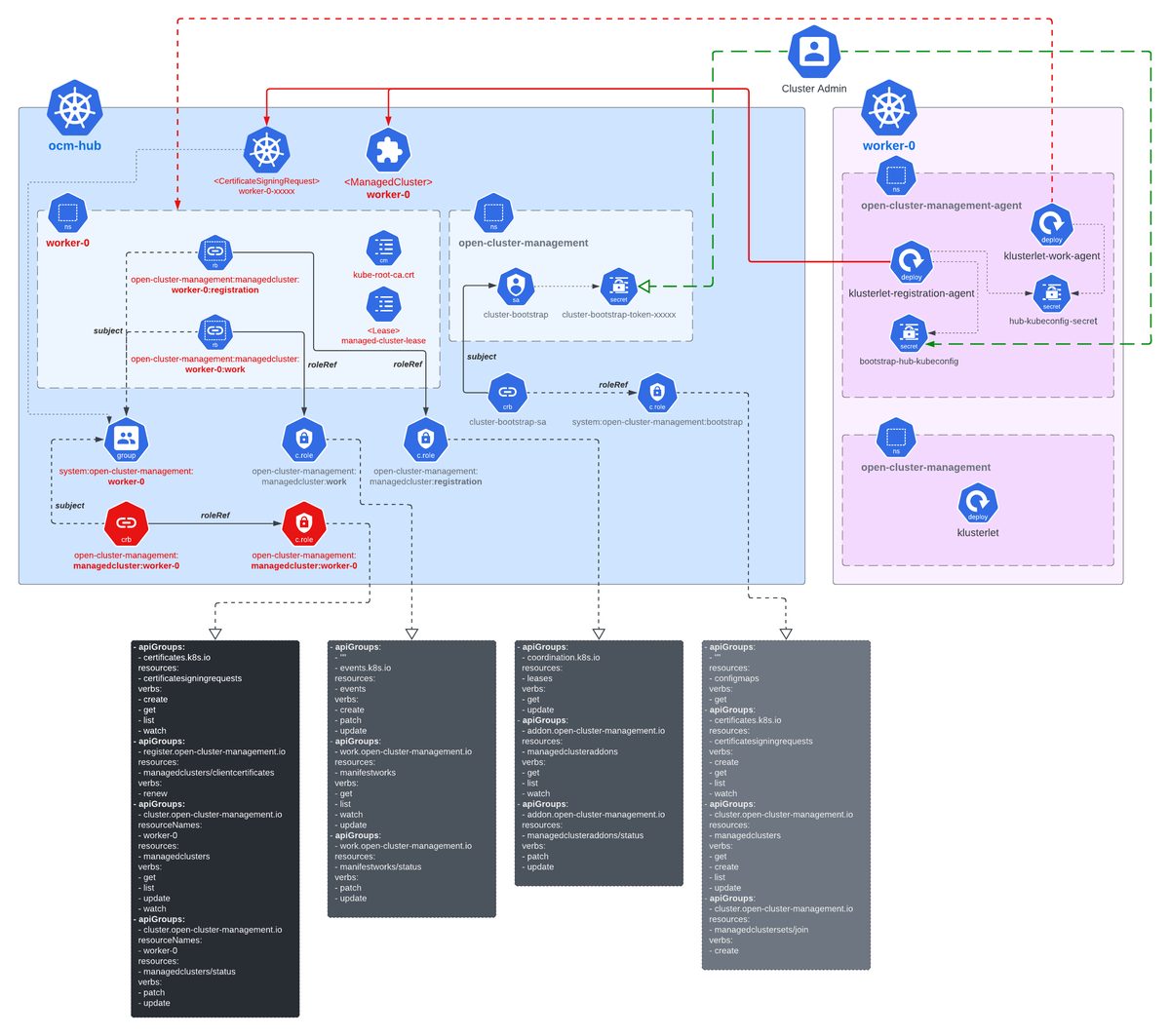
Open Cluster Management became a CNCF incubating project on November 4, 2026, after the foundation's technical oversight committee voted 9-0, with one abstention. The project lets a central hub register Kubernetes clusters, decide which workloads run where, and deliver configuration to agents that pull it on their own schedule.

Incubation does not change the software. It changes who is willing to standardize on it. The hub never stores the credentials of the clusters it manages, so a compromised control plane does not hand an attacker the keys to every cluster. eBay runs OCM across more than 190 Kubernetes clusters, feeding Argo CD with placement decisions.

Why it matters

Open multicluster tooling lets companies move workloads between clouds without re-platforming. OCM's promotion is a bet that this layer stays vendor-neutral.

Questions about this story

Free account needed to ask — your question is kept and asked for you right after sign-up. Answers are public.

No questions yet — be the first to ask.

Key Indicators

190+
Kubernetes clusters at eBay
The largest publicly named OCM deployment, managed with Argo CD.
9
TOC votes in favor
No votes against, one abstention and one member not voting.
537
Contributors
Across 84 organizations in 16 countries, per CNCF's announcement.
84
Contributing organizations
Organizations with at least one contributor to the project.
1,100
GitHub stars
Small next to Kubernetes, which is part of the case for incubation rather than graduation.

Voices

Curated perspectives — historical figures and your fellow readers.

Sign up to generate historical perspectives on this story.

People Involved

Organizations Involved

Timeline

November 2021 November 2026

6 events Latest: 2 days ago
Tap a bar to jump to that date
  1. TLDR DevOps newsletter publishes its summary

    Latest Publication

    The newsletter item is what surfaced the promotion in developer feeds.

  2. CNCF announces the promotion

    Announcement

    The post cites eBay's 190-cluster fleet and 537 contributors across 84 organizations.

  3. TOC vote passes 9-0

    Decision

    One abstention, one member not voting, no votes against.

  4. Version 1.4 ships

    Release

    Adds ManifestWork observability, SIG Multicluster placement sync and network policy hardening.

  5. Version 1.0 ships

    Release

    The first stable release adds CEL cluster selection and an Argo CD pull add-on.

  6. OCM enters the CNCF Sandbox

    Milestone

    IBM and Red Hat donate the project to the foundation's early-stage tier.

Scenarios

1

OCM ships a simpler install in its next minor release

Likely Resolves by Q2 2027

Discussed by: OCM maintainers, in the CNCF incubation announcement

Maintainers named streamlining setup and onboarding as their next focus. Bootstrap is the usual blocker for multicluster tooling: a hub has to be installed, clusters joined, and credentials exchanged before anyone sees value. A release that cuts those steps would widen the pool of teams willing to try it.

2

OCM files a graduation application with the CNCF

Possible Resolves by End of 2028

Discussed by: Not yet stated by maintainers; implied by the sandbox-to-incubation-to-graduation ladder

Incubation is the middle rung. Graduation requires production adoption, an independent contributor base and documented governance. Filing would show the project intends to stay in the foundation rather than fold into a vendor product. The application would appear as an issue in the CNCF's technical oversight repository.

3

A Kubernetes vendor bundles OCM as its default multicluster layer

Unlikely Resolves by End of 2027

Discussed by: No vendor has announced this; it follows from the add-on framework and existing integrations

OCM's add-on framework exists so other projects can inherit multicluster capability without building their own. A distribution that ships OCM by default would move it from a tool teams choose to a component they get. That is the difference between adoption and default status.

Historical Context

2 moments from history that rhyme with this story — and how they unfolded.

2015-2018

Kubernetes joins the CNCF (2015-2018)

Google donated Kubernetes to the newly formed Cloud Native Computing Foundation in 2015, handing control of the container orchestrator to a vendor-neutral body while competing orchestration tools were backed by rivals. The foundation gave cloud providers a shared place to collaborate on a tool none of them controlled alone.

Then

Kubernetes became the default way to run containers, and CNCF grew its project portfolio around it.

Now

Graduation became the signal that a project had production adoption and independent governance, and the sandbox-to-incubation-to-graduation ladder became the foundation's standard path.

Why this matters now

OCM is climbing the same ladder with the same argument: neutral governance is what gets rival vendors to adopt one tool.

2020-2022

Argo CD and pull-based delivery (2020-2022)

Argo, a set of Kubernetes delivery tools that included Argo CD, joined the CNCF and later graduated. Argo CD's model put an agent inside each cluster that pulls its configuration from a repository, so a central delivery server never needed every cluster's credentials.

Then

Pull-based GitOps spread because it fit how security teams wanted credentials handled.

Now

The pattern became a standard, and other projects built integrations around Argo CD rather than replacing it.

Why this matters now

OCM uses the same pull model and now feeds Argo CD cluster placement decisions. The two projects show how a delivery pattern becomes infrastructure once a neutral foundation hosts it.

Sources

(6)