

Pull to refresh
Logo
OpenAI launches ChatGPT Wallet for AI agent payments

OpenAI launches ChatGPT Wallet for AI agent payments

New Capabilities

A tokenized card wallet lets OpenAI's Dots agents buy things, with biometric approval for each purchase.

Overview

Updated 41 minutes ago

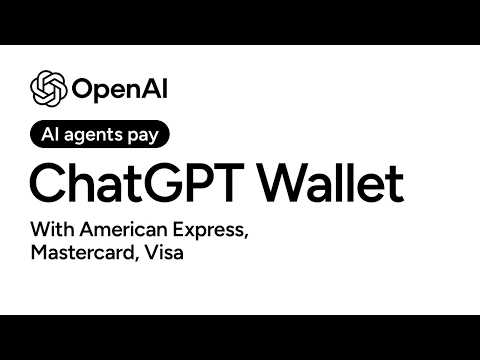
OpenAI opened ChatGPT Wallet to Pro subscribers in the United States this week. Their Dots agents can now complete purchases with a card the agent never sees.

Every purchase needs a biometric approval, such as Face ID or a fingerprint. The card network then issues a single-use payment token, so the merchant and the agent handle a substitute number rather than the real card. OpenAI built the system with American Express, Mastercard and Visa, and says it is not taking a cut of transactions for now.

Why it matters

If agent checkout becomes routine, the payment decision shifts from a human at a keyboard to a pre-approved, tokenized authorization.

Questions about this story

Free account needed to ask — your question is kept and asked for you right after sign-up. Answers are public.

No questions yet — be the first to ask.

Key Indicators

1.2B
Weekly ChatGPT users
OpenAI's stated weekly user base at the wallet's launch.
3
Card networks in launch partnership
American Express, Mastercard and Visa.
0%
OpenAI's initial cut of Wallet transactions
OpenAI said it is not taking a share for now.
30%
Projected premium for agentic orders
Signifyd expects agent-placed holiday orders to average 30% higher value than non-agent orders.

Voices

Curated perspectives — historical figures and your fellow readers.

Sign up to generate historical perspectives on this story.

People Involved

Organizations Involved

Timeline

September 2025 November 2026

6 events Latest: Today
Tap a bar to jump to that date
  1. OpenAI launches ChatGPT Wallet

    Today Product

    US Pro users can let Dots agents pay with tokenized cards.

  2. United Airlines says it will block AI agents

    Access

    Airline joins retailers restricting automated shopping on its site.

  3. OpenAI unveils Dots agents

    Product

    Agents introduced as assistants that can act for users.

  4. OpenAI replaces Instant Checkout with product discovery

    Product

    Company shifts from checkout toward comparison and discovery experience.

  5. Amazon blocks Meta's Muse agents

    Access

    Amazon restricts third-party AI agents from shopping on its site.

  6. OpenAI introduces Instant Checkout

    Product

    OpenAI adds in-chat checkout for select merchants.

Scenarios

1

Wallet adds delegated spending limits for Pro users

Likely Resolves by Q2 2027

Discussed by: OpenAI's launch post and Help Center

OpenAI said it expects users to hand agents preset budgets, categories and time windows, with pre-approval replacing a per-purchase check. The trigger is a settings feature and an expanded rollout.

2

A top retailer blocks ChatGPT Wallet checkout

Possible Resolves by Q1 2027

Discussed by: The Verge and Signifyd

United Airlines said it would block AI agents, and Amazon has restricted rivals' agents. A top-20 retailer following suit would limit where Wallet works and could slow adoption.

3

OpenAI starts charging a fee on Wallet transactions

Possible Resolves by End of 2027

Discussed by: Anadolu Agency

OpenAI said it is not taking a cut now, but the wallet could become a revenue stream as agentic shopping grows. A fee would change the economics for merchants and networks.

4

Wallet launches outside the United States

Possible Resolves by Q3 2027

Discussed by: OpenAI Help Center

The launch is limited to US Pro users with US-issued cards and US billing addresses. International expansion would require bank and network partners in each market.

Historical Context

3 moments from history that rhyme with this story — and how they unfolded.

October 2014

Apple Pay (2014)

Apple launched Apple Pay with Visa, Mastercard and American Express. It stored a device-specific token instead of the card number and required Touch ID for each payment.

Then

Merchant adoption started slow because many stores lacked compatible terminals.

Now

Tokenized mobile payments became standard, and Apple Pay grew into the largest contactless wallet in the US.

Why this matters now

ChatGPT Wallet uses the same tokenization and biometric approval model, but adds an AI agent as the buyer.

2006-2011

Google Checkout (2006-2011)

Google launched Checkout in 2006 as a rival to PayPal, offering free processing to merchants. Adoption stayed limited despite Google's reach.

Then

Google folded Checkout into Google Wallet in 2011 and discontinued the brand.

Now

The episode showed that a large platform's reach does not guarantee merchant acceptance for a new checkout.

Why this matters now

OpenAI faces the same acceptance problem: websites and risk systems must choose to recognize agent purchases.

June 2019-2022

Facebook Libra and Diem (2019-2022)

Facebook announced Libra in June 2019 with a consortium of payment and tech partners. Regulators in the US and Europe objected, and several founding partners left.

Then

The project was renamed Diem and scaled back.

Now

Diem wound down in 2022 and sold its assets, ending Facebook's currency ambitions.

Why this matters now

It shows how payment-network plans can stall on partner and regulatory resistance. ChatGPT Wallet avoids a new currency by using existing card rails.

Sources

(11)