Anchor

OpenAI ships its first hardware, a keypad for coders
New CapabilitiesThe Codex Micro is a $230 macro pad, and a first step toward OpenAI selling physical devices
July 15th, 2026: Codex Micro launchesNew here? Follow stories to track developments over time. Create a free account to get updates when stories you care about change.
Overview
Updated Jul 15OpenAI has never sold a physical product. On July 15, it started, with a $230 desk gadget for programmers.
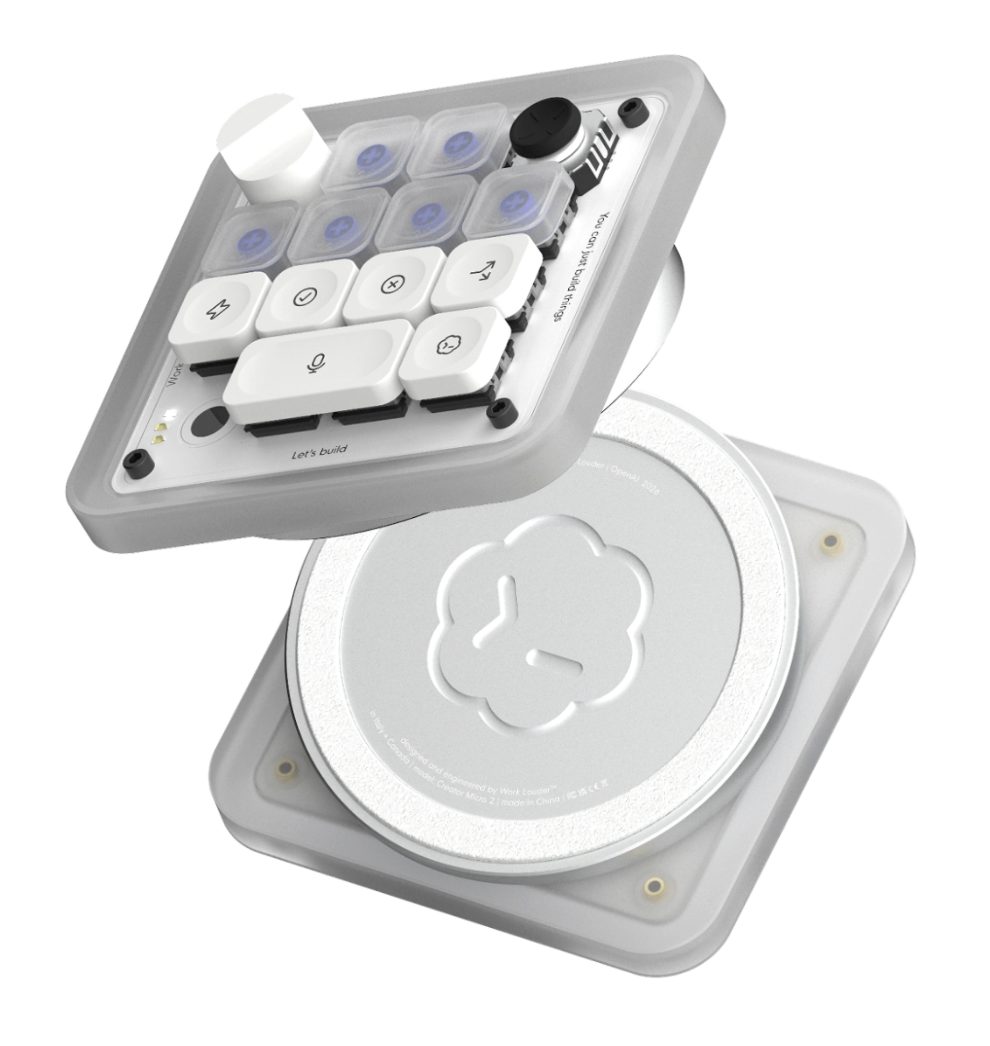
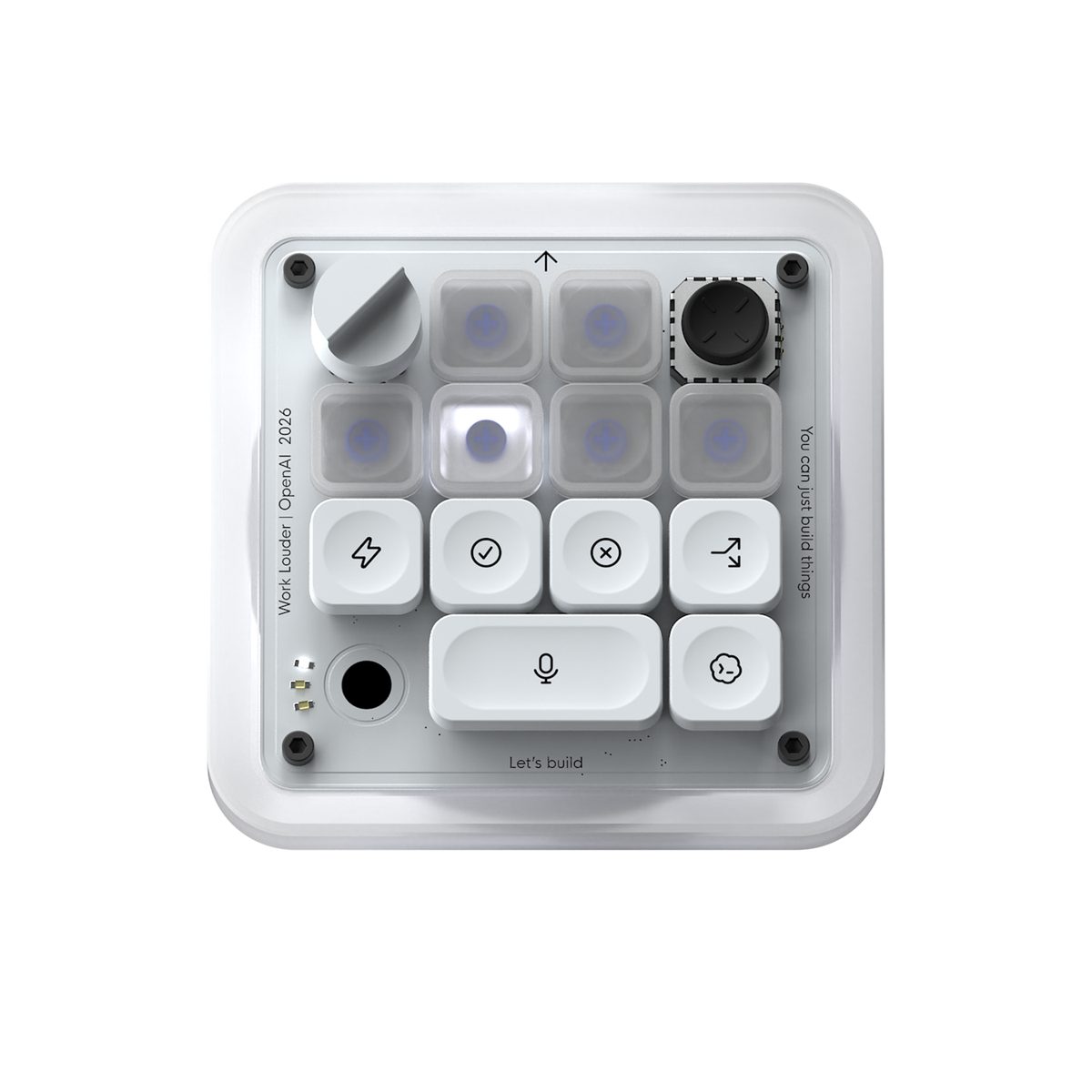
The Codex Micro is a small keypad wired to Codex, OpenAI's coding agent that reads a codebase, writes and tests code, and proposes changes. It ships to a base of roughly 5 million weekly Codex users. It is also a warm-up for a bigger bet: a screenless consumer device OpenAI is building with former Apple designer Jony Ive.
Why it matters
OpenAI is now testing whether the world's most-used AI lab can also become a hardware company, starting with the people who use it most.
Questions about this story
Free account needed to ask — your question is kept and asked for you right after sign-up. Answers are public.
No questions yet — be the first to ask.
Key Indicators
$230
Reported price
The price for the Codex Micro reported by The New Stack; OpenAI has not confirmed a figure publicly.
13
Mechanical keys
Six of them are backlit 'agent keys' that change color with the state of a running agent.
5M
Weekly Codex users
The developer base OpenAI is targeting, up more than six times since the desktop app launched in February 2026.
$6.5B
io acquisition
What OpenAI paid in stock in 2025 for Jony Ive's hardware startup, the base for its coming consumer device.
Related Media
OpenAI Ships Its First Hardware: The $230 Codex Micro Macro Pad — Glitchwire
Supply Co. x Work Louder | OpenAI
Supply Co. x Work Louder | OpenAI

48.6K views
1:09:57
Why OpenAI is merging Codex and ChatGPT and the future of ...
Lenny's Podcast

383 views
2:56
OpenAI Just Removed All Codex's Limits (To Beat Claude)
Synctify

5.1K views
2:38:07
Apple vs OpenAI, Mustard Controversy, Mark Gurman, Alexis ...
TBPN
Images from Openverse under Creative Commons licenses. Videos from YouTube.
Voices
Curated perspectives — historical figures and your fellow readers.
Play
Exploring all sides of a story is often best achieved with Play.
Most of these play right now — no account needed. Sign up to save scores, keep a streak, and unlock Debate and Predict.
Log in
Sign Up
Higher or Lower
A number from this story, against one from elsewhere in the news — guess which is bigger, then keep the chain going. 5 rounds, 3 strikes; a miss costs a strike and resets your streak.
Example
Anchor
EU tariff revenue
$52B
Big for this kind of number
Mystery
Pentagon AI contract
?
Round 1
Streak: 0
Mystery
?
Keyboard: ↓/L lower · ↑/H higher
0 pts
Best streak: 0 · Rounds: 0
0 points — sign up to put that on the leaderboard.
Now try on this story
Connections
Sixteen names from the news. Find the four hidden groups of four. Four mistakes max.
Loading today's puzzle…
0/4 groups
Mistakes
Sign up to keep a daily streak — a new puzzle lands every day.
Now try on this story
Exit debate?
Your progress in this debate will be lost.
How it works
- 1 Two AI personas square off on this story.
- 2 You predict who'll win each round — correct picks earn XP.
- 3 One crossfire question is yours to fire. Pick it carefully.
Couldn't generate a topic
Select Your Champions
Choose one persona for each side of the debate
DEBATE TOPIC
Choose personas with different perspectives for a more dynamic debate.
SIDE A (PRO)
Select debater for this side:
No debate personas available right now.
SIDE B (CON)
Select debater for this side:
No debate personas available right now.
VS
Get ready to make your prediction...
Round of
Claim
Evidence
Stakes
Crossfire Answer
Closing Statement
Claim
Evidence
Stakes
Crossfire Answer
Closing Statement
Your Crossfire Question
Generating arguments...
Who's Got This Round?
Make your prediction before the referee scores
The referee scores both sides on
Correct predictions earn +20 XP
· Press 1 or 2 to pick
Evidence
40%
Logic
30%
Detail
20%
Style
10%
Round Results
Your Pick
Not this time
(%)
Overall Score
/10
Your Pick
Not this time
(%)
Overall Score
/10
Set the Crossfire
Pick the question both personas must answer in the final round
Crafting crossfire questions...
Choosing a question earns +10 XP crossfire bonus
🏆
Total XP Earned
Cred Change
Predictions
Debate Oracle! You called every round!
Sharp Instincts! You know your debaters!
The Coin Flip Strategist! Perfectly balanced!
The Contrarian! Bold predictions!
Inverse Genius! Try betting the opposite next time!
XP Breakdown
Base completion
+20 XP
Rounds played ( rounds x 5 XP)
+ XP
Correct predictions ( correct x 20 XP)
+ XP
Crossfire bonus
+10 XP
Accuracy
%
Prediction History
Round
You picked:
✓
✗
Now try on this story
Keep debating to level up your credibility and unlock achievements
People Involved
Organizations Involved
Timeline
April 2025 July 2026
6 events
Latest: July 15th, 2026 · 2 months ago
Tap a bar to jump to that date
-
Codex Micro launches
Latest ProductOpenAI ships the Codex Micro, its first branded hardware. The keypad has 13 keys, a joystick, and a dial, with six backlit agent keys that change color as Codex works.
-
OpenAI teases the Codex Micro
AnnouncementOpenAI and Work Louder reveal the Codex Micro, a programmable macro pad, and set a July 15 launch.
-
Codex crosses 5 million weekly users
MilestoneOpenAI says Codex passed 5 million weekly active users, more than six times its February figure.
-
Codex desktop app launches
ProductOpenAI releases a desktop app for Codex. Weekly usage begins a steep climb over the following months.
-
OpenAI buys Jony Ive's io
AcquisitionOpenAI acquires io, the hardware startup co-founded by former Apple designer Jony Ive, in a stock deal valued near $6.5 billion.
-
OpenAI releases Codex CLI
ProductOpenAI ships an open-source coding agent that runs in the terminal, an early version of Codex.
Historical Context
3 moments from history that rhyme with this story — and how they unfolded.
April 2013
Google Glass (2013)
Google, a software giant, launched a face-worn computer with a tiny display and camera. It drew huge hype and a $1,500 price. Public discomfort with the always-on camera and thin everyday use sank it.
Then
Glass became a punchline and was pulled from consumer sale in 2015.
Now
Google retreated to enterprise uses, a warning about software companies overreaching into wearables.
Why this matters now
It is the cautionary version of OpenAI's story: a dominant software firm can still stumble badly when it tries to put hardware on, or near, people's bodies.
November 2014
Amazon Echo and Alexa (2014)
Amazon, a software and retail company, launched a screenless voice speaker built around its Alexa assistant. Skeptics doubted people would talk to a cylinder on the counter. Tens of millions bought one.
Then
The Echo created a new home-device category and a lead in voice assistants.
Now
Amazon sold hundreds of millions of Alexa devices, though the business struggled to turn voice into profit.
Why this matters now
OpenAI's screenless Ive device chases the same bet Amazon made: that a voice-first gadget can open a hardware category a software company can own.
May 2017
Elgato Stream Deck (2017)
Elgato released a small pad of programmable LCD keys aimed at video streamers. Each key could trigger a scene switch, a sound, or an app command. It turned fiddly keyboard shortcuts into single physical buttons.
Then
Streamers adopted it quickly as a control surface for live broadcasts.
Now
The Stream Deck became a standard desk accessory and spawned larger and smaller versions for creators and office workers.
Why this matters now
The Codex Micro copies this playbook exactly: take the repetitive commands of a software workflow and give them dedicated physical keys.
Sources
(7)Related Stories
OpenAI extends Codex agent to control Windows desktops
New Capabilities
Updated Jun 8
OpenAI rolls GPT-6 Astra out to ChatGPT Plus subscribers
New Capabilities
Updated Yesterday
OpenAI achieves automated research intern milestone
New Capabilities
Updated 2 days ago
Frontier AI labs move into application security, shaking up a $14 billion industry
New Capabilities
Updated May 30
OpenAI launches self-serve ChatGPT advertising platform
Money Moves
Updated May 21
AgentConnect launches open-source multi-agent collaboration platform
New Capabilities
Updated Aug 27