Pull to refresh
Logo
Daily Brief
Following
Why Ranks Sign Up
OpenAI extends Codex agent to control Windows desktops

OpenAI extends Codex agent to control Windows desktops

New Capabilities

Computer-use agents move off the browser and onto the operating system

Yesterday: Codex gains Computer Use on Windows

Overview

OpenAI's Codex agent can now see and click inside Windows applications, not just web pages. The shift moves a general-purpose AI agent off the browser and onto the desktop, where most office work still happens.

Anthropic introduced this kind of screen-level control with Claude in October 2024. OpenAI's Windows expansion widens the surface where autonomous AI can act on a user's behalf, and where a wrong click can do real damage.

Why it matters

If Codex can drive a Windows PC, it can operate your spreadsheets, accounting software, and inbox without you watching.

Questions about this story

0

How does this compare to what Claude has been able to do on Macs?

Claude has been doing Mac computer use since Cowork launched Mac-first in early 2026 — and already reached full Windows parity in February 2026, meaning Codex is replicating capabilities Claude users on both platforms already have.

Why it matters: OpenAI is catching up, not leaping ahead: by the time Codex gains Windows desktop control, Claude had already closed the Mac-to-Windows gap three months earlier.

  • Claude's Cowork feature launched Mac-first, letting Claude see the screen, move the cursor, click buttons, and type into any app — the same core actions Codex now does on Windows.
  • On February 10, 2026, Anthropic shipped Cowork for Windows with what it called complete feature parity; Windows x64 is supported, though ARM devices (Surface Pro X, some Copilot+ PCs) are not.
  • In March 2026, Mac users got an extra layer: remote session handoff, letting you assign tasks from your iPhone and resume on your desktop — a capability not yet part of Codex's Windows release.
  • Claude runs a fallback hierarchy before touching the screen — API connectors first, then browser, then direct system control — and requires explicit per-app permission; Codex's Windows integration is more direct, which is faster but carries more surface area for a wrong click.
Room for disagreement
  • Anthropic frames its permission hierarchy and per-app approval as a safety feature; critics argue it makes Claude slower and more cumbersome for power users who want continuous autonomous operation — the kind of seamless control Codex's direct Windows integration is designed to deliver.
AI-generated with web search — may be wrong. Check the linked sources.

Key Indicators

72%
Windows desktop share
Share of desktop and laptop computers running Windows, per StatCounter.
19 months
Since first computer-use agent
Anthropic launched Claude Computer Use in October 2024; OpenAI's Windows expansion arrives in May 2026.
Web → OS
Surface area shift
OpenAI's prior agent, Operator, was limited to a remote browser. Codex now reaches native desktop apps.
Mobile + Mac
Remote continuation
Users can start a Codex task on one device and resume it on another, raising the share of work an agent can carry alone.

Voices

Curated perspectives — historical figures and your fellow readers.

Ever wondered what historical figures would say about today's headlines?

Sign up to generate historical perspectives on this story.

Play

Exploring all sides of a story is often best achieved with Play.

Log in to play. Track your picks, climb the leaderboards. Log in Sign Up
Predict 4 ways this could play out. Contrarian picks score more — points lock when the scenario resolves. Log in to play
Higher or Lower Two numbers from this story. Guess which is bigger. 5 rounds to set a streak. Log in to play
Connections Sixteen names from the news. Find the four hidden groups of four. Log in to play

People Involved

Organizations Involved

Timeline

October 2024 May 2026

3 events Latest: Yesterday
  1. Codex gains Computer Use on Windows

    Latest Capability launch

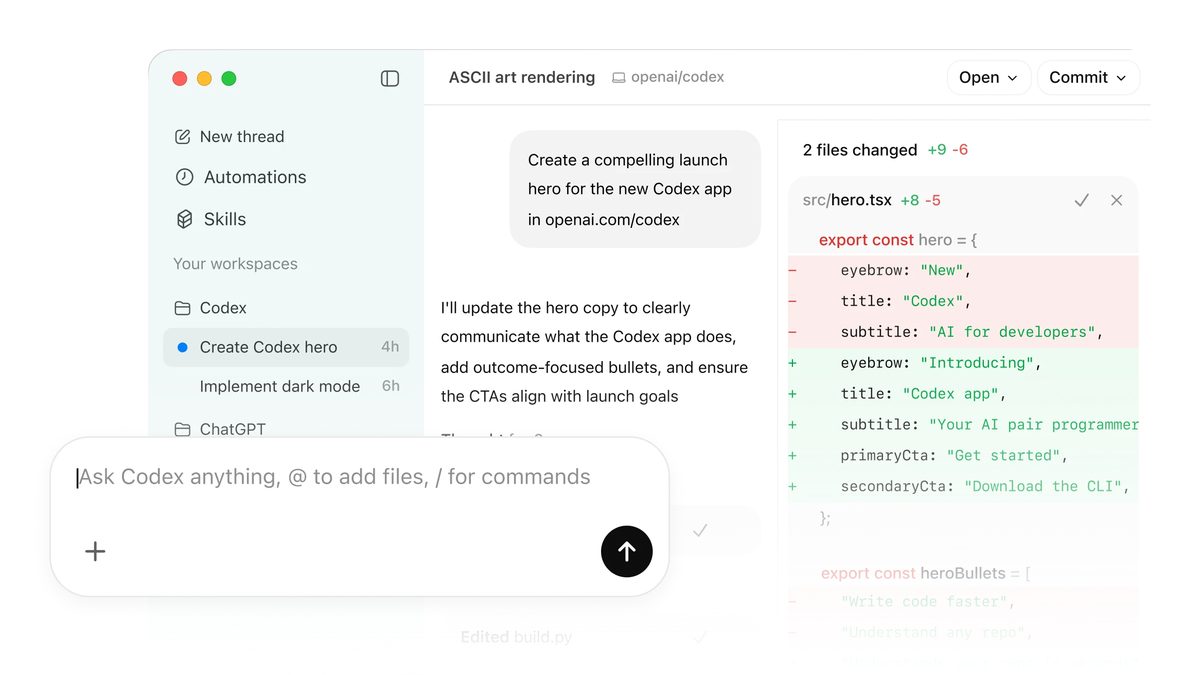
    OpenAI extends ChatGPT Codex to see, click, and type inside Windows applications. Update also adds remote continuation from mobile and Mac, and new Codex Profiles with token tracking.

  2. OpenAI launches Operator

    Capability launch

    OpenAI's first agent product, Operator, ships inside a sandboxed remote browser. It can fill forms and complete web tasks but cannot reach the desktop.

  3. Anthropic ships Claude computer use

    Capability launch

    Anthropic releases a public beta letting Claude take screenshots, move a cursor, and type into any application. The first general-purpose computer-use model.

Historical Context

3 moments from history that rhyme with this story — and how they unfolded.

1995-1998

Browser wars (1995-1998)

Netscape Navigator dominated the early web. Microsoft bundled Internet Explorer free with Windows 95, used its OS distribution advantage, and overtook Netscape's share within three years. The Justice Department later sued Microsoft for tying.

Then

Netscape lost most of its share by 1998 and sold to AOL in 1999. Internet Explorer reached over 90% browser share by 2002.

Now

The case established that controlling an operating system gave a vendor decisive leverage over any new layer that ran on top of it. That precedent is now relevant again as agents become a new layer.

Why this matters now

Codex Computer Use is a third-party agent running inside a Microsoft OS. If Microsoft ships its own equivalent inside Windows, the same distribution dynamic that ended Netscape applies again.

May-June 2024

Microsoft Recall backlash (May 2024)

Microsoft announced Recall, a Windows feature that took continuous screenshots of the user's desktop so an AI could search them later. Security researchers showed the local database could be read by malware. Public reaction was sharply negative.

Then

Microsoft delayed the launch, made Recall opt-in, encrypted the database, and moved the screenshots behind Windows Hello authentication.

Now

Set a template for how the public reacts to AI features that watch a user's screen. Vendors now ship such features behind explicit consent and on-device storage.

Why this matters now

Codex on Windows raises a sharper version of the same question. An agent does not just record the screen; it acts on it. Public tolerance for that is still being tested.

October 2024

Anthropic launches Claude computer use (October 2024)

Anthropic released a public beta of Claude that could take screenshots of a user's screen, move a cursor, and type into applications through an API loop. It was the first generally available computer-use model from a frontier lab.

Then

Developers built early agents for QA testing, browser automation, and workflow scripting. Adoption stayed mostly inside engineering teams.

Now

Set the technical template every major lab is now copying, including the screenshot-plus-action loop OpenAI's Codex now uses on Windows.

Why this matters now

OpenAI's Windows launch is the second act of the story Anthropic started 19 months earlier. The race is now about distribution, not capability.

Sources

(4)