



POWERGRID wins HVDC project to move 6 GW of Rajasthan solar power
Built WorldState-run grid operator beats private rivals in competitive auction for ±800 kV line estimated to cost ₹25,000-26,000 crore
Yesterday: POWERGRID shares gain ~1.5% after announcementNew here? Follow stories to track developments over time. Create a free account to get updates when stories you care about change.
Overview
Updated 1 hour agoIndia's state-owned grid operator won the contract on September 2, 2026 to build the transmission line that will carry 6 gigawatts of solar power from Rajasthan's Barmer desert to Maharashtra's industrial west. POWERGRID will be paid ₹3,244 crore in annual transmission charges under a build-own-operate-transfer (BOOT) model: it finances, constructs, and runs the line before handing it to regulators.
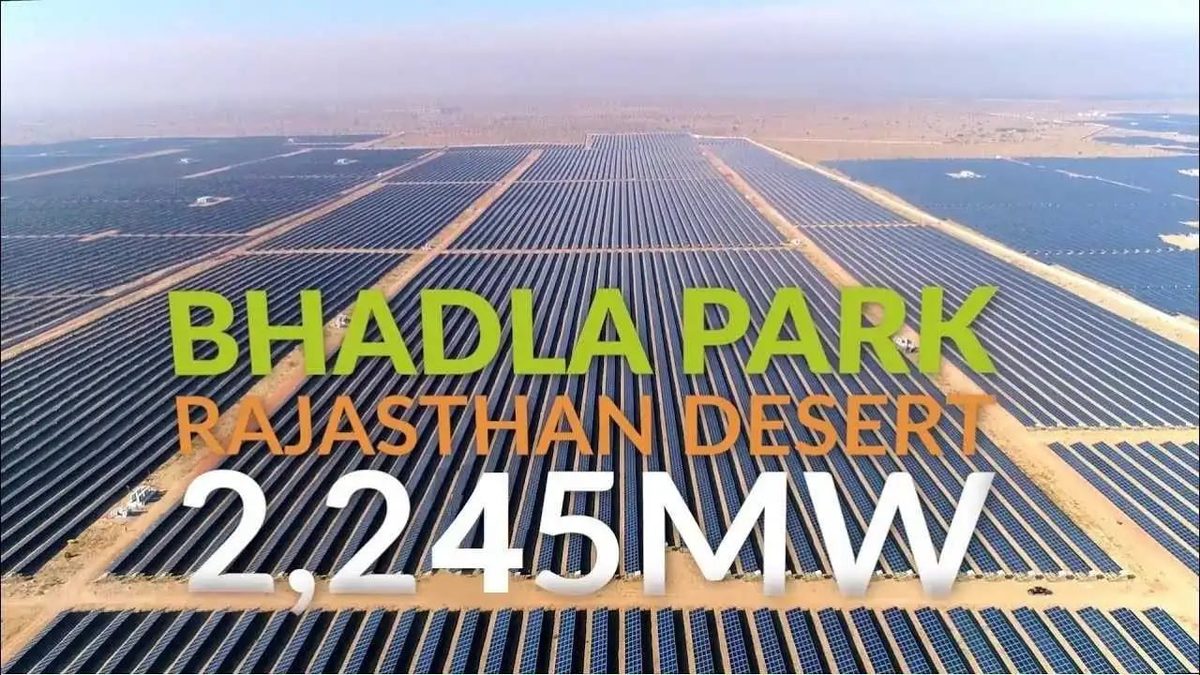
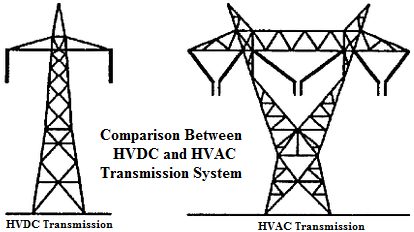
The project tackles India's biggest renewable energy constraint: the sunniest states sit far from the cities that consume power, so Rajasthan's solar output gets stranded without long-distance grid corridors. This ±800 kV high-voltage direct current (HVDC) line, roughly 1,000 km long, is among the largest built specifically to evacuate renewable power. It also tests whether the state utility can hold its ground against private rivals in India's competitive transmission auctions.
Why it matters
Rajasthan's desert solar is stranded without long-distance grid capacity; this line decides whether India's renewable target can actually reach the cities.
Questions about this story
Free account needed to ask — your question is kept and asked for you right after sign-up. Answers are public.
No questions yet — be the first to ask.
Key Indicators
Voices
Curated perspectives — historical figures and your fellow readers.
Play
Exploring all sides of a story is often best achieved with Play.
Higher or Lower
A number from this story, against one from elsewhere in the news — guess which is bigger, then keep the chain going. 5 rounds, 3 strikes; a miss costs a strike and resets your streak.
Keyboard: ↓/L lower · ↑/H higher
0 points — sign up to put that on the leaderboard.
Connections
Sixteen names from the news. Find the four hidden groups of four. Four mistakes max.
Sign up to keep a daily streak — a new puzzle lands every day.
Exit debate?
Your progress in this debate will be lost.
- 1 Two AI personas square off on this story.
- 2 You predict who'll win each round — correct picks earn XP.
- 3 One crossfire question is yours to fire. Pick it carefully.
Couldn't generate a topic
Select Your Champions
Choose one persona for each side of the debate
DEBATE TOPIC
Choose personas with different perspectives for a more dynamic debate.
Select debater for this side:
No debate personas available right now.
Select debater for this side:
No debate personas available right now.
Who's Got This Round?
Make your prediction before the referee scores
The referee scores both sides on
Round Results
Set the Crossfire
Pick the question both personas must answer in the final round
Debate Oracle! You called every round!
Sharp Instincts! You know your debaters!
The Coin Flip Strategist! Perfectly balanced!
The Contrarian! Bold predictions!
Inverse Genius! Try betting the opposite next time!
XP Breakdown
Prediction History
Organizations Involved
India's central transmission utility, owning and operating the bulk of the national high-voltage grid.
A subsidiary of state-owned REC Limited that manages transmission bidding auctions for the Ministry of Power.
The union ministry responsible for transmission policy and the Renewable Energy Zone framework.
One of a handful of firms that make the specialized converter stations and transformers an ±800 kV HVDC line requires.
Timeline
April 2026 September 2026
-
POWERGRID shares gain ~1.5% after announcement
Latest MarketStock rises to about ₹270 on NSE; analysts flag positive read-through for GE Vernova T&D, Hitachi Energy, Siemens.
-
POWERGRID declared winner of Barmer HVDC project
AwardState utility wins at ₹3,244.33 crore annual charges after cutting its bid about 14% in the e-reverse auction.
-
POWERGRID wins separate 20 GW Rajasthan transmission project
AwardState utility receives Letter of Intent for a larger renewable-evacuation system, also run by RECPDCL.
-
RECPDCL issues RFP for Barmer HVDC transmission project
BiddingThe Bid Process Coordinator floats tenders for evacuating 6 GW of solar power from Rajasthan REZ Phase IV, Barmer Complex.
Historical Context
3 moments from history that rhyme with this story — and how they unfolded.
India's shift to competitive bidding in transmission (2006-2011)
India moved interstate transmission from a cost-plus model, where developers passed costs to consumers, to Tariff-Based Competitive Bidding (TBCB). Private firms entered the market and undercut the state utility POWERGRID on price.
Transmission tariffs fell as competition took hold.
POWERGRID now bids against private operators for each new line, and its competitive behavior, like the ~14% quote cut in this auction, has become essential to winning work.
The Barmer win is a test of POWERGRID's ability to defend its dominant position under that competitive framework.
China's ultra-high-voltage grid buildout (2009-2020)
China's State Grid built the world's largest ultra-high-voltage network, connecting remote wind and solar zones in the northwest to coastal industrial cities. Lines stretched 2,000-3,000 km across deserts and mountains.
China avoided severe renewable curtailment by building transmission in parallel with generation.
The playbook, build long-distance grid first, became the reference for any country scaling renewables far from demand.
India faces the same geographic mismatch, and the Barmer HVDC corridor is part of the same strategy applied to Rajasthan's solar belt.
India's first ±800 kV HVDC lines (2015-2019)
India commissioned its first ultra-high-voltage direct current lines, including the multi-terminal line from Biswanath Chariali in Assam to Agra in Uttar Pradesh, over 1,700 km long. The Raigarh-Pugalur corridor followed in 2015-2018. Engineers and contractors had to learn how to build and operate the technology at scale.
The lines proved HVDC could span Indian distances reliably and created domestic expertise in converter stations.
POWERGRID now applies that experience to a new generation of lines built specifically for renewable evacuation.
The Barmer project uses the same ±800 kV HVDC technology at 6,000 MW capacity, but its purpose is new: moving desert solar to load centers instead of thermal power from eastern coal fields.
