

Pull to refresh
Logo
Daily Brief
Following
Why
Rayonier-PotlatchDeltic merger creates timber giant

Rayonier-PotlatchDeltic merger creates timber giant

Money Moves
By Newzino Staff |

Two century-old forestry companies combine to form North America's second-largest timber REIT

January 30th, 2026: Merger Completed

Overview

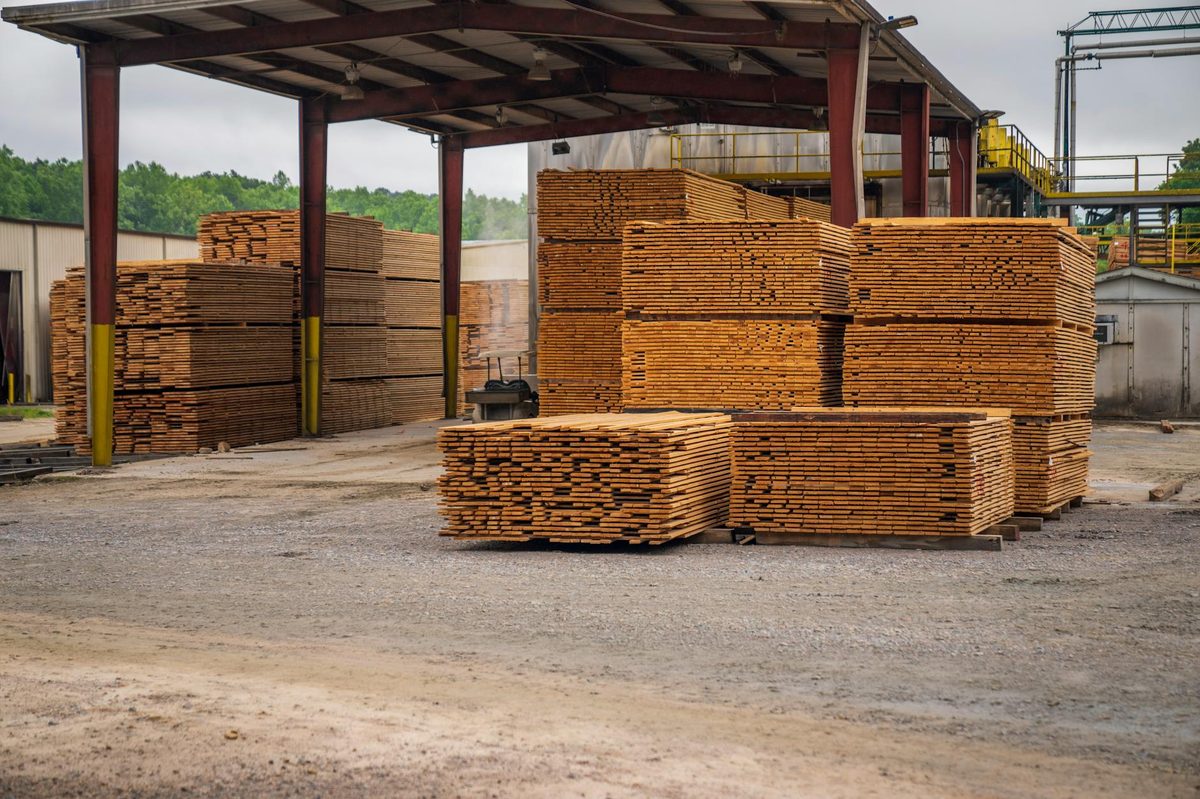
Two forestry companies with roots stretching back a century combined on January 30, 2026, creating North America's second-largest publicly traded timber company. Rayonier and PotlatchDeltic completed their $8.2 billion merger after market close, bringing 4.2 million acres of American timberland under single ownership—an area larger than Connecticut.

The deal reshapes an industry that has seen steady consolidation since pension funds and institutional investors began acquiring timberland in the 1980s. The combined company now trails only Weyerhaeuser, which controls 10.4 million acres, in publicly traded timber holdings. For investors, it marks another step toward an industry dominated by a handful of massive Real Estate Investment Trusts (REITs).

Key Indicators

4.2M
Acres Controlled
Combined timberland holdings across 11 U.S. states
$8.2B
Enterprise Value
Total value including $1.1 billion of net debt
$40M
Annual Synergies
Projected cost savings by end of 2027
99.9%
Shareholder Approval
PotlatchDeltic shareholders voting in favor

Interactive

Exploring all sides of a story is often best achieved with Play.

Ever wondered what historical figures would say about today's headlines?

Sign up to generate historical perspectives on this story.

Sign Up

Debate Arena

Two rounds, two personas, one winner. You set the crossfire.

People Involved

Mark McHugh
Mark McHugh
Chief Executive Officer, Combined Company (Leading integration of merged entity)
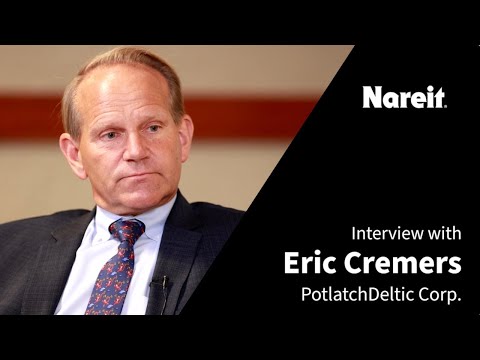
Eric Cremers
Eric Cremers
Executive Chair, Combined Company (Serving two-year term as Executive Chair)

Organizations Involved

Rayonier Inc.
Rayonier Inc.
Timber REIT
Status: Surviving entity in merger

One of North America's oldest timber companies, founded in 1926 as Rainier Pulp and Paper in Washington state.

PotlatchDeltic Corporation
Timber REIT
Status: Merged into Rayonier

Created through the 2018 merger of Potlatch Corporation and Deltic Timber, with roots in Idaho timber dating to 1903.

Weyerhaeuser Company
Timber REIT
Status: Largest publicly traded timber company

The largest private timberland owner in North America, controlling 10.4 million acres.

Timeline

  1. Merger Completed

    Corporate

    Transaction closes after market hours. PotlatchDeltic shareholders receive 1.8185 Rayonier shares plus $0.61 cash per share.

  2. Shareholders Approve Merger

    Corporate

    Both companies' shareholders vote overwhelmingly in favor. PotlatchDeltic approval: 65.2 million for, 79,564 against.

  3. Antitrust Review Completed

    Regulatory

    Hart-Scott-Rodino waiting period terminates, clearing federal antitrust review.

  4. Rayonier-PotlatchDeltic Merger Announced

    Corporate

    Companies announce all-stock merger creating $8.2 billion timber giant with 4.2 million acres.

  5. Mark McHugh Becomes Rayonier CEO

    Leadership

    McHugh succeeds David Nunes after multi-year succession planning process.

  6. PotlatchDeltic Acquires CatchMark

    Corporate

    PotlatchDeltic completes CatchMark Timber Trust acquisition, adding 350,000 Southern acres.

  7. Potlatch-Deltic Timber Merger Completed

    Corporate

    Potlatch Corporation and Deltic Timber combine in $1.2 billion deal, creating PotlatchDeltic with 2 million acres.

  8. Weyerhaeuser-Plum Creek Merger Closes

    Industry

    Weyerhaeuser completes $8.4 billion acquisition of Plum Creek, creating the largest U.S. timber REIT with 13 million acres.

Scenarios

1

Combined Company Captures Synergies, Outperforms Peers

Discussed by: Raymond James analysts, Seeking Alpha contributors, Forisk Consulting

The merged company achieves its $40 million synergy target ahead of schedule, primarily through corporate overhead reduction and operational efficiencies from overlapping geographies in five states. If Southern timber prices recover alongside anticipated housing market improvement in 2026-2027, the combined entity's larger scale and manufacturing capacity positions it to capture disproportionate upside. This scenario becomes more likely if housing starts approach the projected 1.5 million units in 2026.

2

Integration Challenges Delay Benefits

Discussed by: Industry observers familiar with prior timber mergers

Combining two corporate cultures with distinct regional identities (Rayonier's Florida roots versus PotlatchDeltic's Idaho/Arkansas heritage) proves more difficult than anticipated. Key talent defects during the two-year leadership transition period. Synergies fall short of projections, and the company underperforms Weyerhaeuser. Historical precedent from the 2016 Weyerhaeuser-Plum Creek merger, which met its targets, suggests this outcome is less probable but remains possible.

3

Natural Climate Solutions Drive New Revenue

Discussed by: Boston Consulting Group, Nareit analysts, Weyerhaeuser investor presentations

The combined company's 4.2 million acres become increasingly valuable for carbon credits, renewable energy development, and conservation easements. Following Weyerhaeuser's goal of $100 million in natural climate solutions revenue, the merged Rayonier aggressively develops carbon projects on less productive timberland. Demand for high-quality forest carbon credits exceeds supply by decade's end, making this a meaningful revenue stream.

4

Further Industry Consolidation Follows

Discussed by: Forisk Consulting, industry analysts following timber REIT sector

The merger leaves only two major publicly traded timber REITs (Weyerhaeuser and the combined Rayonier). Private equity and pension funds controlling timberland through TIMOs (Timber Investment Management Organizations) become acquisition targets or consolidators themselves. The pattern mirrors other natural resource industries where scale advantages drive concentration.

Historical Context

Weyerhaeuser-Plum Creek Merger (2016)

November 2015 - February 2016

What Happened

Weyerhaeuser announced in November 2015 it would acquire fellow timber REIT Plum Creek for $8.4 billion in stock. The deal created a company owning 13 million acres of U.S. timberland with 38 manufacturing facilities. Plum Creek shareholders received 1.6 Weyerhaeuser shares per share owned.

Outcome

Short Term

Combined company achieved its $100 million annual synergy target. Weyerhaeuser closed two Montana mills within six months, citing operational efficiency.

Long Term

The merger established Weyerhaeuser's dominance in the industry. Analysts at the time predicted more consolidation would follow among smaller REITs—a prediction now validated by the Rayonier-PotlatchDeltic combination.

Why It's Relevant Today

The Weyerhaeuser-Plum Creek deal serves as the template for timber REIT mega-mergers. Both deals were structured as mergers of equals with stock consideration, both promised synergies in the $40-100 million range, and both faced minimal antitrust scrutiny despite creating significantly larger market players.

Potlatch-Deltic Timber Merger (2018)

October 2017 - February 2018

What Happened

Potlatch Corporation, based in Spokane, Washington, announced a $1.2 billion acquisition of Deltic Timber Corporation, headquartered in El Dorado, Arkansas. The deal combined Pacific Northwest timberland with Southern pine holdings, creating a geographically diversified portfolio of 2 million acres.

Outcome

Short Term

Eric Cremers, who engineered the deal, became CEO of the combined PotlatchDeltic in 2021. The company maintained manufacturing operations at both legacy firms.

Long Term

PotlatchDeltic's subsequent acquisition of CatchMark Timber Trust in 2022 and now the Rayonier merger demonstrates that mid-size timber REITs face a choice: acquire or be acquired.

Why It's Relevant Today

The Potlatch-Deltic merger showed that geographic diversification across timber regions (Northwest softwoods, Southern pine) creates a more stable portfolio. The combined Rayonier will own 3.2 million Southern acres and 931,000 Northwestern acres, following this proven strategy.

ITT-Rayonier Spin-off (1994)

1994

What Happened

ITT Corporation spun off Rayonier as an independent public company after 26 years of ownership. The spin-off allowed Rayonier to pursue timberland acquisitions and eventually convert to REIT status in 2004, fundamentally changing its tax structure and shareholder base.

Outcome

Short Term

Rayonier began trading independently on the New York Stock Exchange under ticker RYN.

Long Term

The spin-off set Rayonier on a path to become one of the largest timber REITs. The company acquired nearly one million acres in the Southeast in 1999 and moved its headquarters to Jacksonville, Florida.

Why It's Relevant Today

Rayonier's transformation from industrial conglomerate subsidiary to independent REIT mirrors broader industry evolution. Most U.S. timberland has shifted from integrated forest products companies to specialized REITs and investment managers since the 1980s.

12 Sources: