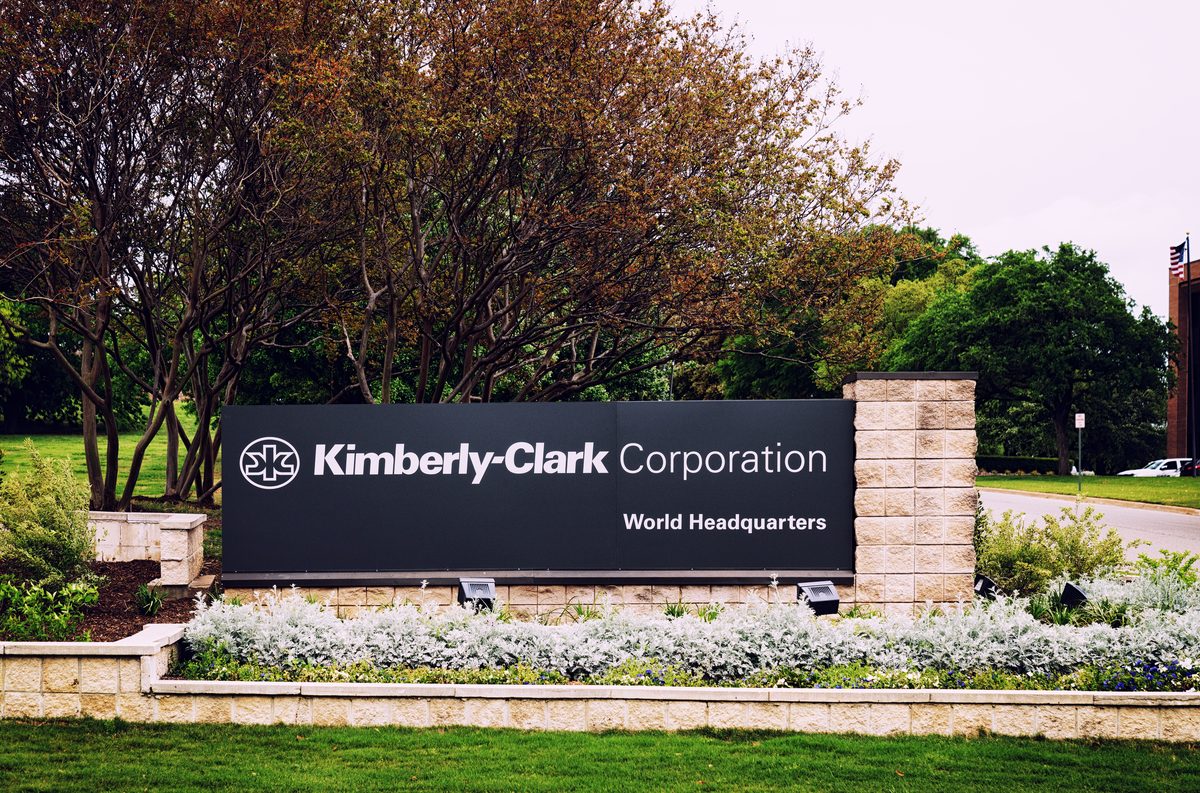
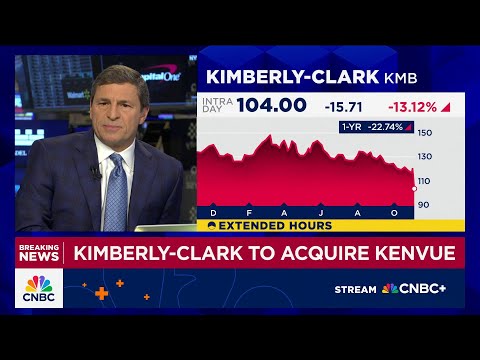
Johnson & Johnson spun off its consumer health division as Kenvue in May 2023, creating the world's largest pure-play consumer health company. In less than three years, Kimberly-Clark and Kenvue shareholders approved a $48.7 billion acquisition absorbing Kenvue into Kimberly-Clark, the Kleenex and Huggies maker—with 96% and 99% voting in favor. On January 30, 2026, The Lancet published a study finding no evidence linking acetaminophen use during pregnancy to autism, contradicting Trump administration concerns that sent Kenvue's stock tumbling in late 2025.
The combined company will generate roughly $32 billion in annual revenue and control 10 billion-dollar brands spanning diapers, tissues, pain relievers, mouthwash, and skincare. But regulatory approval from the Federal Trade Commission (FTC) remains the final hurdle, with scrutiny expected over potential monopoly concerns in baby care and skin health. The Lancet study significantly reduces, but doesn't eliminate, Kenvue's legal exposure around Tylenol, though international talc lawsuits inherited from Johnson & Johnson continue to add uncertainty to what Kimberly-Clark is acquiring.
Questions about this story
Free account needed to ask — your question is kept and asked for you right after sign-up. Answers are public.
No questions yet — be the first to ask.
Key Indicators
$48.7B
Enterprise Value
Total deal value including debt, representing a 46% premium over Kenvue's 2025 lows
$32B
Combined Revenue
Projected annual net revenues of the merged entity
$2.1B
Expected Synergies
Projected annual cost savings by 2030
96%/99%
Shareholder Approval
Kimberly-Clark and Kenvue shareholder vote percentages in favor
10
Billion-Dollar Brands
Number of brands with over $1 billion in annual sales in combined portfolio
Images from Openverse under Creative Commons licenses.
Videos from YouTube.
Voices
Curated perspectives — historical figures and your fellow readers.
Andrew Mellon
(1855-1937) ·Progressive Era · finance
Fictional AI pastiche — not real quote.
"The shareholders vote with near unanimity, yet await permission from bureaucrats to consummate their own transaction—a peculiar inversion of property rights that would have bewildered my generation. One notes the exquisite irony: a "pure-play" consumer health company proves so pure it cannot stand alone for thirty-six months."
0% found this insightful
Ever wondered what historical figures would say about today's headlines?
Sign up to generate historical perspectives on this story.
18 events
Latest: February 4th, 2026 · 8 months ago
Showing 8 of 18
JK to step
Tap a bar to jump to that date
Jump to
February 2026
Kenvue Schedules Q4 Earnings Release, Skips Call
LatestFinancial
Kenvue announced it will release fourth quarter and full year 2025 financial results after market close on February 17, 2026, without a quarterly conference call due to the pending Kimberly-Clark acquisition.
January 2026
Lancet Study Finds No Tylenol-Autism Link
Scientific
The Lancet published a gold-standard evidence review analyzing 43 high-quality studies and finding no evidence that acetaminophen use during pregnancy increases risk of autism, ADHD, or intellectual disabilities, directly contradicting HHS concerns raised in September 2025.
Shareholders Overwhelmingly Approve Acquisition
Deal
Shareholders of both companies voted to approve the merger—96% of Kimberly-Clark shares and 99% of Kenvue shares voted in favor.
ISS Recommends Shareholder Approval
Advisory
Institutional Shareholder Services recommended shareholders approve the merger, citing $2.1 billion in potential annual synergies.
Major Study Finds No Tylenol-Autism Link
Scientific
The Lancet published a comprehensive review of 43 high-quality studies finding no evidence that acetaminophen use during pregnancy increases risk of autism, ADHD, or intellectual disabilities, contradicting earlier concerns raised by the Trump administration.
November 2025
Kimberly-Clark Announces Kenvue Acquisition
Deal
Kimberly-Clark announced $48.7 billion deal to acquire Kenvue, offering $3.50 cash plus 0.14625 shares per Kenvue share.
Texas AG Sues Over Tylenol Marketing
Legal
Texas Attorney General Ken Paxton sued Johnson & Johnson and Kenvue for allegedly deceiving pregnant mothers about Tylenol safety risks.
Kirk Perry Named Permanent CEO
Leadership
Kenvue named Kirk Perry as permanent chief executive after his interim tenure.
October 2025
Kenvue Stock Plunges on Dual Headwinds
Financial
Kenvue shares fell sharply amid renewed Tylenol safety concerns and escalating talc litigation, dropping 30% from recent highs.
September 2025
FDA Initiates Tylenol Label Update
Regulatory
FDA published notice warning doctors that some studies suggest acetaminophen could increase autism risk if used regularly during pregnancy, initiating formal label change process.
Trump and Kennedy Raise Tylenol Concerns
Regulatory
Former President Trump and Health Secretary Robert F. Kennedy Jr. publicly voiced concerns about potential links between Tylenol use during pregnancy and autism.
July 2025
Kenvue CEO Mongon Terminated
Leadership
Kenvue's board fired CEO Thibaut Mongon effective immediately and named Kirk Perry interim chief executive.
March 2025
Kenvue Settles with Starboard
Corporate
Kenvue and Starboard reached cooperation agreement, adding three new directors to the board including Starboard CEO Jeffrey Smith.
February 2025
Starboard Files Proxy Statement
Investor Action
Starboard outlined goals to unlock Kenvue's "trapped potential," citing "disappointing" financial results and "ineffective board oversight."
October 2024
Starboard Value Discloses Kenvue Stake
Investor Action
Activist hedge fund Starboard Value revealed it had acquired a stake in Kenvue and would push for changes to improve shareholder value.
August 2023
J&J Completes Kenvue Separation
Corporate
Johnson & Johnson completed exchange offer, reducing its stake to 9.5%. The separation generated $13.2 billion in cash for J&J.
May 2023
Kenvue IPO Raises $3.8 Billion
Financial
Kenvue went public at $22 per share, the largest U.S. IPO since 2021. Johnson & Johnson retained 91.9% ownership initially.
November 2021
J&J Announces Consumer Health Spinoff
Corporate
Johnson & Johnson announced plans to separate its consumer health division into a standalone company, the largest restructuring in the company's 135-year history.
Scenarios
1
FTC Approves Merger with Minor Divestitures
Likely
Discussed by: Morningstar analysts, industry observers citing consumer welfare standard under current antitrust leadership
The FTC approves the deal after requiring Kimberly-Clark to divest a small number of overlapping brands in baby care or feminine care, similar to the 2005 P&G/Gillette precedent. The combined company emerges largely intact, achieving most of its projected synergies. This scenario assumes regulators accept that the portfolios are "largely complementary" rather than directly competing.
2
FTC Demands Major Divestitures, Deal Restructured
Possible
Discussed by: Antitrust analysts noting potential "near-monopoly" in certain shelf segments
Regulators determine the combined company would hold excessive market power in baby care (Huggies + Johnson's Baby) and skin health (Neutrogena + Aveeno alongside K-C's portfolio). The FTC demands significant brand divestitures that reduce the strategic value of the merger. Kimberly-Clark may renegotiate the deal price or walk away entirely.
Adverse rulings in Tylenol/autism lawsuits or expanded FDA safety warnings materially increase Kenvue's projected liability. With Tylenol representing 10-15% of Kenvue's operating profit, Kimberly-Clark invokes material adverse change provisions to renegotiate the acquisition price downward or restructure how litigation risk is allocated between the parties.
4
Deal Closes on Schedule, Combined Giant Emerges
Likely
Discussed by: ISS recommendation, company projections, investment banks advising on deal
Regulatory approval arrives in the second half of 2026 as planned, with minimal divestitures. The combined company becomes the world's second-largest consumer health and staples company, achieving its $2.1 billion synergy target and fundamentally reshaping competitive dynamics in the sector. Haleon becomes a potential next acquisition target as the last major independent player.
Historical Context
3 moments from history that rhyme with this story — and how they unfolded.
1 of 3
January-October 2005
Procter & Gamble Acquires Gillette (2005)
P&G paid $57 billion for Gillette in the largest acquisition in consumer products history, combining Pampers and Tide with Gillette razors and Duracell batteries. The FTC approved the deal after requiring divestitures of Gillette's Rembrandt teeth whitening, P&G's SpinBrush toothbrush business, and Right Guard deodorant.
Then
P&G gained 10 billion-dollar brands and massive retail shelf leverage, achieving $1-1.2 billion in cost synergies by 2008.
Now
The merger created the template for consumer staples consolidation. P&G's net earnings margin improved from 10.7% to 13.6% post-merger, and Gillette Fusion reached $1 billion in sales faster than any prior P&G product.
Why this matters now
The Kimberly-Clark/Kenvue deal explicitly follows this playbook—combining complementary portfolios to create retail leverage and cost synergies. Both faced FTC scrutiny over shelf dominance; both required targeted divestitures for approval.
2 of 3
September-November 1982
Johnson & Johnson's Tylenol Crisis (1982)
Seven people in the Chicago area died after taking Tylenol capsules laced with potassium cyanide by an unknown tamperer. Tylenol's market share collapsed from 35% to 7% overnight. CEO James Burke ordered a nationwide recall of 31 million bottles worth $100 million.
Then
J&J spent $100 million on the recall and relaunch. Within six months, Tylenol's market share recovered to 30%.
Now
The crisis led to federal anti-tampering laws, FDA tamper-proof packaging requirements, and became the gold standard case study in corporate crisis management. Tylenol remained J&J's most valuable consumer brand for four decades.
Why this matters now
Tylenol survived the 1982 poisoning crisis to become a billion-dollar brand. Now it faces a different kind of threat—scientific questions about pregnancy safety and litigation risk. Kimberly-Clark is betting the brand is again "resilient," as CEO Hsu has stated, but the uncertainty has materially affected the deal's risk profile.
3 of 3
March 2015 - February 2019
Kraft-Heinz Merger and Post-Merger Struggles (2015-2019)
3G Capital and Berkshire Hathaway merged Kraft and Heinz in a $46 billion deal, promising aggressive cost-cutting to unlock value. The combined company achieved $1.7 billion in synergies but wrote down $15.4 billion in brand value in 2019 as sales declined.
Then
Cost synergies materialized as promised, with thousands of layoffs and facility closures.
Now
The company's brands suffered from underinvestment. Consumer preferences shifted while Kraft-Heinz cut marketing and R&D. The stock lost half its value from 2017 to 2019.
Why this matters now
A cautionary tale for synergy-driven consumer staples mergers. Kimberly-Clark projects $2.1 billion in synergies, but achieving cost savings while maintaining brand investment is notoriously difficult. Morningstar analysts have flagged "sizable integration risk."