Overview
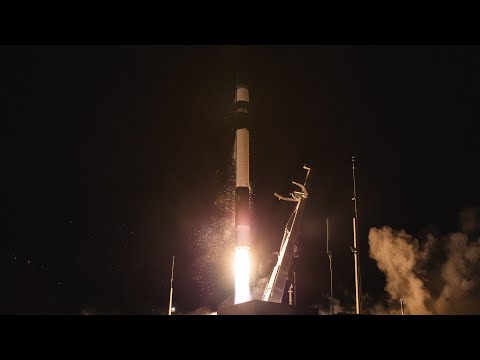
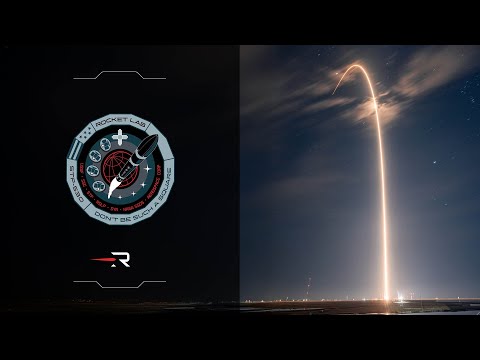
Rocket Lab ended 2025 the way it wants investors and customers to remember it: a clean launch, a clean deployment, and a clean record. On Dec. 21, Electron lifted off from Māhia and placed iQPS’s QPS-SAR-15 into orbit, extending a run of repeat business that’s quietly turning Rocket Lab into a “default setting” for certain constellation operators.
The real story isn’t one satellite. It’s the assembly line logic behind it: iQPS is trying to build a radar-imaging web that works at night, through clouds, and on tight revisit times—exactly the kind of service governments and insurers pay for when the world gets messy. If iQPS can keep manufacturing, and Rocket Lab can keep cadence, this becomes a template for how mid-tier space powers buy persistence without owning rockets.
Key Indicators
People Involved
Organizations Involved
Rocket Lab sells dedicated, repeatable access to orbit—and increasingly, the infrastructure to make it routine.
iQPS is trying to make radar Earth observation persistent, fast, and commercially scalable.
SpaceX provides high-volume launch capacity that constellation builders often use when schedules and orbits align.
Timeline
-
QPS-SAR-15 flies as Rocket Lab seals a perfect year
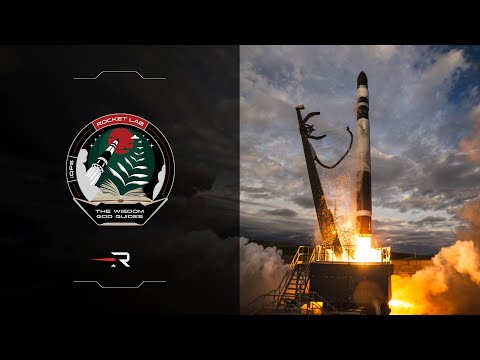
LaunchElectron deploys QPS-SAR-15 on “The Wisdom God Guides,” ending 2025 at 21 launches and 100% success.
-
QPS-SAR-14 joins the constellation; more launches are promised
LaunchElectron deploys QPS-SAR-14 “YACHIHOKO-I,” with Rocket Lab highlighting follow-on missions.
-
QPS-SAR-12 expands the on-orbit stack
LaunchElectron deploys QPS-SAR-12 “KUSHINADA-I,” Rocket Lab’s fifth iQPS mission overall.
-
Rocket Lab proves it can turn launches like airline flights
MilestoneRocket Lab posts a sub-48-hour turnaround between launches from the same site.
-
QPS-SAR-9 kicks off the high-cadence phase
LaunchElectron deploys QPS-SAR-9 “SUSANOO-I,” the first of the eight-launch run.
-
Rocket Lab and iQPS scale the relationship: eight dedicated missions
DealA second multi-launch deal brings iQPS’s booked Electron launches to eight across 2025–2026.
-
Rocket Lab becomes a dedicated iQPS launcher
LaunchElectron deploys QPS-SAR-5 “TSUKUYOMI-I” on “The Moon God Awakens.”
-
Epsilon-6 fails; two iQPS satellites are lost
SetbackQPS-SAR-3 “AMATERU-I” and QPS-SAR-4 “AMATERU-II” do not reach orbit after launch failure.
-
iQPS lines up a domestic launch path—on paper
DealIHI Aerospace signs to launch QPS-SAR-3/4 on Japan’s Epsilon rocket.
-
Transporter era begins for iQPS with QPS-SAR-2
LaunchQPS-SAR-2 “IZANAMI” launches on SpaceX, later demonstrating high-resolution spotlight imagery.
-
iQPS gets its first SAR satellite to orbit
LaunchQPS-SAR-1 “IZANAGI” reaches orbit, proving a small-SAR path is possible.
Scenarios
iQPS hits 24 satellites by FY2027 — and turns “near-real-time” from slogan into subscription
Discussed by: iQPS (program targets and service concept), Rocket Lab (multi-launch planning and follow-on missions)
This outcome follows the plan both companies are already advertising: iQPS continues manufacturing at scale, Rocket Lab keeps delivering dedicated insertions, and the constellation crosses the threshold where revisit rates become a product feature rather than an aspiration. The trigger is boring but decisive: stable production, stable launch slots, and fast commissioning cycles that keep new satellites from piling up on the ground.
Rocket Lab becomes the ‘default’ for Japanese SAR constellations — and Electron turns into a routine logistics lane
Discussed by: Rocket Lab (Japanese customer pipeline; multi-launch strategy), coverage of Rocket Lab’s Japan partnerships and cadence
If Rocket Lab keeps stacking multi-launch deals (iQPS plus other Japanese SAR operators) and maintains reliability, it can lock in a niche where dedicated small launches are purchased like freight capacity. The trigger would be continued contract expansion (more bulk orders for 2026–2028) and customers prioritizing schedule control and orbital precision over the marginal savings of rideshare.
Commercial SAR turns into a price war — iQPS slows launches, and “persistence” consolidates around a few winners
Discussed by: Defense and EO market reporting highlighting accelerating SAR adoption and competition (including ICEYE’s defense expansion)
As SAR becomes a national-security staple, more players push capacity into orbit, and imagery pricing and tasking priority become the battlefield. If iQPS struggles to differentiate (analytics, latency, exclusivity, government contracts), it could stretch deployment schedules, defer launches, or shift to cheaper rideshares—reducing the tempo Rocket Lab is currently showcasing. The trigger is demand that grows slower than supply, or buyers insisting on bundled analytics instead of raw pixels.
Historical Context
Iridium NEXT constellation refresh (SpaceX multi-launch campaign)
2017-01 to 2019-01What Happened
Iridium replaced a global communications constellation through a tightly choreographed series of Falcon 9 launches. The campaign delivered 75 satellites in under two years, proving that “repeat launches + standardized satellites” can replatform an entire network faster than traditional procurement cycles.
Outcome
Short term: Constellation deployment completed on schedule, enabling new services and spares on-orbit.
Long term: Normalized the idea that constellation upgrades can be executed as an operational campaign, not a one-off.
Why It's Relevant
It’s the clearest precedent for what iQPS is attempting—turning deployment into a predictable manufacturing-and-launch rhythm.
Commercial SAR becomes a defense asset (ICEYE and Ukraine)
2022-08 to presentWhat Happened
A commercial SAR operator provided rapid, all-weather imaging access tied to real-world military needs. The episode showed that radar revisit and tasking speed aren’t just nice-to-have features; they become strategic leverage when optics are blinded by weather, smoke, or night.
Outcome
Short term: SAR imagery and access agreements became part of wartime capability packages.
Long term: Governments increasingly treat commercial constellations as extensions of national reconnaissance capacity.
Why It's Relevant
It explains why iQPS’s “near-real-time” pitch matters beyond commercial mapping—persistence is becoming a security primitive.
Planet Labs and the ‘smallsat swarm’ model
2013-04 to 2014-01What Happened
Planet demonstrated that large numbers of cheap satellites, launched opportunistically, could create a new kind of Earth-observation product: frequent refresh instead of exquisite single-image quality. The narrative shifted from “best image” to “most recent image,” and data pipelines became as important as payloads.
Outcome
Short term: Constellation thinking moved from theory to a business strategy startups could actually execute.
Long term: Set expectations for cadence-driven EO services and accelerated competition across imaging modalities.
Why It's Relevant
iQPS is applying the same swarm logic to radar—where the value spikes when the world is dark or clouded over.