Artemis II completed in April 2026, marking the first crewed lunar flight since 1972. Program overhaul moves first lunar landing to 2028 with Artemis IV; orbital docking test planned for 2027.
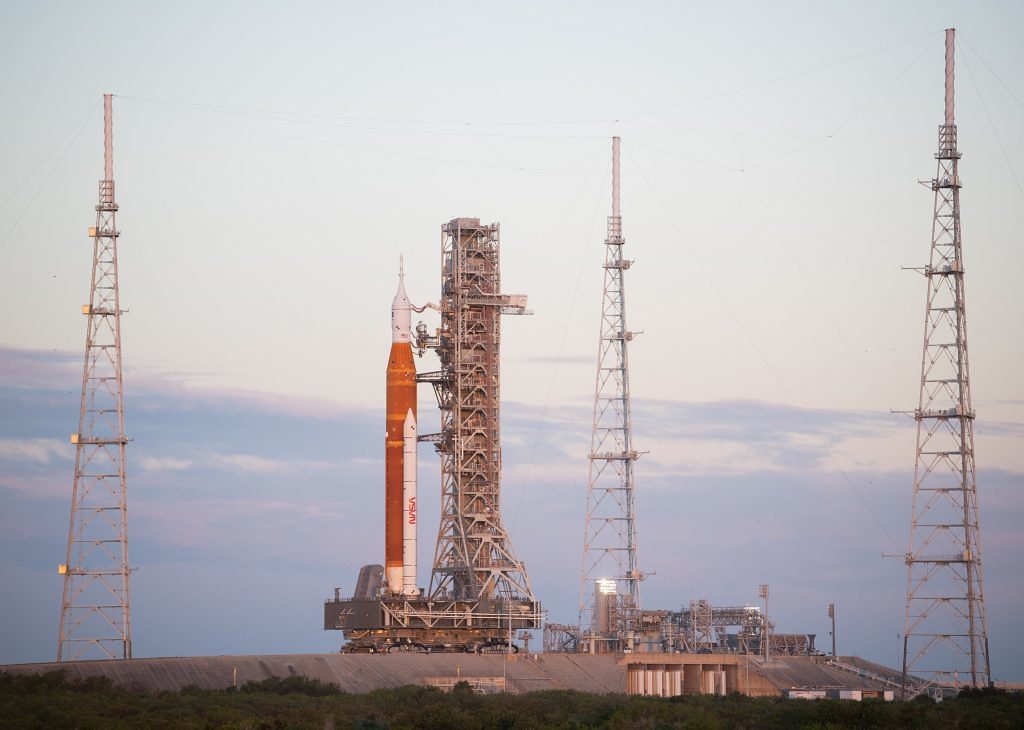
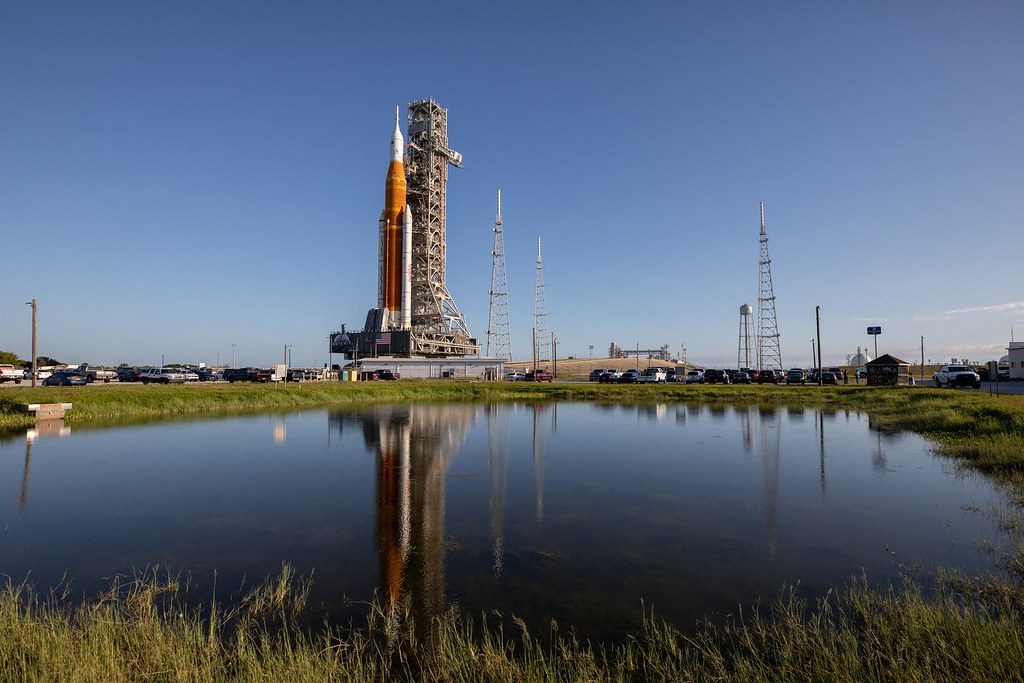
No human has traveled beyond low-Earth orbit since December 1972. On January 17, 2026, NASA rolled its 322-foot Space Launch System (SLS) rocket to the launch pad at Kennedy Space Center.
A rare arctic outbreak delayed the wet dress rehearsal to February 2; it completed propellant loading but hit a hydrogen leak, valve issues, and other anomalies. On February 21, teams found a helium flow interruption in the SLS interim cryogenic propulsion stage (ICPS), prompting a rollback to the Vehicle Assembly Building (VAB) on February 25 and eliminating the March launch window. After repairs to the helium system, battery replacements, and seal repairs on the core stage liquid oxygen line, Artemis II still targets early April 2026; the Flight Readiness Review completed March 12.
The 10-day Artemis II mission validates the Orion spacecraft's life support systems with humans aboard amid competition from China's 2030 lunar landing plans and SpaceX Starship delays. On February 27, NASA Administrator Jared Isaacman announced a program overhaul: Artemis III's moon landing is scrapped and repurposed for Earth-orbit docking tests with a commercial lander in 2027. The first lunar landing is now targeted for Artemis IV in early 2028; Isaacman cited the 'too big of a gap' from flyby to surface mission given SLS's slow launch cadence.
Questions about this story
Free account needed to ask — your question is kept and asked for you right after sign-up. Answers are public.
No questions yet — be the first to ask.
Key Indicators
54
Years since last crewed lunar landing
Apollo 17 splashed down on December 19, 1972. Artemis II flew around the Moon in 2026 but did not land.
$93B
Artemis program spending through 2025
NASA Office of Inspector General estimate from FY2012 through FY2025.
4
Astronauts on Artemis II
Reid Wiseman, Victor Glover, Christina Koch, and Jeremy Hansen.
10
Mission duration in days
Crew traveled 6,400 miles beyond the Moon's far side before returning to Earth on April 11.
Apr 1, 2026
Artemis II Launch Date
Launched on schedule after a March rollback and helium repairs.
Early 2028
First Lunar Landing (Artemis IV)
Artemis III repurposed for Earth-orbit docking test; surface landing deferred due to SLS cadence and development gaps.
Images from Openverse under Creative Commons licenses.
Videos from YouTube.
Voices
Curated perspectives — historical figures and your fellow readers.
J. P. Morgan
(1837-1913) ·Gilded Age · finance
Fictional AI pastiche — not real quote.
"A nation that permits fifty-three years to pass between ventures has lost the habit of enterprise. China grasps what we once knew: dominance belongs to those who act, not those who deliberate."
100% found this insightful
Sign up to generate historical perspectives on this story.
24 events
Latest: April 14th, 2026 · 6 months ago
Showing 8 of 24
JK to step
Tap a bar to jump to that date
Jump to
April 2026
Isaacman calls Artemis II 'opening act' of lunar return
LatestProgram
At the 2026 Space Symposium, Isaacman said the successful mission is the 'opening act in America's return to the moon' and described a 'relay race' toward a crewed landing and moon base. He also noted a $10 billion supplemental request in the fiscal 2027 budget proposal.
March 2026
Isaacman announces $20 billion lunar investment
Program
During a speech in Houston, Administrator Jared Isaacman stated 'America will never again give up the moon' and announced a $20 billion investment to accelerate lunar infrastructure.
February 2026
NASA Scraps Artemis III Moon Landing, Overhauls Lunar Program
Program
Administrator Jared Isaacman announced Artemis III will test Orion docking with commercial lander in Earth orbit instead of lunar landing, deferred to Artemis IV in early 2028 due to 'too big of a gap' from flyby and SLS launch limitations.
NASA Shifts Artemis II to March Launch After Wet Dress Rehearsal Completion
Schedule
NASA concluded the February 2 wet dress rehearsal, successfully loading cryogenic propellants into SLS tanks despite cold weather delays, hydrogen leak at T-5 minutes, Orion valve retorquing, and communication dropouts. Launch now targets March; crew released from quarantine to re-enter later.
January 2026
Wet Dress Rehearsal Delayed to February 2 Due to Cold Weather
Schedule
NASA postpones the wet dress rehearsal from January 31 to February 2 due to a rare arctic outbreak bringing freezing temperatures to Florida. The decision invokes lessons from the Challenger disaster 40 years earlier, when cold weather contributed to O-ring failure.
Launch Date Slips to No Earlier Than February 8
Schedule
NASA announces that Artemis II will launch no earlier than February 8, eliminating the original February 6 target and February 7 backup. Only three launch opportunities remain in February: the 8th, 10th, and 11th. Missing this window would push the mission to March.
Pad Operations Progress: Booster Servicing and Engine Checkouts
Preparation
Teams successfully loaded hydrazine into the SLS booster aft skirts over the weekend and performed checkouts of the core stage's four RS-25 engines. Technicians also completed planned pyrotechnic work on the launch abort system and pressurized a tank in Orion's propulsion system.
Wet Dress Rehearsal Adjusted to January 31
Schedule
NASA announces Saturday, January 31, as the earliest date for the wet dress rehearsal fueling test, a slight adjustment from the previous February 2 target. Technicians prepare environmental control systems for cold weather conditions.
Artemis II Crew Enters Quarantine
Preparation
The four astronauts begin 14-day quarantine at Johnson Space Center in Houston to prevent illness that could delay launch. NASA states the timing 'preserves flexibility as teams work toward potential opportunities in the February launch period.'
Launch Pad Preparations Progress Ahead of Wet Dress Rehearsal
Preparation
Teams connect SLS and Orion to ground support equipment including electrical lines, environmental control ducts, and cryogenic propellant feeds. Systems powered up at the pad for the first time to verify integration.
Artemis II Rocket Rollout Begins
Preparation
The 11-million-pound SLS/Orion stack begins its 4-mile, 12-hour journey to Launch Pad 39B for the wet dress rehearsal and launch.
Artemis II Rocket Arrives at Launch Pad 39B
Preparation
After a 12-hour, 4-mile journey, the SLS/Orion stack successfully reached Launch Pad 39B at 6:42 PM EST, completing the rollout and positioning the vehicle for wet dress rehearsal operations.
December 2025
Artemis II Crew Completes Countdown Rehearsal
Preparation
The four astronauts practice launch day procedures in the Orion spacecraft at Kennedy Space Center.
Jared Isaacman Confirmed as NASA Administrator
Leadership
The Senate confirms the billionaire astronaut 67-30 to lead NASA during the critical Artemis push.
March 2025
NASA Accelerates Artemis II by Two Months
Schedule
NASA moves the target launch date from April to February 2026 after faster-than-expected progress.
December 2024
NASA Identifies Heat Shield Root Cause
Investigation
After two years of analysis and 121 tests, engineers determine trapped gases caused unexpected char loss during Artemis I reentry.
Artemis II Delayed to April 2026, Artemis III to Mid-2027
Schedule
NASA announces additional delays due to heat shield findings and life support system analysis requirements.
January 2024
Artemis II Delayed to September 2025
Schedule
NASA pushes back the crewed mission from November 2024, citing heat shield concerns discovered after Artemis I.
April 2023
NASA Announces Artemis II Crew
Crew
Reid Wiseman, Victor Glover, Christina Koch, and Jeremy Hansen are named to fly the first crewed Orion mission.
December 2022
Artemis I Splashes Down
Mission
Orion returns to Earth after traveling 1.4 million miles, splashing down in the Pacific 50 years to the day after Apollo 17's lunar landing.
November 2022
Artemis I Launches Successfully
Launch
The uncrewed Orion spacecraft lifts off on the first Space Launch System flight, beginning a 25.5-day test mission around the Moon.
May 2019
Program Named 'Artemis'
Program
NASA Administrator Jim Bridenstine announces the lunar program will be called Artemis, after Apollo's twin sister in Greek mythology.
December 2017
Trump Signs Space Policy Directive 1
Policy
President Trump directs NASA to return astronauts to the Moon, formalizing the shift from asteroid missions to lunar exploration.
September 2011
NASA Announces Space Launch System
Program
NASA unveils plans for the heavy-lift rocket that will power Artemis missions, beginning a development effort that would stretch over a decade.
Scenarios
1
Artemis II Launches in February, Validates Orion for Human Flight
Likely
Discussed by: NASA officials, SpaceNews, Ars Technica space coverage
The wet dress rehearsal on February 2 proceeds without major issues. NASA confirms flight readiness and launches within the February 6-14 window. The 10-day mission successfully demonstrates life support systems, navigation, and the modified reentry trajectory. Artemis III planning accelerates, though SpaceX Starship readiness remains the constraint.
2
Technical Issues Force Artemis II Delay to Spring 2026
Possible
Discussed by: NASA safety panels, aerospace industry analysts
The wet dress rehearsal reveals problems—propellant loading issues, software glitches, or ground system failures—that require the rocket to return to the Vehicle Assembly Building for fixes. NASA pushes to the March or April launch windows. The delay compresses the schedule for Artemis III preparations but doesn't fundamentally alter program trajectory.
SpaceX's Starship Human Landing System continues to slip—internal documents show September 2028 as the earliest crewed landing attempt. Meanwhile, China executes its Mengzhou-Lanyue program on schedule, landing two taikonauts on the lunar surface by 2030. The U.S. completes Artemis II and III orbits but loses the landing milestone to a competitor.
4
Artemis III Lands Americans on Moon by Late 2027
Uncertain
Discussed by: NASA Administrator Isaacman, SpaceX statements
SpaceX accelerates Starship development, completing orbital refueling demonstrations and an uncrewed lunar landing ahead of schedule. NASA selects an aggressive launch date and executes the first crewed lunar landing since 1972, with an American woman and a person of color among the first to set foot on the surface.
Historical Context
3 moments from history that rhyme with this story — and how they unfolded.
1 of 3
December 1968
Apollo 8 First Lunar Orbit (1968)
Frank Borman, Jim Lovell, and Bill Anders became the first humans to leave Earth's gravitational influence and orbit another world. They circled the Moon 10 times on Christmas Eve 1968, broadcasting readings from Genesis to an estimated one billion viewers—the most-watched television event in history at that time.
Then
Validated the Saturn V rocket and Apollo spacecraft for lunar operations, setting up Apollo 11's landing seven months later.
Now
Established that humans could survive deep space transit, and produced the iconic 'Earthrise' photograph that galvanized the environmental movement.
Why this matters now
Artemis II mirrors Apollo 8's mission profile: first crewed flight of a new vehicle around the Moon without landing, serving as the critical validation step before attempting a surface mission.
2 of 3
September 1988, July 2005
Space Shuttle Return to Flight (1988, 2005)
After Challenger's O-ring failure killed seven astronauts in 1986, NASA spent 32 months redesigning the solid rocket boosters and safety culture before flying again. After Columbia's foam strike destroyed the orbiter on reentry in 2003, killing seven more, NASA grounded the fleet for 29 months while developing inspection protocols and repair kits.
Then
Both return-to-flight missions—Discovery in 1988 and 2005—succeeded, though the 2005 flight revealed foam continued to shed despite fixes.
Now
Columbia led directly to the Shuttle's retirement in 2011, creating the capability gap that the SLS program was designed to fill.
Why this matters now
The Artemis I heat shield anomaly—unexpected char loss during reentry—echoes the pattern of discovering problems only visible in actual flight conditions. NASA's two-year investigation and trajectory modifications for Artemis II follow the post-Columbia playbook of understanding root causes before flying crew.
3 of 3
July 1975
Apollo-Soyuz Test Project (1975)
American astronauts and Soviet cosmonauts docked their spacecraft in orbit, marking the first international crewed space mission. The symbolic handshake between Tom Stafford and Alexei Leonov occurred at the height of détente.
Then
Demonstrated that Cold War rivals could cooperate in space, laying groundwork for later ISS partnership.
Now
Established the precedent that space exploration could bridge geopolitical divides—a model the Artemis Accords attempts to extend.
Why this matters now
Jeremy Hansen's presence on Artemis II—the first non-American on a lunar mission—represents a different model of international cooperation. Canada's contribution comes through the Artemis Accords framework, which China and Russia have rejected in favor of their competing International Lunar Research Station.