Anchor

Veteran general counsel takes over division running the state's captive insurance companies
Today: Dennis Flynn named new state risk managerNew here? Follow stories to track developments over time. Create a free account to get updates when stories you care about change.
Overview
Updated 1 hour agoUtah's state government runs its own insurance operation, funding liability claims for agencies, schools, universities, and charter schools through captive companies instead of buying commercial policies. On Sept. 6, veteran attorney Dennis Flynn took over the division that manages that risk.
Flynn replaces Rachel Terry, who led the division since 2023 and, officials say, saved Utahns millions by keeping risk funding in-house. His task: hold the self-insurance model steady while keeping premium increases down for the state entities it covers.
Why it matters
Utah's captive program decides how much state agencies and school districts pay for coverage and who absorbs a big liability claim.
Questions about this story
Free account needed to ask — your question is kept and asked for you right after sign-up. Answers are public.
No questions yet — be the first to ask.
Key Indicators
17
Years Flynn spent as a civil and insurance defense litigator
His private-practice background before joining the state in 2015.
2022
Year Flynn became division general counsel
He moved into the risk division's top legal role two years before leading it.
2023
Year Rachel Terry took over as risk manager
She led the division until this appointment and is credited with millions in savings.
Millions
State savings credited to Terry's captive program
Officials say her changes moderated annual premium increases for covered entities.
Related Media
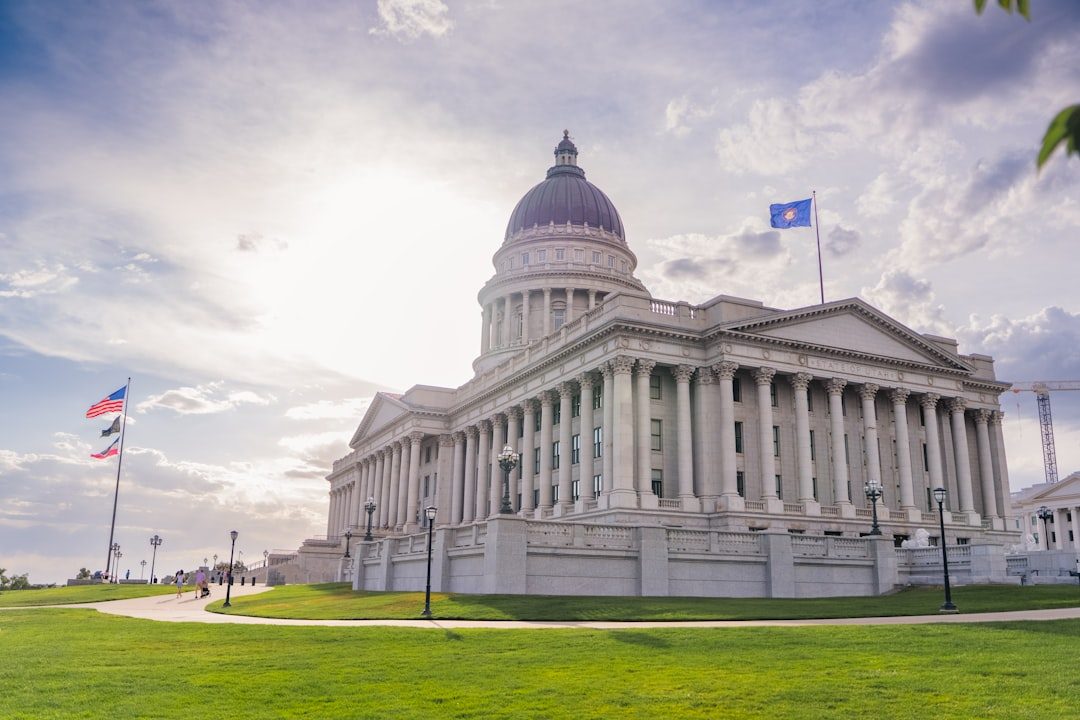
The Utah State Capitol building stands majestically under a bright, cloud-streaked sky, its grand neoclassical columns and domed roof illuminated by soft afternoon light. Flags wave on tall poles beside the manicured green lawn, adding a patriotic touch to the scene.
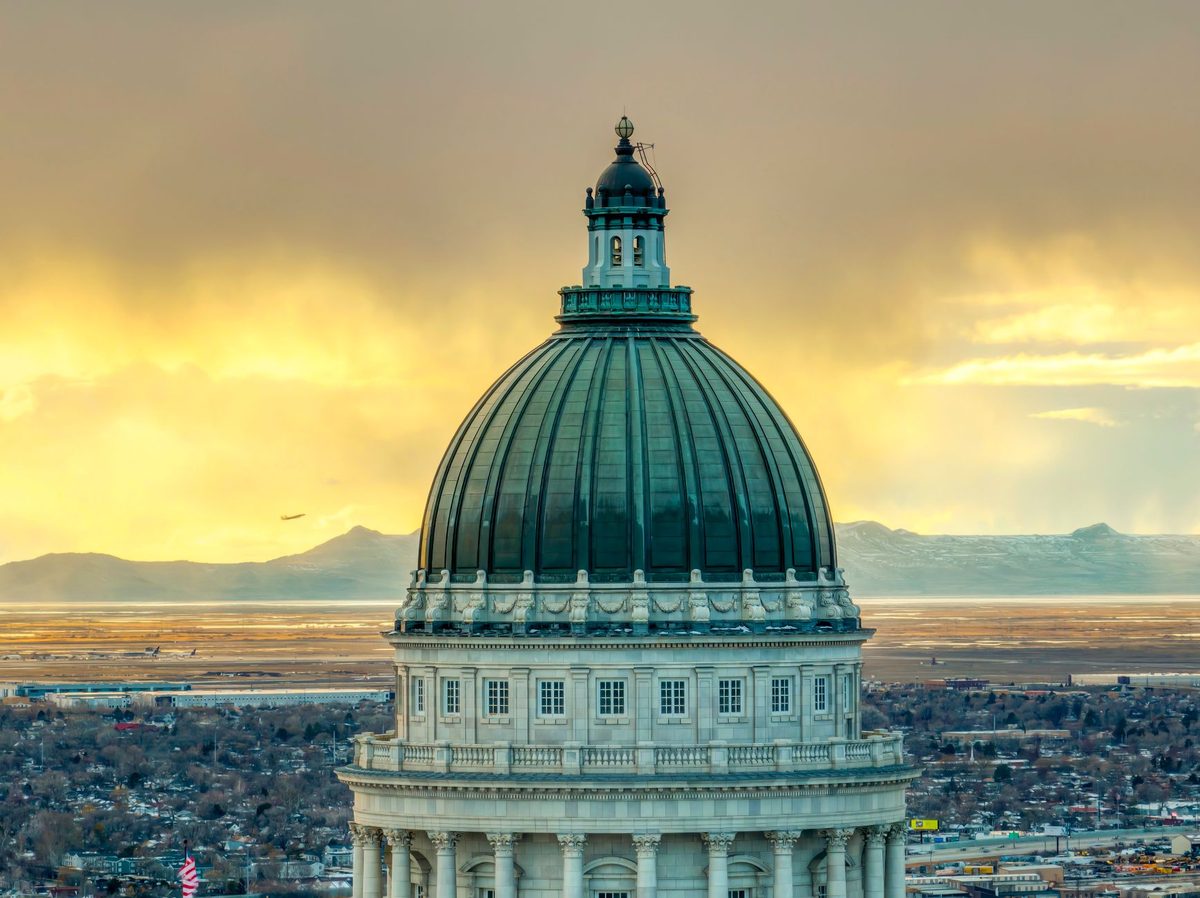
Majestic view of the Utah State Capitol dome with a vibrant sunset backdrop in Salt Lake City.
202 views
16:38
As 'captive insurance' leader, DC empowers companies and ...
WTOP News

92.6K views
3:31
Attorneys work to unseal confidential documents from State ...
KFOR Oklahoma's News 4
37 views
1:50
Hancock County hires outside counsel for opioid fund ...
WTRF
Images from Openverse under Creative Commons licenses. Videos from YouTube.
Voices
Curated perspectives — historical figures and your fellow readers.
Play
Exploring all sides of a story is often best achieved with Play.
Most of these play right now — no account needed. Sign up to save scores, keep a streak, and unlock Debate and Predict.
Log in
Sign Up
WHO SAID WHAT?
Can you match the quotes to the right people?
Rounds
People
Per question
Scoring
- points for each correct match.
- time bonus when you answer in under seconds.
- streak bonus once you hit correct in a row.
Score:
Round /
streak
— Who said this?
Tip: press 1– to answer.
Score:
Round /
streak
+
Base +
⚡ Speed +
🔥 Streak +
Streak reset · the answer was
No answer in time · it was
Next Up
Round
of
Score
points
Correct
Best Streak
Time Bonus
Avg. Time
points — sign up to put that on the leaderboard.
Now try on this story
Higher or Lower
A number from this story, against one from elsewhere in the news — guess which is bigger, then keep the chain going. 5 rounds, 3 strikes; a miss costs a strike and resets your streak.
Example
Anchor
EU tariff revenue
$52B
Big for this kind of number
Mystery
Pentagon AI contract
?
Round 1
Streak: 0
Mystery
?
Keyboard: ↓/L lower · ↑/H higher
0 pts
Best streak: 0 · Rounds: 0
0 points — sign up to put that on the leaderboard.
Now try on this story
Connections
Sixteen names from the news. Find the four hidden groups of four. Four mistakes max.
Loading today's puzzle…
0/4 groups
Mistakes
Sign up to keep a daily streak — a new puzzle lands every day.
Now try on this story
Exit debate?
Your progress in this debate will be lost.
How it works
- 1 Two AI personas square off on this story.
- 2 You predict who'll win each round — correct picks earn XP.
- 3 One crossfire question is yours to fire. Pick it carefully.
Couldn't generate a topic
Select Your Champions
Choose one persona for each side of the debate
DEBATE TOPIC
Choose personas with different perspectives for a more dynamic debate.
SIDE A (PRO)
Select debater for this side:
No debate personas available right now.
SIDE B (CON)
Select debater for this side:
No debate personas available right now.
VS
Get ready to make your prediction...
Round of
Claim
Evidence
Stakes
Crossfire Answer
Closing Statement
Claim
Evidence
Stakes
Crossfire Answer
Closing Statement
Your Crossfire Question
Generating arguments...
Who's Got This Round?
Make your prediction before the referee scores
The referee scores both sides on
Correct predictions earn +20 XP
· Press 1 or 2 to pick
Evidence
40%
Logic
30%
Detail
20%
Style
10%
Round Results
Your Pick
Not this time
(%)
Overall Score
/10
Your Pick
Not this time
(%)
Overall Score
/10
Set the Crossfire
Pick the question both personas must answer in the final round
Crafting crossfire questions...
Choosing a question earns +10 XP crossfire bonus
🏆
Total XP Earned
Cred Change
Predictions
Debate Oracle! You called every round!
Sharp Instincts! You know your debaters!
The Coin Flip Strategist! Perfectly balanced!
The Contrarian! Bold predictions!
Inverse Genius! Try betting the opposite next time!
XP Breakdown
Base completion
+20 XP
Rounds played ( rounds x 5 XP)
+ XP
Correct predictions ( correct x 20 XP)
+ XP
Crossfire bonus
+10 XP
Accuracy
%
Prediction History
Round
You picked:
✓
✗
Now try on this story
Keep debating to level up your credibility and unlock achievements
People Involved
Dennis Flynn
State Risk Manager and Director, Utah Division of Risk Management
Appointed effective Sept. 6, 2026
Rachel Terry
Outgoing State Risk Manager
Moved to Commissioner's Office, Utah System of Higher Education
Marvin Dodge
Commissioner, Utah Department of Government Operations
Made the appointment
Spencer Cox
Governor of Utah
Approved the appointment
Organizations Involved
Utah Division of Risk Management
State Agency
Runs Utah's self-insurance program and captive insurance companies
Insures and provides loss control services to Utah state agencies, school districts, higher education institutions, and some charter schools.
Utah Department of Government Operations
State Agency
Parent agency that houses the Division of Risk Management
The state agency that oversees Utah's internal services, including the Division of Risk Management.
Utah System of Higher Education
Education System
Rachel Terry's new employer
Coordinates Utah's public colleges and universities; Terry joined its Commissioner's Office.
Timeline
January 2022 September 2026
3 events
Latest: Today
-
Dennis Flynn named new state risk manager
Today AppointmentFlynn replaced Rachel Terry as director of the Division of Risk Management.
-
Rachel Terry named state risk manager
AppointmentTerry took over the division and later expanded its captive insurance program.
-
Flynn becomes division general counsel
AppointmentDennis Flynn took the top legal role at the Division of Risk Management.
Historical Context
2 moments from history that rhyme with this story — and how they unfolded.
1996
California Earthquake Authority (1996)
After the 1994 Northridge earthquake produced about $12.5 billion in insured losses and insurers stopped writing new policies, California created the California Earthquake Authority, a publicly managed pool that funds claims from premiums and investment returns.
Then
Homeowners got an earthquake coverage option again, backed by a pool rather than private insurers.
Now
The model showed governments can stand up their own risk-funding vehicles when commercial insurance fails them.
Why this matters now
Utah's captive companies follow the same logic: the state retains risk it used to pay private carriers to bear.
mid-1980s
Public entity risk pools surge in the 1980s liability crisis
In the mid-1980s, commercial liability insurance prices spiked and coverage dried up for cities, counties, and schools. In response, thousands of public entities formed self-insurance pools to share risk directly, often called intergovernmental pools.
Then
Municipalities regained liability coverage at predictable cost without commercial insurers.
Now
Public self-insurance pools became a permanent feature of local and state finance.
Why this matters now
Utah's captive program is a modern version of the same strategy: public entities keeping their own risk rather than buying commercial policies.
Sources
(3)Related Stories
Democrat exits Utah Senate race, clearing path for Forward Party incumbent
Rule Changes
Updated 8 hours ago
University of Utah replaces longtime food truck operators with rotating program
Rule Changes
Updated 3 days ago
Utah pauses age-verification enforcement pending Pornhub lawsuit
Rule Changes
Updated 2 hours ago
Taco America licensed to open in Salt Lake City's west downtown
Money Moves
Updated Yesterday
Trump revives Schedule F to make senior federal jobs at-will
Rule Changes
Updated Aug 8
Las Vegas airport gets federal funds to rebuild firefighting facility
Built World
Updated 5 days ago