Anchor

Cluck Truck's Granary District storefront appears on Salt Lake County health list
New Capabilities Salt Lake City, UT localThe fried chicken business that launched as a 2015 food truck now has a permanent home at 285 W 800 S
Today: Storefront appears on county food establishment listNew here? Follow stories to track developments over time. Create a free account to get updates when stories you care about change.
Overview
Updated 49 minutes agoA fried chicken business that spent a decade on Salt Lake City's streets now shows up on the county's list of food establishments. The record for Cluck Truck #V271Dv at 285 W 800 S appeared on the Salt Lake County health department's public page on September 12, 2026.
The listing is one approval among several a restaurant needs; it shows the county tracks the address as a food establishment, not that the business has every permit or has opened. For owners Phil Rodriguez and Gentry Davies, the storefront is the payoff of a run that began with a single truck in October 2015.
Why it matters
A spot on the county food establishment list is required for the Granary District storefront to keep serving customers.
Questions about this story
Free account needed to ask — your question is kept and asked for you right after sign-up. Answers are public.
No questions yet — be the first to ask.
Key Indicators
2
Food trucks in Cluck Truck's fleet
The business expanded from one truck to two before adding a storefront.
1
Brick-and-mortar storefront
Located at 285 W 800 S in Salt Lake City's Granary District.
2015
Year Cluck Truck launched
Started as a food truck shuttling between Salt Lake City and Provo.
Related Media
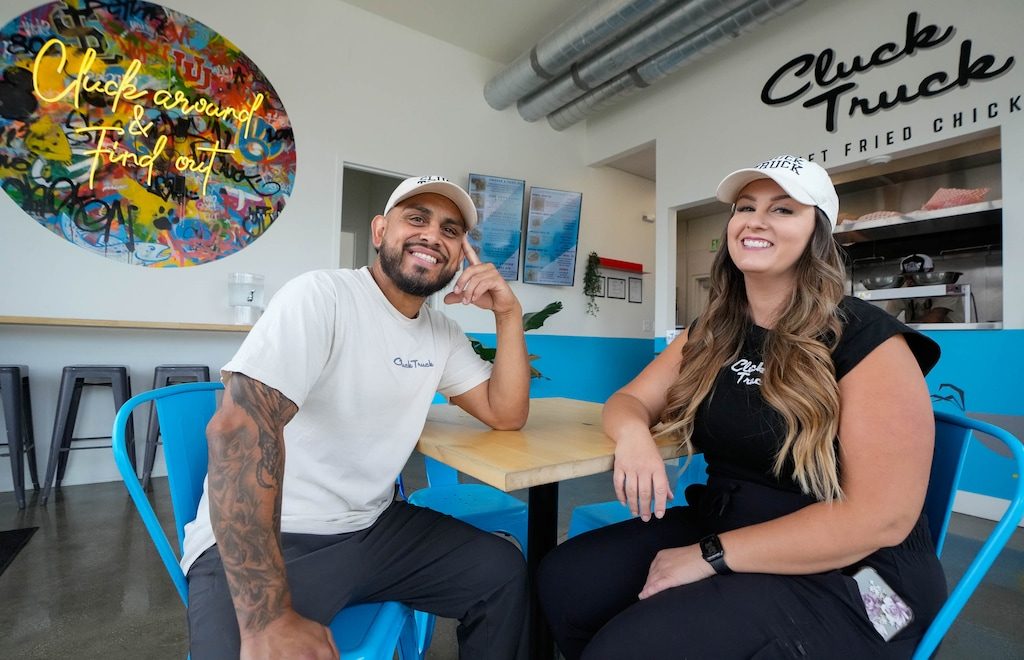
Utah Eats: Cluck Truck finds a brick-and-mortar home in Granary District
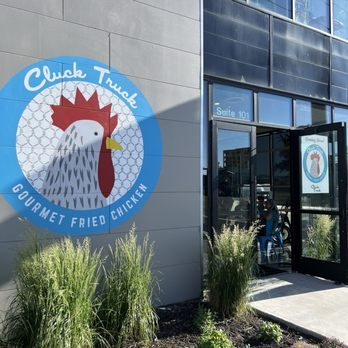
CLUCK TRUCK UTAH - Updated September 2026 - 72 Photos & 88 Reviews - 285 W 800th S, Salt Lake City, Utah - Food Trucks - Restaurant Reviews - Phone Number - Menu - Yelp
2.9K views
2:33
Utah food trucks dealing with rising costs of diesel and food
FOX 13 News Utah
8.7K views
2:16
Inspectors watch raw chicken juice flung over clean plates at ...
Local 3 News
991 views
0:34
King County health inspectors shut down 17 food ...
KING 5 Seattle
Images from Openverse under Creative Commons licenses. Videos from YouTube.
Voices
Curated perspectives — historical figures and your fellow readers.
Play
Exploring all sides of a story is often best achieved with Play.
Most of these play right now — no account needed. Sign up to save scores, keep a streak, and unlock Debate and Predict.
Log in
Sign Up
Higher or Lower
A number from this story, against one from elsewhere in the news — guess which is bigger, then keep the chain going. 5 rounds, 3 strikes; a miss costs a strike and resets your streak.
Example
Anchor
EU tariff revenue
$52B
Big for this kind of number
Mystery
Pentagon AI contract
?
Round 1
Streak: 0
Mystery
?
Keyboard: ↓/L lower · ↑/H higher
0 pts
Best streak: 0 · Rounds: 0
0 points — sign up to put that on the leaderboard.
Now try on this story
Connections
Sixteen names from the news. Find the four hidden groups of four. Four mistakes max.
Loading today's puzzle…
0/4 groups
Mistakes
Sign up to keep a daily streak — a new puzzle lands every day.
Now try on this story
Exit debate?
Your progress in this debate will be lost.
How it works
- 1 Two AI personas square off on this story.
- 2 You predict who'll win each round — correct picks earn XP.
- 3 One crossfire question is yours to fire. Pick it carefully.
Couldn't generate a topic
Select Your Champions
Choose one persona for each side of the debate
DEBATE TOPIC
Choose personas with different perspectives for a more dynamic debate.
SIDE A (PRO)
Select debater for this side:
No debate personas available right now.
SIDE B (CON)
Select debater for this side:
No debate personas available right now.
VS
Get ready to make your prediction...
Round of
Claim
Evidence
Stakes
Crossfire Answer
Closing Statement
Claim
Evidence
Stakes
Crossfire Answer
Closing Statement
Your Crossfire Question
Generating arguments...
Who's Got This Round?
Make your prediction before the referee scores
The referee scores both sides on
Correct predictions earn +20 XP
· Press 1 or 2 to pick
Evidence
40%
Logic
30%
Detail
20%
Style
10%
Round Results
Your Pick
Not this time
(%)
Overall Score
/10
Your Pick
Not this time
(%)
Overall Score
/10
Set the Crossfire
Pick the question both personas must answer in the final round
Crafting crossfire questions...
Choosing a question earns +10 XP crossfire bonus
🏆
Total XP Earned
Cred Change
Predictions
Debate Oracle! You called every round!
Sharp Instincts! You know your debaters!
The Coin Flip Strategist! Perfectly balanced!
The Contrarian! Bold predictions!
Inverse Genius! Try betting the opposite next time!
XP Breakdown
Base completion
+20 XP
Rounds played ( rounds x 5 XP)
+ XP
Correct predictions ( correct x 20 XP)
+ XP
Crossfire bonus
+10 XP
Accuracy
%
Prediction History
Round
You picked:
✓
✗
Now try on this story
Keep debating to level up your credibility and unlock achievements
People Involved
Organizations Involved
Cluck Truck
Restaurant business
Operating a storefront and food truck fleet in the Salt Lake City area
A fried chicken business that grew from a single 2015 food truck into a two-truck operation and now a Granary District storefront at 285 W 800 S.
Salt Lake County Health Department
Local government agency
Issuer of food establishment permits and inspector for county businesses
The agency that permits and inspects food establishments in Salt Lake County, publishing its records through Utah's environmental public health portal.
Timeline
October 2015 September 2026
3 events
Latest: Today
-
Storefront appears on county food establishment list
Today RegulatoryCluck Truck #V271Dv at 285 W 800 S appears on the Salt Lake County health department's public records page.
-
Salt Lake Tribune reports storefront opening
CoverageThe Tribune photographs Rodriguez and Davies at the new 285 W 800 S location in the Granary District.
-
Cluck Truck launches as a mobile fried chicken business
Business LaunchThe truck begins shuttling between Salt Lake City and Provo with 24-hour brined chicken wraps.
Scenarios
1
Cluck Truck storefront becomes an anchor of the Granary District
Likely
Resolves by Sep 12, 2027
Discussed by: Salt Lake Tribune local food coverage; neighborhood restaurant observers
The storefront at 285 W 800 S builds a steady lunch-and-dinner crowd, keeping the truck's menu alive in a permanent kitchen. The county record stays active through routine inspections, and the location becomes a neighborhood fixture rather than a novelty.
2
Storefront closes and Cluck Truck returns to the streets
Unlikely
Resolves by Sep 12, 2027
Discussed by: Independent restaurant analysts tracking post-opening attrition
The storefront proves too costly or under-trafficked, the owners shut the Granary District location, and the business falls back on its food truck roots — the model that carried it from 2015.
3
Cluck Truck expands to a second location
Possible
Resolves by End of 2028
Discussed by: Dim Hour venue data; local business-watch coverage
Demand from the storefront persuades the owners to add another shop or a commissary kitchen, showing up as a new establishment record on the county list. This would signal the brand is opening a second permanent site beyond 285 W 800 S.
Historical Context
3 moments from history that rhyme with this story — and how they unfolded.
1990-2014
The Halal Guys (New York City, 1990-2014)
Three Egyptian immigrants ran a hot dog cart in midtown Manhattan, then pivoted to chicken and gyro platters. The cart drew lines for two decades before the owners opened their first brick-and-mortar shop in 2014 and grew into a national chain.
Then
Storefront demand turned the cart's street-level cult into a fast-casual business with locations across the U.S.
Now
It became the standard example of a mobile food brand graduating to permanent real estate — a path Cluck Truck is trying.
Why this matters now
Halal Guys shows the graduation route: build a following on the street, then convert it into a permanent space. Cluck Truck is attempting the same move a decade into its run.
2008-present
Kogi Korean BBQ (Los Angeles, 2008)
Kogi rolled out a Korean-taco truck in Los Angeles in late 2008, using Twitter to announce daily locations. It ignited the gourmet food truck trend but never opened a flagship store, staying mobile and selling through trucks and catering.
Then
Kogi proved trucks could build a brand without a permanent address, running as a fleet rather than a restaurant.
Now
Its success made the food truck a launchpad for chefs and a stepping stone — or a replacement — for storefronts.
Why this matters now
Kogi is the counter-scenario to Cluck Truck: a successful truck brand that chose not to anchor itself to one location, keeping costs low and flexibility high.
2008-2012
The American food truck boom (2008-2012)
After the 2008 recession, cheap start-up costs pushed cooks out of restaurants and into trucks, letting them test menus and neighborhoods before risking a lease. Cities responded with permit systems that turned mobile food into a regulated industry.
Then
Trucks became market tests; many operators used the revenue and fan base to open storefronts.
Now
The truck-to-restaurant path is now a standard small-business route in American cities, including Salt Lake City.
Why this matters now
Cluck Truck rode exactly this path — starting mobile, building a following, then committing to a permanent kitchen.
Sources
(3)Related Stories
New Chick-fil-A location licensed to open on Salt Lake City's State Street
Built World
Updated Sep 2
Taco America licensed to open in Salt Lake City's west downtown
Money Moves
Updated 7 days ago
Brucie's Berries obtains health permit for Delta Center location
New Capabilities
Updated Sep 2
La Casa De La Empanada SLC gets county food permit for Salt Lake City location
Built World
Updated 7 days ago
Carib Sol/Bayanihan Fiesta applies for food license in Salt Lake City
Money Moves
Updated 2 hours ago
Hoodah Fest 2026 food permit appears in Salt Lake County records
Rule Changes
Updated 7 days ago