
Pull to refresh
Logo
SFO begins taxiway rehabilitation with $14.5 million federal grant

SFO begins taxiway rehabilitation with $14.5 million federal grant

Built World San Francisco, CA local

FAA award covers first 2,225 feet of aging Taxiway B pavement

September 10th, 2026: FAA obligates $14.5 million for SFO Taxiway B phase one

Overview

Updated 1 hour ago

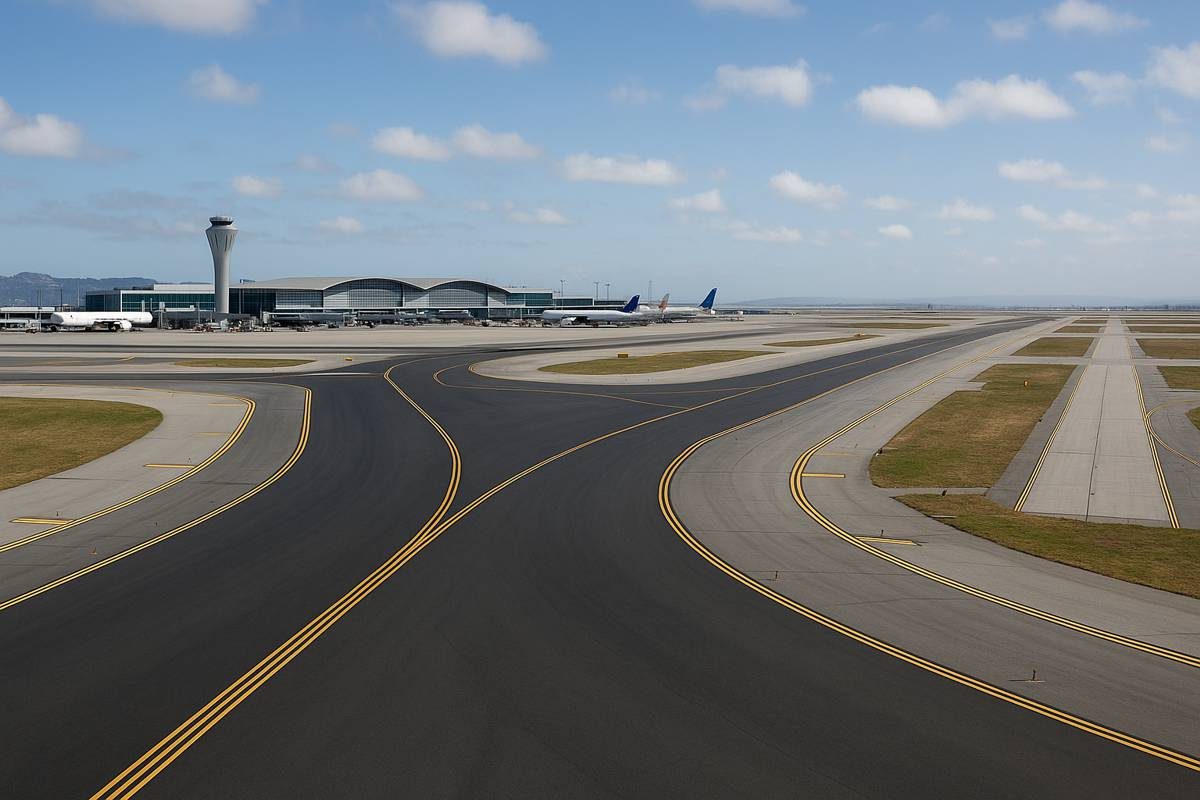
The Federal Aviation Administration has committed $14.5 million to San Francisco International Airport to begin fixing Taxiway B, the strip of pavement planes use to move between runways and gates. The money covers design and construction of the most deteriorated 2,225 feet of the 4,825-foot taxiway.

Aging runway and taxiway pavement can shed stones and chunks of asphalt, which jet engines can suck in or tires can blow over. The FAA's Airport Improvement Program, funded by airline ticket taxes, pays for rehabilitation projects like this at airports nationwide. SFO will need a second grant for the remaining 2,600 feet.

Why it matters

Taxiway B carries planes between SFO's runways and gates; without rehabilitation, loose pavement debris could damage aircraft at one of the nation's busiest airports.

Questions about this story

Free account needed to ask — your question is kept and asked for you right after sign-up. Answers are public.

No questions yet — be the first to ask.

Key Indicators

$14.5 million
FAA grant amount
Obligated for the first phase of Taxiway B rehabilitation; the full amount has not yet been spent.
4,825 feet
Total Taxiway B length
Full stretch of aging pavement eventually needing work, about 1.47 kilometers.
2,225 feet
Phase one coverage
Most deteriorated section funded by this grant, about 0.68 kilometers.

Voices

Curated perspectives — historical figures and your fellow readers.

Ever wondered what historical figures would say about today's headlines?

Sign up to generate historical perspectives on this story.

People Involved

Organizations Involved

Timeline

1 event Latest: September 10th, 2026 · 2 weeks ago
  1. FAA obligates $14.5 million for SFO Taxiway B phase one

    Latest Funding

    Federal award record posted, funding design and construction of 2,225 feet of deteriorating Taxiway B pavement.

Scenarios

1

SFO completes Taxiway B phase one construction

Likely Resolves by Q3 2029

Discussed by: SFO capital planning documents; the project's expected 2-to-3-year design-and-construction timeline

Design work typically takes 12 to 18 months. Construction then runs through 2028 and into 2029. If schedules hold, SFO and the FAA will announce completion of the 2,225-foot segment.

2

Cost inflation forces SFO to seek more taxiway funding

Possible Resolves by Q3 2028

Discussed by: California construction cost indexes and airport engineering trade reporting

Asphalt, concrete, and labor costs have risen sharply in California. If the project exceeds the $14.5 million grant, SFO would need to draw on airport operating funds or seek supplemental federal money, which could stretch the timeline.

3

FAA funds final stretch of SFO Taxiway B

Possible Resolves by Sep 10, 2027

Discussed by: FAA Airport Improvement Program award history; past multi-phase grant patterns at US hubs

The remaining 2,600 feet of Taxiway B still needs rehabilitation. SFO could apply for a second AIP grant once phase one moves from design into construction. Several major airports have secured consecutive-year AIP awards to complete multi-phase pavement projects.

Historical Context

2 moments from history that rhyme with this story — and how they unfolded.

1982

Airport and Airway Improvement Act (1982)

Congress created a dedicated trust fund for airport infrastructure, financed by passenger ticket taxes and aviation fuel taxes. The law established the Airport Improvement Program (AIP), which the FAA uses to distribute grants.

Then

US airports gained a predictable annual stream of federal money for safety, capacity, and maintenance projects.

Now

AIP grants have financed thousands of runway, taxiway, and safety projects nationwide. Nearly every commercial airport in America has received an AIP award at some point.

Why this matters now

The $14.5 million SFO grant is one of thousands of annual AIP disbursements, illustrating how the 1982 trust fund continues to underwrite airport pavement work.

July 2000

Air France Concorde crash (July 2000)

Air France Flight 4590 crashed shortly after takeoff from Paris Charles de Gaulle when a metal strip on the runway punctured a tire, sending debris into the fuel tank. All 109 people aboard and 4 on the ground died.

Then

The crash grounded the Concorde fleet and triggered global scrutiny of foreign object debris hazards on runways and taxiways.

Now

Airports worldwide stepped up pavement inspection and debris-removal programs. The incident remains the most cited example of why maintaining pavement integrity is a safety imperative.

Why this matters now

Taxiway B's deteriorating surface is exactly the kind of debris source the aviation industry has worked to eliminate since the 2000 crash. This grant funds that kind of prevention.

Sources

(2)

More from San Francisco, CA

Openings, permits and council decisions in San Francisco, CA, in your inbox every Monday.