


Pull to refresh
Logo
Schneider Electric signs $22.6 billion deal to acquire PTC

Schneider Electric signs $22.6 billion deal to acquire PTC

Money Moves

French energy technology giant's biggest-ever acquisition targets industrial software and AI

Today: Deal announced; Schneider shares slide nearly 10%

Overview

Updated 1 hour ago

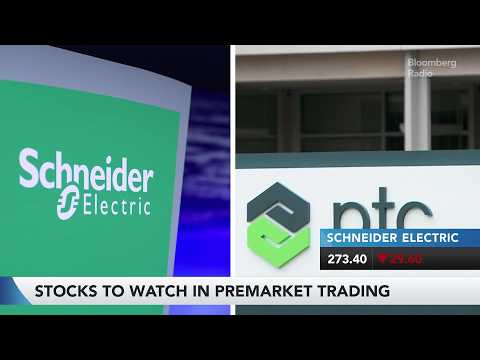
Schneider Electric, the French energy technology company, agreed Monday to buy PTC, the Boston-based industrial software firm, for $22.6 billion in cash. It's the largest acquisition in Schneider's history and a bet that software will drive the next phase of its data center business.

PTC shareholders would receive $205 per share, a 42.3% premium over the company's last close. Schneider's shares fell nearly 10% in early Paris trading Monday as investors questioned the price and the integration challenge.

Why it matters

The deal shows industrial hardware giants paying premium prices for software to control the AI data center buildout.

Questions about this story

Free account needed to ask — your question is kept and asked for you right after sign-up. Answers are public.

No questions yet — be the first to ask.

Key Indicators

$22.6B
PTC equity value
Total value of the all-cash acquisition, as stated in the merger agreement.
$205
Per-share cash offer
Cash payment each PTC shareholder receives when the deal closes.
42.3%
Premium over last close
Premium to PTC's last closing price; 46.1% above the 30-day average.
~10%
Schneider share decline
Schneider's stock fell nearly 10% in early Paris trading on announcement day.

Voices

Curated perspectives — historical figures and your fellow readers.

Ever wondered what historical figures would say about today's headlines?

Sign up to generate historical perspectives on this story.

People Involved

Organizations Involved

Timeline

2 events Latest: Today
  1. Deal announced; Schneider shares slide nearly 10%

    Today Announcement

    Schneider Electric publicly announces the acquisition. Its shares fall in early Paris trading as investors weigh the premium.

  2. Schneider Electric and PTC sign merger agreement

    Agreement

    Boards of both companies approve the all-cash deal at $205 per share, valuing PTC at $22.6 billion.

Scenarios

1

PTC shareholders approve merger, deal closes by Q3 2027

Likely Resolves by Q3 2027

Discussed by: Company statements; committed bridge financing from Morgan Stanley and Société Générale

PTC holders vote at a special meeting; a simple majority of outstanding shares is needed. The Hart-Scott-Rodino waiting period expires and the Committee on Foreign Investment in the United States (CFIUS) clears the deal without conditions. Schneider funds the roughly €22 billion purchase with €5-6 billion in new equity and €16-17 billion in debt, and the merger closes by late September 2027. Integration targets €250 million in annual cost savings by the third year and about €800 million in revenue synergies.

2

CFIUS review delays or conditions the PTC acquisition

Possible Resolves by Q2 2027

Discussed by: Merger agreement's enumerated closing conditions; Law360's coverage of legal structure

CFIUS reviews the deal because PTC's industrial software is used in product design across critical sectors. The committee could impose mitigation measures—restricting access to certain customer segments or data—or extend its review beyond the planned timeline. Any of those outcomes would push closing past Q3 2027 and could make the deal less attractive to Schneider.

3

Deal terminates, Schneider or PTC walks away

Unlikely Resolves by Q2 2027

Discussed by: Jefferies analysts, who flagged valuation risk in a client note

PTC shareholders reject the merger at the special meeting, or Schneider's board terminates the agreement citing a material adverse change. The all-cash structure and fully committed financing make a financing failure unlikely. Investor skepticism is real—Schneider's stock fell nearly 10% on announcement—but the 42.3% premium gives PTC shareholders strong incentive to approve.

Historical Context

3 moments from history that rhyme with this story — and how they unfolded.

November 2016 - March 2017

Siemens acquires Mentor Graphics (2016-2017)

Siemens, the German industrial conglomerate, agreed to buy Mentor Graphics, a US maker of electronic design automation software, for about $4.5 billion. The deal closed within five months and folded Mentor into Siemens' digital industries division.

Then

Siemens immediately gained chip-design software to pair with its factory automation hardware.

Now

It became a template for industrial conglomerates buying software to shift from selling hardware to selling systems.

Why this matters now

Like Siemens-Mentor, this deal has a European industrial giant paying a premium to fold US software into its portfolio, testing whether hardware companies can run software businesses.

January - October 2023

Emerson acquires National Instruments (2023)

Emerson Electric, a US automation company, pursued National Instruments, a maker of test and measurement systems, for nine months. It won with a $60-per-share cash offer worth roughly $8.2 billion after a hostile campaign.

Then

Emerson consolidated NI's software-heavy test tools into its automation portfolio.

Now

The deal underscored how industrial firms now view software as the revenue driver, not hardware.

Why this matters now

Emerson-NI shows the same playbook Schneider is running: buying a software-centered firm to capture higher-margin, recurring revenue.

November 2017 - March 2018

Broadcom-Qualcomm blocked by CFIUS (2018)

Broadcom, a Singapore-based chipmaker, launched a hostile $117 billion bid for Qualcomm, a US semiconductor giant. President Donald Trump blocked the deal on national security grounds after the Committee on Foreign Investment in the United States (CFIUS) flagged risks.

Then

Broadcom abandoned the bid and relocated its headquarters to the US.

Now

It established that CFIUS can kill large cross-border tech acquisitions entirely, not just delay them.

Why this matters now

The PTC deal also requires CFIUS clearance, since PTC's industrial software touches critical sectors. Broadcom-Qualcomm defines the upper bound of that regulatory risk.

Sources

(10)