


Pull to refresh
Logo
3D scan reveals superconductors are patchworks, not uniform crystals

3D scan reveals superconductors are patchworks, not uniform crystals

New Capabilities

Forty years of assumptions about cuprate structure may need revision

Yesterday: Patchwork structure revealed inside cuprate

Overview

Updated 1 hour ago

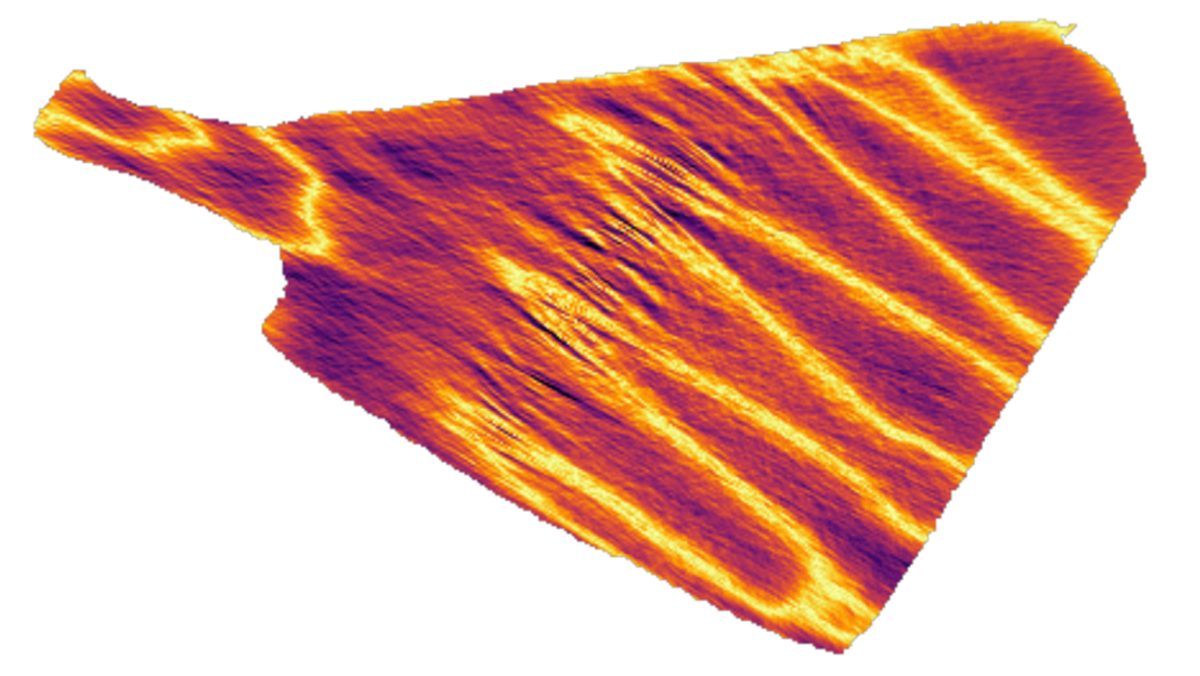
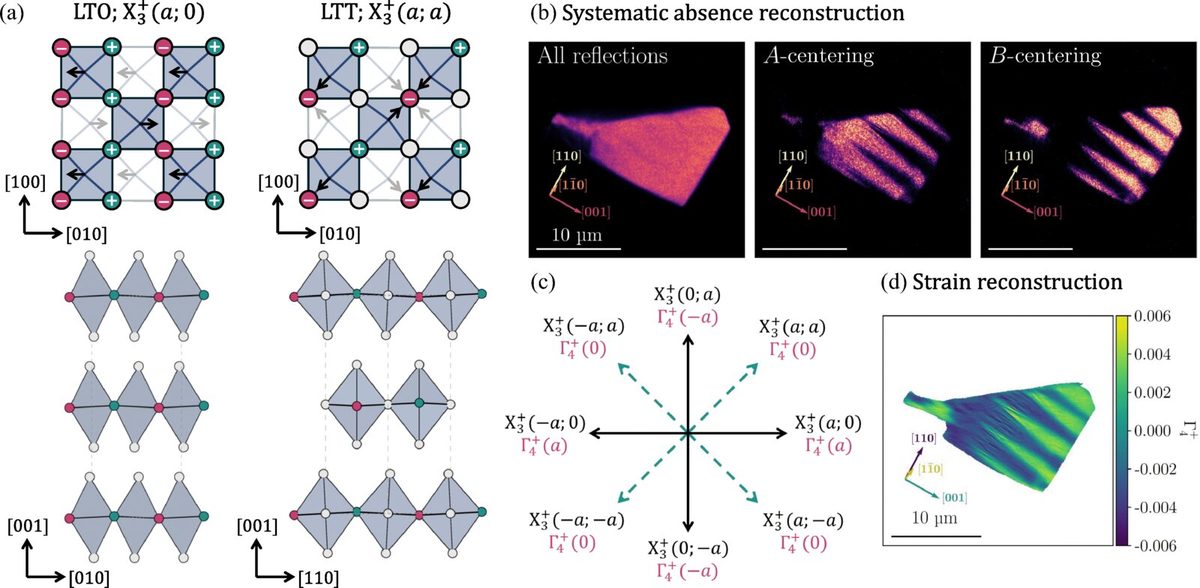
For 40 years, physicists assumed cuprate superconductors were uniform crystals. A 3D scan of a material called LESCO shows a hidden patchwork of two atomic arrangements, divided by boundaries hundreds of times wider than expected.

Cuprates are copper-oxide ceramics that conduct electricity with zero resistance, but only at deep-cold temperatures. The wide boundaries appear to weaken superconductivity, which could explain why some materials outperform others and why pushing them to higher temperatures has been so hard.

Why it matters

If the hidden boundaries weaken superconductivity, learning to control them could unlock higher-temperature superconductors and more efficient energy systems.

Questions about this story

Free account needed to ask — your question is kept and asked for you right after sign-up. Answers are public.

No questions yet — be the first to ask.

Key Indicators

40 years
How long cuprates were assumed to be uniform crystals
The working assumption since the discovery of high-temperature superconductivity in 1986.
2
Distinct crystal arrangements found inside one sample
Two slightly different atomic structures coexist inside the LESCO cuprate.
hundreds
Times wider than expected the crystal boundaries are
The transition zones between regions behave almost like structures of their own.
€150M
Cost of the ESRF upgrade that enabled the scan
The European Synchrotron Radiation Facility's upgrade made the 3D imaging possible.

Voices

Curated perspectives — historical figures and your fellow readers.

Ever wondered what historical figures would say about today's headlines?

Sign up to generate historical perspectives on this story.

People Involved

Organizations Involved

Timeline

1986 October 2026

2 events Latest: Yesterday
  1. Patchwork structure revealed inside cuprate

    Latest Research publication

    3D X-ray imaging shows LESCO contains two atomic arrangements whose wide boundaries may weaken superconductivity.

  2. Cuprate superconductors discovered

    Discovery

    Bednorz and Müller find superconductivity in a copper-oxide ceramic at 35 K, far beyond theory's limits.

Scenarios

1

Patchwork found across the cuprate family

Likely Resolves by Oct 24, 2028

Discussed by: The Warwick team, which said it suspects the pattern is widespread among cuprates

Other research groups apply the same 3DXRD technique to different cuprate compounds. If the patchwork is common, it would confirm the finding's reach and force a broad reinterpretation of bulk measurements across the field.

2

Boundary engineering lifts critical temperature

Possible Resolves by Oct 24, 2031

Discussed by: University of Warwick and ESRF researchers involved in the study

If the wide boundaries weaken superconductivity, growing crystals with fewer or narrower boundaries could raise the critical temperature. A demonstration would point a practical path toward higher-temperature superconductors.

3

Hidden structures found in hydrogen-rich superconductors

Uncertain Resolves by Oct 24, 2030

Discussed by: The Warwick team, which noted the pattern could occur in high-pressure superconducting materials

The same 3DXRD technique is applied to hydrogen-rich compounds being studied for superconductivity under extreme pressure. If wide boundaries appear there too, the search for room-temperature superconductors gains another complication.

Historical Context

2 moments from history that rhyme with this story — and how they unfolded.

April 1982 - October 2011

Quasicrystals (1982-2011)

Materials scientist Daniel Shechtman, working at the National Bureau of Standards, observed electron diffraction patterns with 5-fold symmetry in a manganese-aluminum alloy. Crystallography held that crystals must have periodic, repeating lattices, and 5-fold symmetry violated that rule. Shechtman faced ridicule, and Nobel laureate Linus Pauling dismissed the finding publicly.

Then

Shechtman was asked to leave his research group over the finding, and it took years for the community to accept it. In 2011, he won the Nobel Prize in Chemistry.

Now

The discovery forced a redefinition of what counts as a crystal and showed that core structural assumptions about materials can be wrong.

Why this matters now

Like the Warwick finding, deep-held assumptions about material structure gave way only when better observation tools arrived.

September 1986 - 1987

High-temperature superconductivity (1986)

J. Georg Bednorz and K. Alex Müller of IBM Zurich found that a ceramic compound of lanthanum, barium, and copper oxide became superconducting at 35 K, far above what BCS theory predicted. Within a year, researchers at the University of Houston found that a yttrium-barium-copper-oxide compound superconducted at 93 K, above liquid nitrogen's boiling point of 77 K.

Then

Bednorz and Müller won the 1987 Nobel Prize in Physics, just a year after the discovery. The cuprate race that followed produced the highest-temperature superconductors known at ambient pressure.

Now

Cuprates have remained central to superconductivity research for four decades, and the mechanism behind their high transition temperatures is still debated.

Why this matters now

The cuprates are the very materials whose structure is now being re-examined. The uniform-crystal assumption has underpinned nearly all cuprate theory since Bednorz and Müller's breakthrough.

Sources

(6)