
Pull to refresh
Logo
Daily Brief
Following
Why
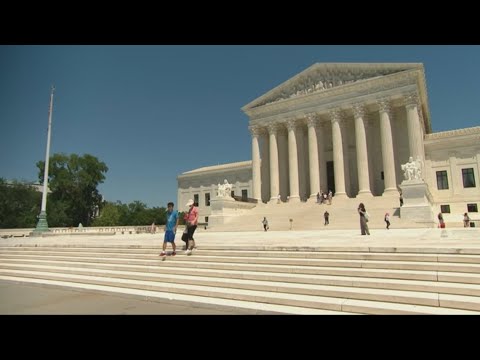
Supreme Court tests whether marijuana users can own guns

Supreme Court tests whether marijuana users can own guns

Rule Changes
By Newzino Staff |

United States v. Hemani pits a 1968 federal firearms ban against the Second Amendment, with implications for millions of Americans in states where marijuana is legal

Today: Supreme Court hears oral arguments

Overview

Since 1968, federal law has barred anyone who uses illegal drugs from owning a firearm. On March 2, 2026, the Supreme Court heard arguments over whether that ban violates the Second Amendment—a question that could reshape gun rights for the roughly 50 million Americans who use marijuana in states where it is legal under state law but still illegal under federal law.

Key Indicators

~50M
Americans potentially affected
Estimated number of marijuana users in states where it is legal under state law but federally prohibited
24
States with legal recreational marijuana
Adult-use cannabis is legal in 24 states as of 2025, with 40 states permitting medical use
30+
Amicus briefs filed
More than 30 organizations filed friend-of-the-court briefs, most supporting Hemani
58 years
Age of the statute
Section 922(g)(3) of the Gun Control Act has been law since 1968

Interactive

Exploring all sides of a story is often best achieved with Play.

Ever wondered what historical figures would say about today's headlines?

Sign up to generate historical perspectives on this story.

Sign Up

Debate Arena

Two rounds, two personas, one winner. You set the crossfire.

People Involved

AH
Ali Danial Hemani
Defendant (Awaiting Supreme Court ruling)
D. John Sauer
D. John Sauer
United States Solicitor General (Argued for the government before the Supreme Court)
Erin Murphy
Erin Murphy
Lead counsel for Hemani (Argued for Hemani before the Supreme Court)

Organizations Involved

Supreme Court of the United States
Federal Court
Status: Hearing the case; ruling expected by June 2026

The nation's highest court, which has reshaped Second Amendment law through three landmark decisions since 2008.

United States Court of Appeals for the Fifth Circuit
Federal Appellate Court
Status: Ruled Section 922(g)(3) unconstitutional as applied to Hemani

The federal appeals court covering Texas, Louisiana, and Mississippi, which struck down the drug-user firearms ban and triggered the Supreme Court's review.

National Rifle Association (NRA)
Advocacy Organization
Status: Filed amicus brief supporting Hemani

The nation's largest gun-rights organization, which sided against the Trump administration by arguing the firearms ban for non-intoxicated marijuana users lacks historical grounding.

American Civil Liberties Union (ACLU)
Civil Liberties Organization
Status: Representing Hemani as co-counsel

The ACLU joined as co-counsel for Hemani, arguing that Trump's own marijuana rescheduling order underscores how outdated the drug-user firearms ban has become.

National Organization for the Reform of Marijuana Laws (NORML)
Advocacy Organization
Status: Filed amicus brief supporting Hemani

The leading marijuana-policy reform organization argued that cannabis has been part of American life since the founding era and that alcohol has a far stronger historical link to violence.

Timeline

  1. Supreme Court hears oral arguments

    Legal

    The justices hear arguments in United States v. Hemani, with Solicitor General D. John Sauer defending the statute and attorney Erin Murphy arguing for Hemani. The session tests how strictly the Court will apply its Bruen framework to the drug-user firearms ban.

  2. NRA, NORML, and 30+ groups file briefs for Hemani

    Legal

    More than 30 organizations file amicus briefs supporting Hemani, including the NRA, NORML, the Cato Institute, and the Reason Foundation. The briefs argue the drug-user gun ban lacks historical grounding.

  3. Trump orders marijuana rescheduling

    Policy

    President Trump signs an executive order directing the attorney general to expedite moving marijuana from Schedule I to Schedule III of the Controlled Substances Act. The order does not legalize marijuana but undermines the government's argument that marijuana users are categorically dangerous.

  4. Supreme Court takes up the case

    Legal

    The Supreme Court grants the government's petition for certiorari in United States v. Hemani, agreeing to resolve a growing circuit split over whether drug users can be barred from owning firearms.

  5. Fifth Circuit strikes down drug-user gun ban

    Legal

    The Fifth Circuit affirms the dismissal of Hemani's indictment, ruling that Section 922(g)(3) is unconstitutional as applied to sober citizens based solely on their status as drug users.

  6. Rahimi softens the Bruen test

    Legal

    The Supreme Court votes 8-1 in United States v. Rahimi to uphold the federal ban on gun possession by people under domestic violence restraining orders. Chief Justice Roberts writes that historical analogues need only be 'similar,' not identical—loosening the strict Bruen framework.

  7. Hemani indicted, magistrate dismisses charges

    Legal

    A grand jury indicts Hemani for violating Section 922(g)(3). A magistrate judge dismisses the indictment, finding the government failed to identify historical analogues for the statute as required by Bruen.

  8. Bruen creates 'history and tradition' test

    Legal

    The Supreme Court strikes down New York's concealed-carry law in New York State Rifle & Pistol Association v. Bruen, requiring all gun regulations to have historical analogues from the founding era. The decision upends how courts evaluate firearms laws nationwide.

  9. FBI searches Hemani's home

    Investigation

    FBI agents execute a search warrant at Ali Danial Hemani's family home in Texas, finding a 9mm pistol, 60 grams of marijuana, and 4.7 grams of cocaine. Hemani admits using marijuana every other day.

  10. Ninth Circuit upholds gun ban for medical marijuana cardholders

    Legal

    In Wilson v. Lynch, the Ninth Circuit rules that barring medical marijuana cardholders from purchasing firearms does not violate the Second Amendment, applying intermediate scrutiny.

  11. Heller establishes individual gun right

    Legal

    The Supreme Court rules 5-4 in District of Columbia v. Heller that the Second Amendment protects an individual's right to own firearms for self-defense, independent of militia service.

  12. Gun Control Act becomes law

    Legislation

    President Lyndon Johnson signs the Gun Control Act, which creates categories of 'prohibited persons' barred from owning firearms, including users of controlled substances under what becomes Section 922(g)(3).

Scenarios

1

Court narrows gun ban to active intoxication only

Discussed by: SCOTUSblog, Duke Center for Firearms Law, Cato Institute, Reason Foundation

The Court rules that Section 922(g)(3) cannot constitutionally be applied to someone based solely on their status as a drug user, but leaves open the possibility that the government can prohibit firearm possession while actually under the influence. This 'active intoxication' standard would align with the Fifth Circuit's reasoning and historical laws that targeted drunkenness, not drinking. It would effectively end federal prosecution of marijuana users who own guns unless they are caught possessing firearms while impaired. This is the narrowest way to rule for Hemani and would have the broadest support among the justices.

2

Court strikes down the entire drug-user gun ban

Discussed by: NRA, NORML, Second Amendment scholars, Bearing Arms

The Court declares Section 922(g)(3) facially unconstitutional, finding no adequate historical analogue for a blanket ban on gun ownership by drug users. This would go beyond Hemani's individual case and invalidate the statute entirely, instantly restoring gun rights for all drug users nationwide. Some analysts consider this unlikely given the Court's preference for narrow rulings and the Rahimi precedent, but it would be the logical conclusion if the justices find the government's historical analogies unpersuasive.

3

Court upholds the ban, deferring to Congress on dangerousness

Discussed by: Everytown for Gun Safety, Brady Center, 19 state attorneys general, The Conversation

The Court reverses the Fifth Circuit and upholds Section 922(g)(3), ruling that Congress can categorically disarm habitual drug users as a class of persons who pose heightened risks. The government would rely on Rahimi's softened historical test and founding-era laws treating habitual drunkards as dangerous. Gun-control organizations and 19 state attorneys general support this outcome, arguing that drug use is a reasonable proxy for dangerousness. This would preserve the status quo but leave millions of state-legal marijuana users in federal legal jeopardy.

4

Court sidesteps on procedural grounds, citing rescheduling

Discussed by: SCOTUSblog, Ropes & Gray legal analysis

The Court avoids a definitive ruling by finding the case moot or unripe because Trump's marijuana rescheduling order, if completed, would move marijuana to Schedule III—meaning recreational use would still be 'unlawful' but the policy landscape would have shifted. Alternatively, the Court could remand for further proceedings in light of the rescheduling. This off-ramp would delay a constitutional resolution but seems unlikely given that the justices specifically chose to take this case.

Historical Context

United States v. Rahimi (2024)

June 2024

What Happened

The Supreme Court considered whether Zackey Rahimi, a man subject to a domestic violence restraining order in Texas, could be barred from possessing firearms under a different provision of the same federal statute—18 United States Code Section 922(g)(8). The Fifth Circuit had struck down that ban too, using the same Bruen framework, ruling the government had no historical analogue for disarming domestic abusers.

Outcome

Short Term

The Court reversed the Fifth Circuit 8-1, with only Justice Clarence Thomas dissenting. Chief Justice Roberts wrote that historical analogues need not be 'dead ringers'—only similar enough in principle.

Long Term

Rahimi softened the strict Bruen test and showed the Court's willingness to uphold 'prohibited persons' categories when it sees a genuine public safety rationale. But the narrowness of some concurrences left open the question of how far the principle extends.

Why It's Relevant Today

Rahimi is the direct legal backdrop for Hemani. The government will argue that if disarming domestic abusers passes the historical test, disarming habitual drug users should too. Hemani's lawyers will argue that domestic violence involves proven individual dangerousness, while drug-user status is a far weaker proxy.

Gonzales v. Raich (2005)

June 2005

What Happened

Angel Raich, a California medical marijuana patient, challenged the federal government's authority to prosecute marijuana users in states where medical cannabis was legal. The Supreme Court ruled 6-3 that Congress could regulate marijuana under the Commerce Clause even when state law permitted its use, reasoning that homegrown marijuana could affect interstate markets.

Outcome

Short Term

Federal supremacy over marijuana policy was affirmed, and state-legal users remained subject to federal prosecution.

Long Term

The decision cemented a legal regime where marijuana can be simultaneously legal under state law and illegal under federal law—the exact tension now animating the Hemani firearms case.

Why It's Relevant Today

Raich created the federal-state contradiction at the heart of Hemani. Because marijuana remains a Schedule I controlled substance federally, the approximately 50 million Americans who use it in legal states are technically 'unlawful users' barred from owning guns—even though their state governments told them their use was lawful.

Prohibition in the United States (1920–1933)

January 1920 – December 1933

What Happened

The Eighteenth Amendment banned the manufacture, sale, and transportation of alcohol nationwide. The average American in the founding era drank more than three gallons of spirits per year—roughly double today's rate. Despite this, founding-era laws targeting 'habitual drunkards' focused on behavior (vagrancy, disorderly conduct) rather than blanket disarmament.

Outcome

Short Term

Prohibition generated massive noncompliance, a black market controlled by organized crime, and widespread public backlash.

Long Term

It was repealed after 13 years—the only constitutional amendment ever reversed—demonstrating the limits of prohibiting widely used substances.

Why It's Relevant Today

The government's core argument in Hemani rests on founding-era laws regulating habitual drunkards. But those laws punished drunken behavior, not the status of being a drinker. With 87% of Americans now supporting marijuana legalization, Hemani forces the Court to decide whether a 1968 statute can survive a historical test drawn from an era when alcohol use was ubiquitous and drug prohibition did not exist.

Sources

(15)