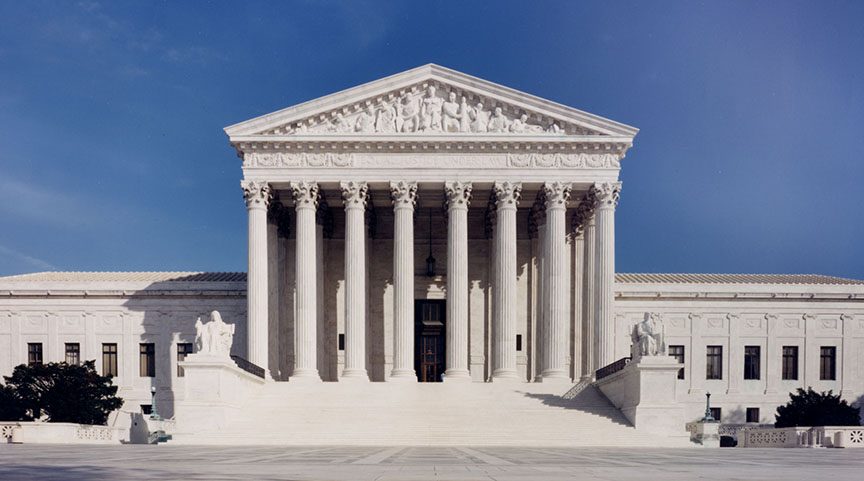
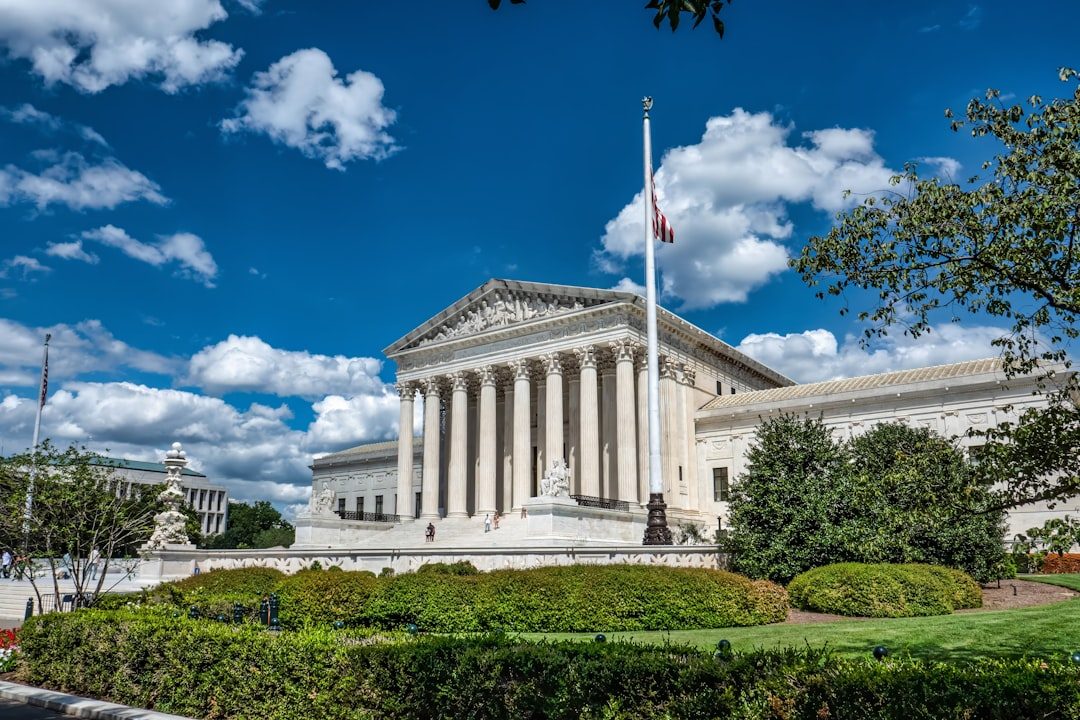
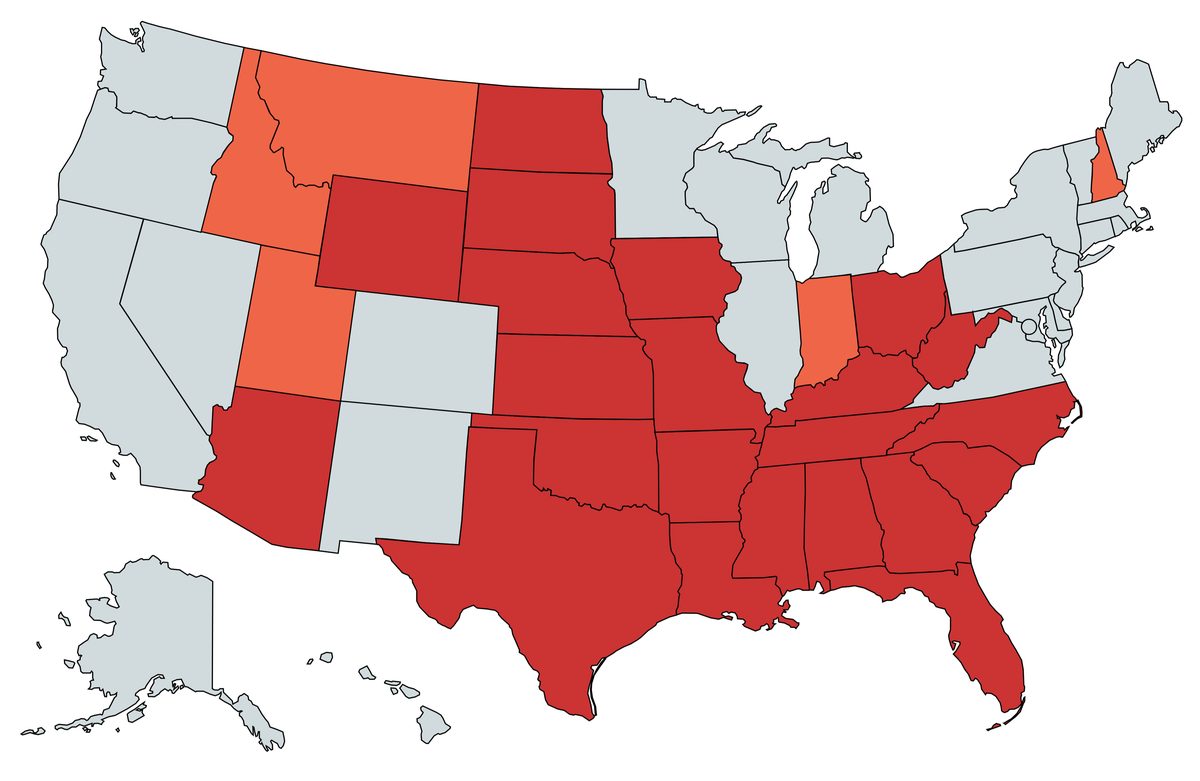
The Supreme Court heard more than three hours of oral arguments on January 13, 2026, in two cases that could determine whether states can bar transgender students from sports teams matching their gender identity. The conservative majority signaled strong support for upholding state restrictions, though several justices appeared wary of a broad ruling.
Little v. Hecox (Idaho) and West Virginia v. B.P.J. challenge laws under Title IX and the 14th Amendment's Equal Protection Clause. Bans exist in 27 states and affect an estimated 122,000 transgender high school athletes nationwide. It's the first time the Court has taken up the constitutionality of such laws.
Conservative justices, led by Chief Justice Roberts and Justice Kavanaugh, raised concerns about fairness to cisgender girls while exploring potential narrow rulings. A decision is expected by late June — it could validate state restrictions enacted since 2020 or strike them down as unconstitutional discrimination. The same 6-3 majority ruled against transgender rights in a related medical care case last June.
Questions about this story
Free account needed to ask — your question is kept and asked for you right after sign-up. Answers are public.
No questions yet — be the first to ask.
Key Indicators
27
States with transgender athlete bans
Number of states that have enacted laws restricting transgender athletes from competing on teams matching their gender identity
122,000
Estimated trans teens in high school sports
Williams Institute estimate of transgender youth ages 13-17 participating in team athletics
6-3
Conservative Court majority
The same majority that upheld Tennessee's transgender medical care ban in June 2025
69%
Americans supporting restrictions
June 2025 Gallup survey showing majority believe transgender girls should play on boys' teams only
21 events
Latest: January 13th, 2026 · 9 months ago
Showing 8 of 21
JK to step
Tap a bar to jump to that date
Jump to
January 2026
Supreme Court Hears Oral Arguments
LatestLegal
The Court hears arguments in Little v. Hecox and West Virginia v. B.P.J., the first cases to test whether state bans on transgender athletes violate Title IX and the Constitution.
Oral Arguments Conclude After 3+ Hours
Legal
The Court concludes arguments with conservative justices signaling support for state bans. Chief Justice Roberts questions transgender 'exception' to sex-based laws; Justice Alito presses attorneys on definitions of sex; Justice Kavanaugh emphasizes harm to cisgender girls who lose team spots.
October 2025
Court Refuses to Dismiss Idaho Case
Legal
A federal judge denies Hecox's mootness request, ruling that Idaho has a 'fair right to have its arguments heard and adjudicated once and for all.'
September 2025
Hecox Asks to Withdraw from Case
Legal
Citing 'significant challenges' and negative public scrutiny, Lindsay Hecox requests the Supreme Court dismiss her case. She no longer wishes to compete in Idaho sports.
July 2025
U.S. Olympic Committee Adopts Ban
Policy
The USOPC updates its athlete safety policy to comply with Trump's executive order, requiring all 50 national governing bodies to restrict transgender women from women's competition.
Supreme Court Agrees to Hear Athlete Cases
Legal
The Court grants review of both Little v. Hecox and West Virginia v. B.P.J., setting up the first direct ruling on transgender sports participation.
June 2025
Supreme Court Upholds Transgender Care Ban
Legal
In United States v. Skrmetti, a 6-3 majority rules that Tennessee's ban on gender-affirming care for minors does not violate the Equal Protection Clause, applying the deferential rational basis standard.
February 2025
NCAA Reverses Transgender Policy
Policy
Within 24 hours of Trump's order, the NCAA changes its policy to limit women's sports competition to athletes assigned female at birth.
Trump Signs Executive Order on Trans Athletes
Executive Action
Executive Order 14201, titled 'Keeping Men Out of Women's Sports,' threatens to revoke federal funding from schools allowing transgender girls on girls' teams.
January 2025
Trump Returns to White House
Political
Donald Trump is inaugurated for a second term, having campaigned on restricting transgender participation in women's sports.
June 2024
Ninth Circuit Upholds Idaho Injunction
Legal
The appeals court affirms that Idaho's ban likely violates the Equal Protection Clause, keeping the preliminary injunction in place.
April 2024
Fourth Circuit Rules for B.P.J.
Legal
The appeals court reverses the district court, holding that West Virginia's law violates Title IX because it discriminates 'on the basis of sex' against transgender students.
April 2023
Supreme Court Declines to Lift Injunction
Legal
The Court denies West Virginia's emergency request to enforce its ban while appeals continue. Justices Alito and Thomas dissent.
January 2023
West Virginia District Court Rules for State
Legal
Judge Goodwin reverses course after full briefing, concluding West Virginia's ban is lawful. B.P.J. appeals while remaining on girls' teams under ongoing injunction.
March 2022
Lia Thomas Wins NCAA Championship
Sports
University of Pennsylvania swimmer Lia Thomas becomes the first openly transgender athlete to win an NCAA Division I national championship, winning the 500-yard freestyle amid protests.
July 2021
Court Allows B.P.J. to Compete
Legal
U.S. District Judge Joseph Goodwin grants preliminary injunction, allowing B.P.J. to join her middle school girls' track team.
May 2021
11-Year-Old Sues West Virginia
Legal
The ACLU and Lambda Legal file suit on behalf of B.P.J. (later identified as Becky Pepper-Jackson), a middle schooler who would be barred from her track team.
April 2021
West Virginia Enacts Similar Ban
Legislation
Governor Jim Justice signs the Save Women's Sports Act, despite being unable to name any transgender athletes competing in the state.
August 2020
Federal Court Blocks Idaho Ban
Legal
U.S. District Judge David Nye grants preliminary injunction, finding Hecox likely to succeed on her equal protection claim. Idaho cannot enforce the law against transgender athletes.
April 2020
Lindsay Hecox Challenges Idaho Law
Legal
The ACLU files suit on behalf of Lindsay Hecox, a 19-year-old Boise State freshman who wants to try out for women's track and cross country.
March 2020
Idaho Becomes First State to Ban Transgender Athletes
Legislation
Governor Brad Little signs the Fairness in Women's Sports Act, making Idaho the first state to bar transgender athletes from competing on women's and girls' teams at all educational levels.
Scenarios
1
Court Upholds State Bans Under Rational Basis Review
The Court applies the same framework as its Skrmetti ruling, concluding that state bans classify based on biological sex rather than transgender status and therefore face only rational basis review. Under this deferential standard, states need only show a reasonable connection between the bans and their interest in competitive fairness—a low bar they would easily clear. This outcome would validate all 27 existing state bans and likely prompt the remaining states to enact similar laws.
The Court extends its 2020 Bostock reasoning to Title IX, holding that discrimination based on transgender status is inherently discrimination 'on the basis of sex.' This would invalidate categorical bans but might leave room for case-by-case restrictions based on specific competitive advantages. Given the Court's refusal to apply Bostock reasoning in Skrmetti and its 6-3 conservative composition, this outcome appears unlikely.
The Court issues a narrow ruling focused on B.P.J.'s specific situation—she never experienced male puberty and has hormone levels typical of cisgender girls. This could hold that blanket bans are unconstitutional as applied to individuals who transitioned before puberty while leaving broader questions unresolved. Such an outcome would create uncertainty and guarantee future litigation over where to draw lines.
4
Court Dismisses One or Both Cases on Procedural Grounds
The Court could dismiss Little v. Hecox as moot given that the plaintiff has withdrawn from competing and no longer has a stake in the outcome. West Virginia v. B.P.J. could continue, but a dismissal of the Idaho case would limit the ruling's geographic scope and leave the Ninth Circuit precedent intact in western states. However, the Court's refusal to dismiss despite Hecox's request suggests the justices want to resolve the legal questions.
Historical Context
3 moments from history that rhyme with this story — and how they unfolded.
1 of 3
August 1976 - August 1977
Richards v. U.S. Tennis Association (1977)
Renée Richards, a 42-year-old ophthalmologist and former men's tennis player, was barred from the 1976 U.S. Open after refusing to take a chromosomal sex test instituted specifically to exclude her. She sued the USTA for discrimination under New York's Human Rights Law.
Then
New York Supreme Court Justice Alfred Ascione ruled the chromosome test 'grossly unfair, discriminatory and inequitable,' declaring Richards legally female and entitled to compete. She played in the 1977 U.S. Open, losing in the first round to Virginia Wade.
Now
Richards played professionally until 1981, reaching as high as 20th in world rankings. The case established an early legal precedent for transgender athlete participation, though it was decided under state civil rights law rather than federal constitutional grounds.
Why this matters now
The Supreme Court cases represent the first federal constitutional test of the question Richards raised 50 years ago: whether sports organizations can categorically exclude transgender women. Unlike Richards, who competed at the elite professional level, today's cases involve K-12 and collegiate sports governed by Title IX.
2 of 3
October 2019 - June 2020
Bostock v. Clayton County (2020)
The Supreme Court consolidated three cases of employees fired for being gay or transgender to decide whether Title VII's prohibition on sex discrimination in employment covers sexual orientation and gender identity. Gerald Bostock was fired from a Georgia county job after joining a gay softball league; Aimee Stephens was fired from a Michigan funeral home after announcing her transition.
Then
In a 6-3 decision written by Justice Neil Gorsuch, the Court held that Title VII protects LGBTQ employees. Using textualist reasoning, Gorsuch wrote it is 'impossible to discriminate against a person for being homosexual or transgender without discriminating against that individual based on sex.'
Now
Lower courts split on whether Bostock's reasoning extends to Title IX (which uses similar 'on the basis of sex' language). The Fourth Circuit applied Bostock to rule for B.P.J.; the Court declined to extend its reasoning to the Tennessee medical care case in Skrmetti.
Why this matters now
The challengers in both sports cases invoke Bostock, arguing that banning transgender students from teams matching their gender identity is discrimination 'on the basis of sex' under Title IX. Whether the Court applies or distinguishes Bostock is a central question.
3 of 3
April 2024 - June 2025
United States v. Skrmetti (2025)
Families of transgender minors and a physician challenged Tennessee's ban on puberty blockers and hormone therapy for treatment of gender dysphoria, arguing it violated the Equal Protection Clause. The Biden administration joined the case, arguing the law discriminated based on sex.
Then
The Supreme Court ruled 6-3 that Tennessee's law does not classify based on sex or transgender status, applying rational basis review rather than heightened scrutiny. Chief Justice Roberts wrote that the law made permissible distinctions based on age and medical purpose.
Now
The decision validated similar laws in 25 states and established a framework highly favorable to state regulations affecting transgender people. The Court explicitly declined to apply Bostock's reasoning beyond employment law.
Why this matters now
Decided just two weeks before the Court agreed to hear the athlete cases, Skrmetti provides the most recent signal of how the conservative majority approaches transgender-related claims. The framework—treating regulations as sex-neutral rather than discriminatory—could easily apply to sports bans.