


Every rechargeable battery in every electric car on the road carries the same vulnerability: if something goes wrong inside a cell — a puncture, a manufacturing defect, a short circuit — temperatures can spike and trigger a self-feeding chain reaction called thermal runaway, producing toxic smoke, fire, and sometimes explosions. A team at the Chinese Academy of Sciences has now published results in Nature Energy showing a sodium-ion battery with a built-in chemical failsafe: an electrolyte that automatically solidifies into a physical barrier when the cell heats past 150 degrees Celsius, cutting off the chain reaction before it starts. The battery survived both nail-puncture and 300-degree-Celsius oven tests with zero smoke, fire, or explosion — a first for a large-format sodium-ion cell.
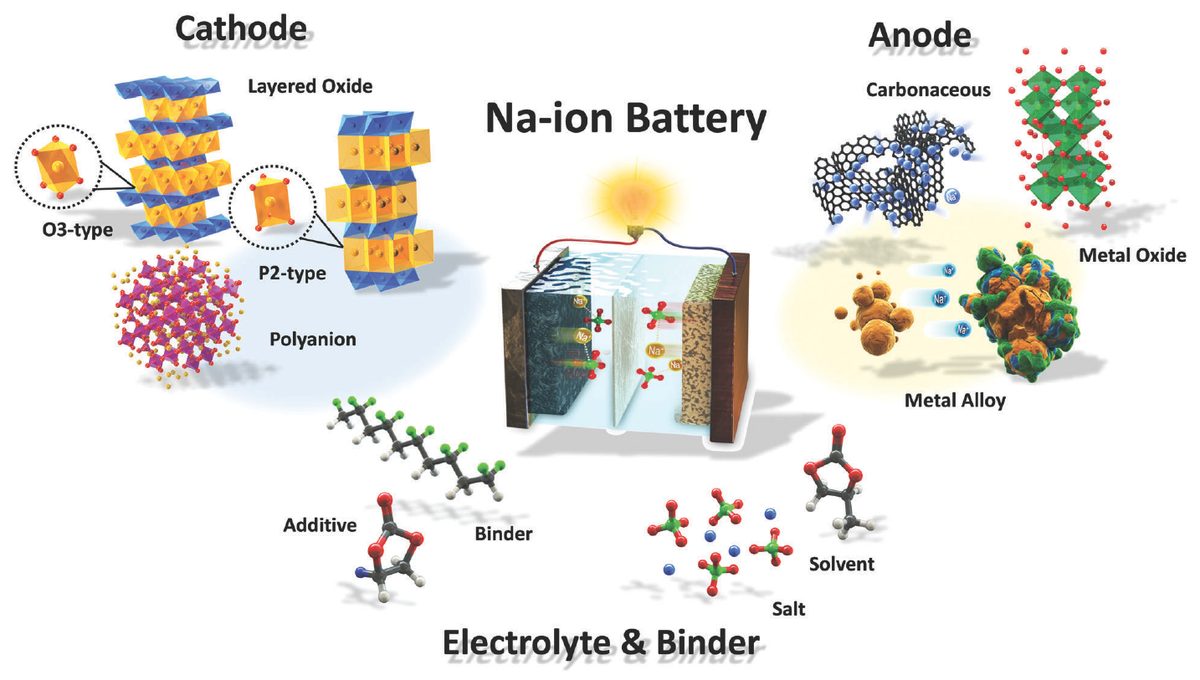
The breakthrough matters for two reasons. First, it addresses the single biggest consumer fear about electric vehicles — that their batteries can catch fire — using a mechanism that requires no external sensors, cooling systems, or electronics. Second, it does so in a sodium-ion battery, a cheaper chemistry that replaces lithium with the sixth most abundant element in Earth's crust, sidestepping the volatile lithium supply chain entirely. With an energy density of 211 watt-hours per kilogram and an operating range from minus 40 to 60 degrees Celsius, the cell is competitive with current lithium iron phosphate batteries already powering millions of vehicles. The gap between laboratory proof and factory production remains, but the raw materials are conventional industrial chemicals, which the researchers say makes scale-up feasible.