

Pull to refresh
Logo
High Court clears UK's largest solar farm to proceed

High Court clears UK's largest solar farm to proceed

Built World

Springwell's 800 MW approval survives a council legal challenge, opening a path to construction from 2027

Overview

Updated 1 hour ago

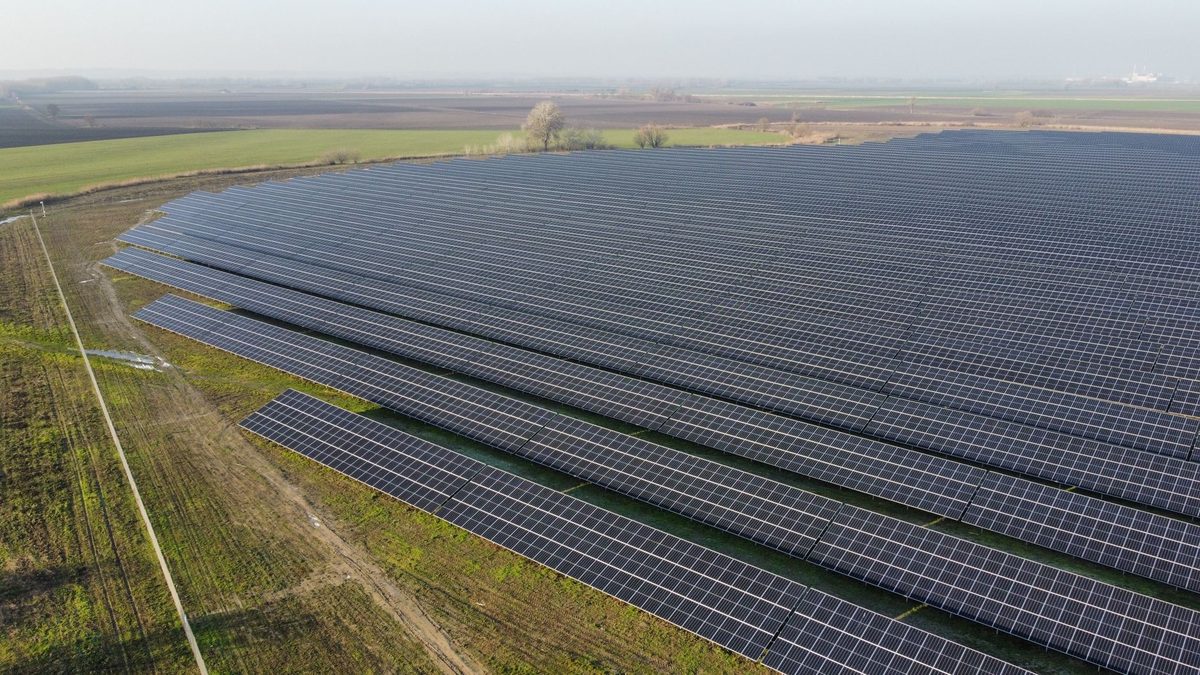
Two Lincolnshire councils asked the High Court to block an 800-megawatt solar farm spread across 1,280 hectares of farmland between Lincoln and Sleaford. In November 2026, a judge refused to let the case reach a full hearing, saying the councils' complaints about the government's process were not arguable.

Springwell is now the largest approved solar project in the UK with a clear route to construction. The ruling also answers a question that applies to every large energy scheme in England: how much can a local authority do in court about a decision taken in London?

Why it matters

The UK's biggest solar farm can now be built, and councils have a fresh answer on whether courts will second-guess national energy decisions.

Questions about this story

Free account needed to ask — your question is kept and asked for you right after sign-up. Answers are public.

No questions yet — be the first to ask.

Key Indicators

800 MW
Planned generating capacity
The largest power-producing solar farm approved in the UK, according to the government.
1,280 ha
Site area
Roughly 3,163 acres, or about 1,700 football pitches, near Scopwick.
180,000
Homes the developer says it can power
Described by the government as about half the homes in Lincolnshire.
600
Peak construction jobs
Developer estimate for the busiest phase of building.
40 years
Operating permission
Consent is time-limited, with decommissioning expected in the 2070s.

Voices

Curated perspectives — historical figures and your fellow readers.

Sign up to generate historical perspectives on this story.

People Involved

Organizations Involved

Timeline

November 2024 November 2026

8 events Latest: Today
Tap a bar to jump to that date
  1. Government grants consent

    Decision

    The energy secretary approves the development consent order for the UK's largest power-producing solar farm.

  2. Councils file objections

    Planning

    Lincolnshire County Council submits a local impact report and written representations against the scheme.

  3. Public examination begins

    Planning

    The Planning Inspectorate's examination of the application runs for six months.

  4. Springwell application submitted

    Filing

    Developer seeks a development consent order for an 800 MW solar park and battery storage in North Kesteven.

Scenarios

1

Construction starts at Springwell in 2027

Likely Resolves by End of 2027

Discussed by: EDF Power Solutions and local reporting on the project timetable

With the legal route closed, the developer moves to detailed design, procurement and grid works. Local reporting expects about two years of construction beginning in 2027, with electricity exported from 2029. The main risk is the Navenby substation, which Springwell depends on and which National Grid must deliver.

2

Councils win a challenge against Beacon Fen

Possible Resolves by Q2 2027

Discussed by: Lincolnshire County Council, which announced the challenge in October 2026

The county council is pursuing a separate judicial review of the Beacon Fen solar farm near Sleaford. A permission grant there would not undo Springwell, but it would show the courts will hear a differently framed case and could slow other Lincolnshire schemes.

3

A fresh legal attempt delays Springwell again

Unlikely Resolves by Q2 2027

Discussed by: Planning lawyers and campaigners cited in local coverage of the ruling

Losing at the permission stage is not always the end. A claimant can seek to renew arguments orally or bring a differently framed claim. Any new case that clears the permission hurdle would push construction back and raise the cost of the project.

4

Springwell reaches full output by 2029

Possible Resolves by End of 2029

Discussed by: EDF Power Solutions, which has targeted 2029 for first export

The developer's stated plan is to export power from 2029. Hitting that depends on the Navenby substation, supply chains and construction labour. A slip in any of them moves the date without changing the consent.

Historical Context

2 moments from history that rhyme with this story — and how they unfolded.

February 2020

Heathrow third runway ruling (2020)

The Court of Appeal ruled the government's airports policy statement unlawful because ministers had not accounted for the Paris climate agreement. The decision froze a nationally significant infrastructure project that had already cleared a parliamentary vote.

Then

Expansion plans stalled and the policy statement had to be rewritten.

Now

The case established that climate commitments can be a valid ground for challenging national infrastructure decisions, even after political sign-off.

Why this matters now

It shows what a successful challenge to a nationally significant project looks like, and why councils keep trying even when the odds are long.

July 2022

Sizewell C consent (2022)

The government granted a development consent order for a new nuclear plant in Suffolk over objections from local groups about construction traffic, landscape and coastal impacts. Opponents went to court and did not stop the project.

Then

Consent held and site preparation moved ahead.

Now

The case reinforced that the development consent regime gives ministers wide discretion on projects designated as nationally significant.

Why this matters now

Springwell follows the same legal route, and the same pattern: local objection, ministerial approval, and a court that declines to reopen the merits.

Sources

(10)