
Pull to refresh
Logo
Sundown solar and battery project clears federal environmental approval

Sundown solar and battery project clears federal environmental approval

Built World

Federal sign-off follows NSW consent for a 360 MW solar farm and a 150 MW battery near Inverell, but no construction date has been set.

Overview

Updated 1 hour ago

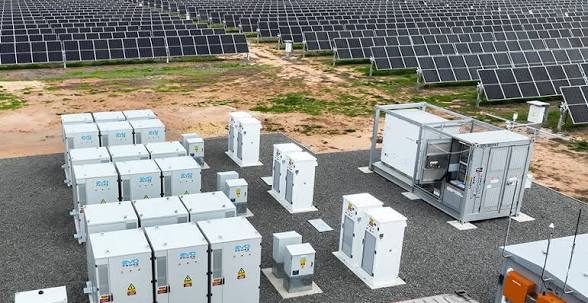
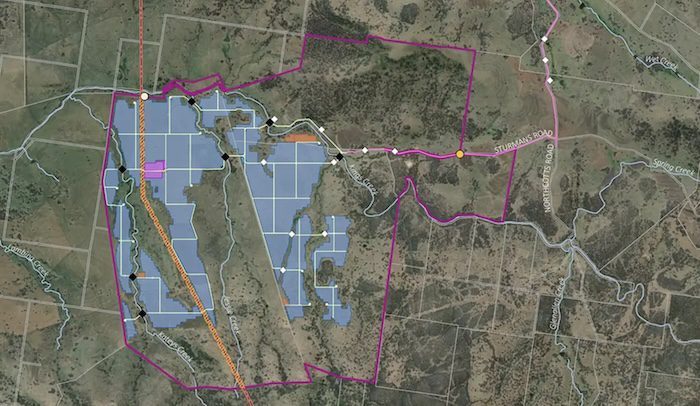
The Sundown solar and battery project has federal environmental approval. The decision, signed October 23, 2026, allows Recurrent Energy to build a 360-megawatt solar farm and a 150-megawatt battery about 30 kilometres east of Inverell in northern New South Wales.

The federal sign-off follows state development consent granted by the NSW Independent Planning Commission on August 4, 2026. Together they clear the project's main regulatory gates. They do not commit the developer to build: no construction start, final investment figure or completion date has been published.

Why it matters

Approval turns years of planning into a buildable project, but construction now depends on an investment decision the developer has not announced.

Questions about this story

Free account needed to ask — your question is kept and asked for you right after sign-up. Answers are public.

No questions yet — be the first to ask.

Key Indicators

360 MW
Solar capacity
Approved solar farm size; federal approval documents cite 350 MW.
150 MW
Battery power
Maximum discharge capacity allowed under the state consent.
600 MWh
Battery storage
Four hours of storage at full discharge.
133
Objections lodged
Objections received during the state planning process, mostly from distant locations.
2066
Federal approval expiry
The federal environmental approval remains valid until the end of 2066.

Voices

Curated perspectives — historical figures and your fellow readers.

Sign up to generate historical perspectives on this story.

People Involved

Organizations Involved

Timeline

November 2017 November 2026

7 events Latest: Today
Tap a bar to jump to that date
  1. Approval reported; construction date still unset

    Today Statement

    Trade press reports the federal approval. No construction start, investment figure or completion date is confirmed.

  2. Federal environmental approval signed

    Approval

    Federal approval under the EPBC Act is granted, subject to biodiversity offsets and a management plan.

  3. NSW grants development consent

    Approval

    The commission approves a 360 MW solar farm and 150 MW battery with conditions.

  4. Application referred to planning commission

    Planning

    The state significant development application is referred to the NSW Independent Planning Commission.

  5. Federal proponent changed

    Regulatory

    Sundown SF Subco Pty Ltd replaces Sundown Solar Pty Ltd as the project's federal proponent.

  6. Environmental impact statement exhibited

    Planning

    The project's environmental impact statement goes on public exhibition, closing August 3.

  7. Scoping report released

    Planning

    The first scoping report for the Sundown project is released.

Scenarios

1

Recurrent Energy reaches financial close and starts building

Possible Resolves by End of 2027

Discussed by: Trade press and the project's own planning documents, which describe the next steps as satisfying conditions and finalising construction arrangements

The developer completes its biodiversity management plan, locks in procurement and grid connection, and announces a final investment decision. Site works follow. This is the outcome the approval process was designed to enable, but the company has given no timetable.

2

Battery capacity increased through a modification application

Possible Resolves by Q2 2028

Discussed by: The state consent itself, which caps storage at 150 MW and 600 MWh but explicitly allows a separate application to raise it

Condition A5 of the consent sets a ceiling on the battery but notes the developer may lodge a new development application or modification to expand it. A larger battery would change the project's cost and role in the grid.

3

Approval conditions delay construction past 2028

Unlikely Resolves by End of 2028

Discussed by: Planning analysts who note that federal approval does not set a construction date and that biodiversity and road conditions must be met first

The developer must buy and retire biodiversity offsets, win approval for a biodiversity management plan, seal sections of Spring Mountain Road and complete a fire safety study before works begin. Any of these can slip. If they do, the project holds approvals but stays unbuilt.

Historical Context

2 moments from history that rhyme with this story — and how they unfolded.

1949–1974

Snowy Mountains Hydro-Electric Scheme (1949–1974)

Australia built a large hydro-electric and irrigation scheme across the Snowy Mountains, with the federal and state governments sharing costs and authority. It required new towns, roads and transmission lines in remote country.

Then

The scheme took 25 years and became a major source of electricity and irrigation water.

Now

It set the template for Commonwealth-state coordination on large energy projects, including the environmental and land-access conditions that now accompany them.

Why this matters now

Sundown is a much smaller project, but it shows the same pattern: federal and state approvals must line up before construction can begin.

2015

Nyngan Solar Plant (2015)

AGL completed a large-scale solar plant near Nyngan in western New South Wales, then the state's biggest solar farm. It was built with government support and connected to the grid in a region with no prior utility-scale solar.

Then

The plant began generating and became a reference point for later NSW solar projects.

Now

It demonstrated that large solar farms could be financed and built in regional NSW, opening the way for the pipeline that now includes Sundown.

Why this matters now

Sundown sits in that later pipeline. Its approval shows how the planning process has become more conditional, with biodiversity offsets and road works written into consent.

Sources

(7)