

Saint Paul residents appeal tall-grass citations for native pollinator gardens
Rule ChangesThree homeowners contest city orders to cut intentional plantings, forcing a public reckoning over what 'lawn' means in city codes.
Today: City council public hearing for Anna FraserNew here? Follow stories to track developments over time. Create a free account to get updates when stories you care about change.
Overview
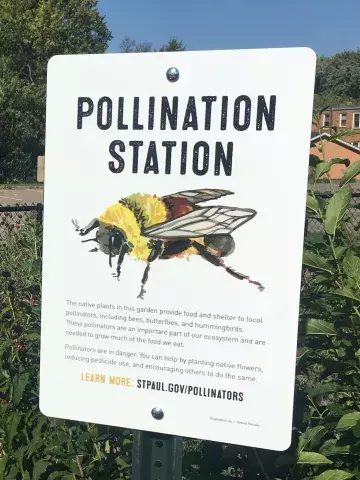
Updated 2 hours agoThree Saint Paul homeowners have filed formal appeals against city orders to cut tall grass and weeds on their properties, arguing the growth is intentional native plantings and pollinator habitat, not neglect. The cases, scheduled for public hearings in late August, are forcing the city to interpret its decades-old vegetation ordinance in an era of climate-conscious landscaping.
At stake is whether Saint Paul's code can accommodate the shift from turf lawns to ecologically functional gardens. A resident at 444 Johnson Parkway has already received a compliance extension after submitting a work plan to convert his lawn to native species, but a homeowner on Stryker Avenue faces a council hearing over her use of cardboard and rocks for weed suppression.
Why it matters
A ruling against native plantings could set a precedent forcing Minnesota homeowners to tear out intentional pollinator gardens or face fines.
Questions about this story
Free account needed to ask — your question is kept and asked for you right after sign-up. Answers are public.
No questions yet — be the first to ask.
Key Indicators
Voices
Curated perspectives — historical figures and your fellow readers.
Play
Exploring all sides of a story is often best achieved with Play.
Higher or Lower
A number from this story, against one from elsewhere in the news — guess which is bigger, then keep the chain going. 5 rounds, 3 strikes; a miss costs a strike and resets your streak.
Keyboard: ↓/L lower · ↑/H higher
0 points — sign up to put that on the leaderboard.
Connections
Sixteen names from the news. Find the four hidden groups of four. Four mistakes max.
Sign up to keep a daily streak — a new puzzle lands every day.
Exit debate?
Your progress in this debate will be lost.
- 1 Two AI personas square off on this story.
- 2 You predict who'll win each round — correct picks earn XP.
- 3 One crossfire question is yours to fire. Pick it carefully.
Couldn't generate a topic
Select Your Champions
Choose one persona for each side of the debate
DEBATE TOPIC
Choose personas with different perspectives for a more dynamic debate.
Select debater for this side:
No debate personas available right now.
Select debater for this side:
No debate personas available right now.
Who's Got This Round?
Make your prediction before the referee scores
The referee scores both sides on
Round Results
Set the Crossfire
Pick the question both personas must answer in the final round
Debate Oracle! You called every round!
Sharp Instincts! You know your debaters!
The Coin Flip Strategist! Perfectly balanced!
The Contrarian! Bold predictions!
Inverse Genius! Try betting the opposite next time!
XP Breakdown
Prediction History
People Involved
Organizations Involved
The legislative body responsible for ruling on the residents' appeals and interpreting the city's vegetation ordinance.
The department that issued the tall grass notices and is responsible for enforcing the city's property maintenance codes.
Timeline
August 2026 September 2026
-
Compliance deadline for Johnson Parkway property
Upcoming DeadlineKinnell Tackett must complete his native planting conversion to satisfy the extension granted by the city.
-
City council public hearing for Anna Fraser
Today HearingFraser's case goes before the city council to contest the citation for her boulevard garden using cardboard and rocks.
-
Residents file appeals against tall-grass notices
Legal ActionTackett, Fraser, and Olson appeal city orders to cut vegetation they identify as native plantings. Tackett receives a compliance extension.
Historical Context
3 moments from history that rhyme with this story — and how they unfolded.
South St. Paul Native Plant Ordinance (2019)
In response to similar conflicts, South St. Paul passed Ordinance 1354, explicitly legalizing native plantings. The law requires removing existing turfgrass, a 5-foot setback from property lines, and adherence to industry maintenance standards.
Resolved ambiguity for homeowners and inspectors by creating a clear, permit-free path for native gardens.
Provided a regional model for how cities can formally accommodate non-traditional landscaping.
South St. Paul's ordinance offers a ready-made template for Saint Paul. The current appeals might push Saint Paul to adopt similar formal rules instead of relying on individual case-by-case extensions.
No Mow May Movement (2020s)
Cities across the US, including several in Minnesota, began participating in 'No Mow May,' encouraging residents to let lawns grow to support early-season pollinators. This sparked debates about aesthetics versus ecology in residential areas.
Many municipalities passed temporary resolutions or proclamations supporting the movement.
Normalized the idea of 'messy' lawns as ecologically beneficial, paving the way for more permanent native planting ordinances.
The Saint Paul appeals are the logical next step after No Mow May—moving from a temporary allowance to a permanent legal right to have non-turf landscapes.
The Fight Over the 'Freedom Lawn' (1990s)
A growing anti-lawn movement, championed by writers like Sara Stein, challenged the suburban ideal of the manicured grass carpet. Homeowners began planting meadows and woodlands, often clashing with homeowners' associations (HOAs) and municipal codes.
Many fights ended with lawsuits and property owners forced to mow or pay fines.
Slowly shifted public opinion and led to more 'natural landscaping' provisions in some local ordinances, though often with strict design requirements.
This is the legal and cultural ancestor of the current Saint Paul conflict, showing how these disputes have moved from HOA covenants to municipal code and city council hearings.
