
Pull to refresh
Logo
Daily Brief
Following
Why Sign Up
Sysco bets $29 billion on Restaurant Depot to reshape food distribution

Sysco bets $29 billion on Restaurant Depot to reshape food distribution

Money Moves
By Newzino Staff |

The largest U.S. foodservice distributor absorbs the dominant cash-and-carry wholesaler, testing both Wall Street's patience and federal antitrust limits

Today: Sysco announces $29.1 billion Restaurant Depot acquisition

Overview

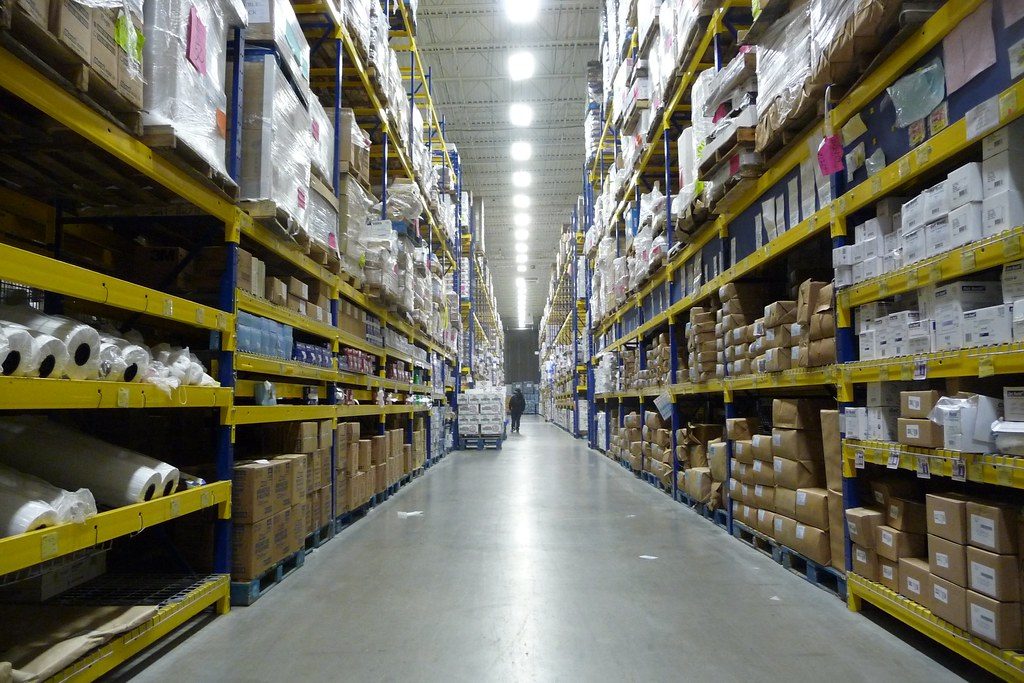
Sysco, the company that delivers food to roughly one in every six restaurants in America, announced on March 30 that it would buy Jetro Restaurant Depot—the nation's largest cash-and-carry wholesaler—for $29.1 billion. The deal would combine Sysco's truck-based delivery empire with Restaurant Depot's 166 warehouse stores where independent restaurant owners walk in, load a cart, and pay cash. If approved, it would create an omnichannel food distribution giant serving more than a million customers through both delivery and self-service.

Why it matters

If this deal closes, every independent restaurant in America will buy food from a company with unprecedented power over pricing and supply.

Key Indicators

$29.1B
Total deal value
The largest acquisition in food distribution history, comprising $21.6 billion in cash and 91.5 million Sysco shares
13%
Sysco stock decline on announcement day
The worst single-day drop for Sysco shares since March 2020, reflecting investor concerns over leverage and dilution
166
Restaurant Depot warehouse stores
Cash-and-carry locations across 35 states serving approximately 725,000 customers
$16B
Restaurant Depot annual revenue
Calendar year 2025 revenue, with approximately $2.1 billion in earnings before interest, taxes, depreciation, and amortization
$250M
Projected annual cost synergies
Expected within three years of closing, primarily from procurement and supply chain efficiencies
14.6x
Acquisition multiple on operating income
The price Sysco is paying relative to Restaurant Depot's operating profit, dropping to 13.0x when adjusted for expected synergies

Interactive

Exploring all sides of a story is often best achieved with Play.

Ever wondered what historical figures would say about today's headlines?

Sign up to generate historical perspectives on this story.

Sign Up

Debate Arena

Two rounds, two personas, one winner. You set the crossfire.

People Involved

Organizations Involved

Timeline

  1. Sysco announces $29.1 billion Restaurant Depot acquisition

    M&A

    Sysco announced a definitive agreement to acquire Jetro Restaurant Depot for $21.6 billion in cash and 91.5 million Sysco shares. The company will finance the deal with $21 billion in new debt. Sysco shares fell 13%, credit agencies placed ratings on negative watch, and the company paused its share buyback program.

  2. Trump orders food supply chain antitrust crackdown

    Regulatory

    President Trump signed an executive order directing the FTC and Department of Justice to create Food Supply Chain Security Task Forces to investigate price-fixing and anticompetitive behavior in food industries.

  3. Andrew Ferguson becomes FTC chairman

    Regulatory

    Andrew Ferguson replaced Lina Khan as FTC chairman, signaling a shift toward a more merger-friendly posture with emphasis on structural remedies over deal-blocking.

  4. FEMSA sells Restaurant Depot minority stake

    Corporate

    Mexican conglomerate Fomento Economico Mexicano (FEMSA) divested its minority stake in Jetro Restaurant Depot for $1.4 billion as part of a broader corporate restructuring.

  5. Federal judge blocks Sysco-US Foods deal

    Legal

    U.S. District Judge Amit Mehta granted the FTC's injunction, finding that the merger would significantly reduce competition. Sysco abandoned the deal six days later and paid a $300 million breakup fee.

  6. FTC sues to block Sysco-US Foods merger

    Legal

    The Federal Trade Commission filed an administrative complaint and sought a preliminary injunction, arguing the deal would reduce competition in 32 local markets and nationwide.

  7. Sysco announces US Foods acquisition

    M&A

    Sysco announced a $8.2 billion deal to acquire US Foods, the second-largest broadline foodservice distributor. The combined company would have controlled roughly 75% of the national broadline market.

  8. Restaurant Depot launched

    Corporate

    Restaurant Depot was founded in Elmhurst, Queens, New York, targeting foodservice businesses with a no-membership, no-delivery warehouse model. It became a Jetro division in 1994.

  9. Jetro Cash & Carry founded

    Corporate

    Jetro Cash & Carry was established in New York City as a wholesale cash-and-carry operation, later expanding to California, New Jersey, Miami, and Philadelphia.

Scenarios

1

FTC approves deal with targeted divestitures, Sysco becomes omnichannel giant

Discussed by: Bullish Wall Street analysts; commentary noting FTC Chairman Ferguson's preference for structural remedies over deal-blocking

Under Chairman Ferguson's remedy-focused approach, the FTC approves the deal after Sysco agrees to divest a handful of Restaurant Depot locations in markets where it already has dominant delivery share. The deal closes by Q3 fiscal 2027 as planned. Sysco becomes a roughly $95 billion revenue company with both delivery and self-service channels, and the $250 million in projected synergies begin materializing. This scenario is bolstered by Sysco's argument that cash-and-carry and broadline delivery are distinct markets with 'minimal overlap'—the exact opposite of what doomed the US Foods deal, where the two companies competed head-to-head in the same channel.

2

Food supply chain executive order triggers prolonged FTC review, deal closes late with conditions

Discussed by: Antitrust attorneys at firms including WilmerHale, Arnold & Porter, and Morrison Foerster analyzing the December 2025 executive order

The FTC's newly created Food Supply Chain Security Task Force uses the Sysco deal as a high-profile test case, issuing a 'Second Request' for extensive information that pushes the review well past the expected closing date. Political pressure around food prices—a persistent consumer concern—makes the FTC reluctant to approve a deal that could be framed as creating a food distribution monopoly. The deal eventually closes in late 2026 or early 2027, but only after Sysco accepts significant behavioral conditions or larger divestitures than expected, reducing the deal's financial attractiveness.

3

FTC blocks the deal, Sysco's second major acquisition failure in a decade

Discussed by: Bearish analysts and antitrust scholars citing the 2015 Sysco-US Foods and 2024 Kroger-Albertsons precedents

Despite the different business models involved, the FTC concludes that combining Sysco's delivery dominance with Restaurant Depot's cash-and-carry dominance would give one company excessive power over how independent restaurants source food. The executive order's emphasis on food supply chain competition provides political cover for a challenge. A federal court grants an injunction, and Sysco abandons the deal—echoing 2015. Sysco would face a significant breakup fee and the reputational damage of two blocked mega-deals. This scenario is less likely than in 2015 given the current FTC leadership's posture, but the food-specific executive order creates real political risk.

4

Deal closes but integration struggles sink the strategic thesis

Discussed by: Skeptical investors and analysts focused on the fundamental differences between delivery and cash-and-carry business models

The deal clears regulatory review, but Sysco struggles to integrate a warehouse retail operation into its truck-delivery infrastructure. Restaurant Depot's independent, price-sensitive customers resist cross-selling from Sysco's higher-margin delivery business. The promised $250 million in synergies prove elusive because procurement savings require harmonizing product assortments across fundamentally different channels. Restaurant Depot store managers, accustomed to private-company autonomy, clash with Sysco's corporate structure. The stock remains under pressure as the debt load constrains Sysco's flexibility.

Historical Context

Sysco-US Foods merger blocked (2015)

December 2013 – June 2015

What Happened

Sysco attempted to acquire US Foods, the second-largest broadline food distributor, for $8.2 billion. The combined company would have controlled roughly 75% of the national broadline distribution market. The Federal Trade Commission sued to block the deal, and U.S. District Judge Amit Mehta granted an injunction in June 2015, finding the merger would substantially reduce competition in both national and local markets.

Outcome

Short Term

Sysco abandoned the deal and paid US Foods a $300 million breakup fee. US Foods went public in 2016.

Long Term

The case became a landmark precedent for antitrust enforcement in food distribution and made Sysco cautious about horizontal combinations. The industry continued consolidating through smaller, less controversial acquisitions.

Why It's Relevant Today

Sysco's current deal is structured to avoid the same trap: instead of combining with a direct broadline competitor, it's acquiring a company in a different channel (cash-and-carry vs. delivery). Whether regulators accept that distinction will determine the deal's fate.

Kroger-Albertsons merger blocked (2024)

October 2022 – December 2024

What Happened

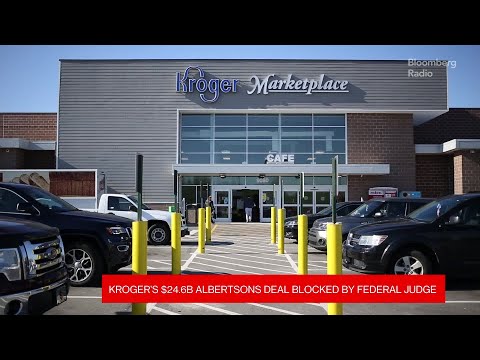
Kroger proposed a $24.6 billion acquisition of Albertsons, the second-largest U.S. supermarket chain. The FTC challenged the deal, arguing it would raise grocery prices for millions of Americans. In December 2024, two federal courts granted injunctions blocking the merger, and the companies terminated the deal.

Outcome

Short Term

Both companies continued operating independently. The ruling reinforced that proposed divestitures to smaller buyers may not satisfy regulators if the buyer lacks the scale to maintain competitive intensity.

Long Term

The case demonstrated that even proposed divestitures worth billions may not save a deal if regulators doubt the buyer's ability to compete effectively against the merged entity.

Why It's Relevant Today

The Kroger-Albertsons case shows that food industry mega-mergers face intense regulatory scrutiny regardless of proposed remedies. However, it involved two direct competitors in the same channel—unlike the Sysco-Restaurant Depot deal, which combines companies in adjacent but distinct channels.

InBev acquisition of Anheuser-Busch (2008)

June – November 2008

What Happened

Belgian-Brazilian brewer InBev acquired Anheuser-Busch, the maker of Budweiser, for $52 billion—then the largest all-cash acquisition in history. The deal combined the world's two largest brewers into AB InBev. Despite concerns about market concentration, regulators approved the deal after targeted divestitures.

Outcome

Short Term

The combined company achieved significant cost synergies by rationalizing operations, but took on enormous debt that constrained investment for years.

Long Term

AB InBev became the dominant global brewer but faced persistent criticism over rising beer prices and declining product innovation. The heavy debt load became a recurring drag on the stock.

Why It's Relevant Today

The parallel to Sysco is the combination of massive debt-funded acquisition, promised synergies, and the question of whether scale in a commodity distribution business actually produces durable value—or simply creates a leveraged giant with limited room to maneuver.

Sources

(10)