

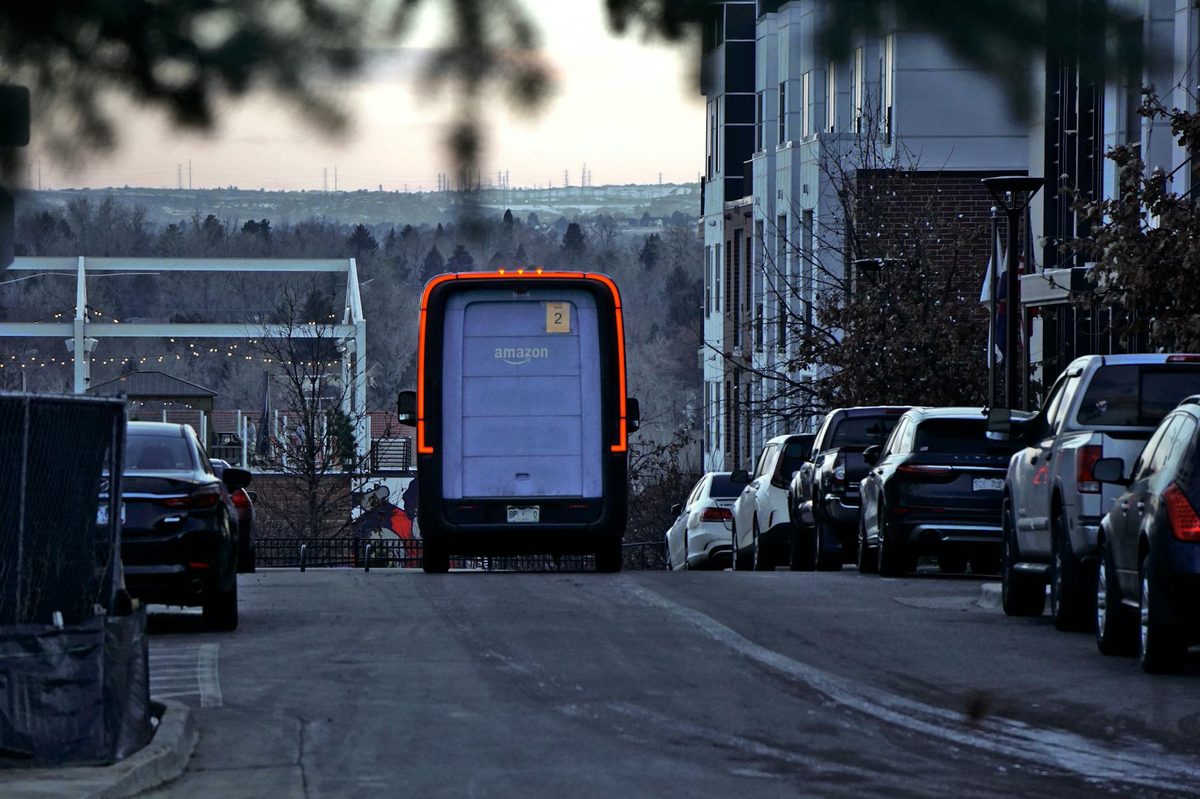

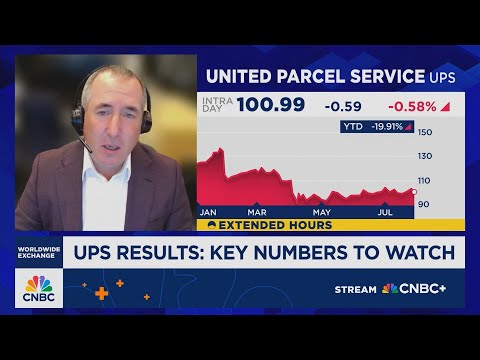
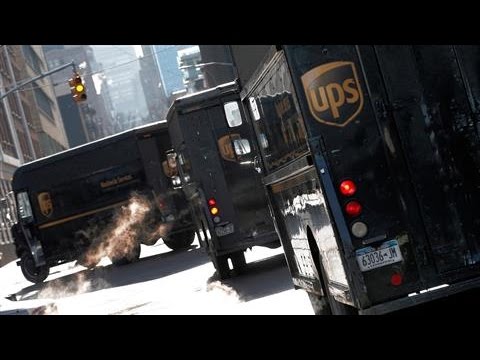
Amazon was UPS's largest customer for nearly three decades. Now UPS is walking away from the business. On January 27, 2026, the parcel carrier announced 30,000 additional job cuts and 24 facility closures as it accelerates a plan to slash Amazon deliveries by more than half—calling the relationship 'extraordinarily dilutive' to its profit margins. UPS stock rose 4% in pre-market trading on the earnings beat before concerns about a weak first-quarter outlook tempered investor enthusiasm.
The breakup marks a dramatic role reversal: Amazon, which once relied on UPS and FedEx to reach customers, now operates the largest delivery network in the United States with approximately 28% market share. UPS is betting it can replace low-margin Amazon volume with more profitable business from healthcare, small businesses, and premium shippers. The gamble will eliminate at least 78,000 jobs over two years and close nearly 200 facilities—the largest restructuring in the company's 117-year history. Meanwhile, FedEx is onboarding Amazon's large-package deliveries under a multi-year deal, positioning itself to capture business UPS is abandoning.
Images from Openverse under Creative Commons licenses.
Videos from YouTube.
Interactive
Exploring all sides of a story is often best achieved with
Play.
J. P. Morgan
(1837-1913) ·Gilded Age · finance
Fictional AI pastiche — not real quote.
"A man who builds his fortune carrying another's parcels discovers too late he was never the merchant—merely the porter. UPS spent thirty years feeding a competitor who studied their routes, then built better roads. Character in business means knowing when you're financing your own obsolescence."
0% found this insightful
Andrew Carnegie
(1835-1919) ·Gilded Age · industry
Fictional AI pastiche — not real quote.
"When a customer becomes your competitor and builds an empire larger than your own, you've not failed in service—you've succeeded in teaching! UPS fed the lion until it grew strong enough to hunt alone; now they must remember what I learned in steel: true profit lies not in volume, but in what you keep after the furnace has cooled."
100% found this insightful
Ever wondered what historical figures would say about today's headlines?
Sign up to generate historical perspectives on this story.
Status: Restructuring operations, exiting Amazon business
The world's largest package delivery company by revenue, operating in more than 200 countries with approximately 490,000 employees.
AM
Amazon
Technology and Cloud Computing Company
Status: Operating largest U.S. delivery network, partnering with FedEx
The world's largest online retailer and, since 2022, the largest parcel delivery company in the United States by volume.
IN
International Brotherhood of Teamsters
Labor Union
Status: Criticizing job cuts and opposing second voluntary buyout program
The union representing approximately 330,000 UPS workers under a five-year contract ratified in August 2023.
Timeline
UPS Announces 30,000 Additional Job Cuts
Restructuring
CFO Brian Dykes reveals plans to eliminate 30,000 operational jobs through attrition and voluntary buyouts, close 24 more facilities, and retire the MD-11 fleet.
UPS Stock Jumps 4% on Earnings Beat
Market Reaction
UPS shares rise in pre-market trading after reporting Q4 adjusted EPS of $2.38 vs. estimates of $2.10, though concerns about weak Q1 2026 outlook temper enthusiasm later in the session.
Teamsters Condemn Job Cuts and Buyout Program
Labor
Teamsters spokeswoman Kara Deniz criticizes UPS's second voluntary separation offer, stating 'drivers overwhelmingly rejected it the first time' and emphasizing workers 'still know our worth.'
UPS Completes 2025 Restructuring Phase
Restructuring
UPS eliminates 48,000 positions and closes 93 facilities, achieving $3.5 billion in cost savings while reducing Amazon volume by 1 million packages per day.
UPS Retires MD-11 Cargo Fleet
Operations
UPS completes accelerated retirement of its entire MD-11 cargo aircraft fleet during Q4 2025, five months after Flight 2976 crash killed 15 people in Louisville.
FedEx Begins Amazon Large-Package Onboarding
Strategic
FedEx advances integration of multi-year Amazon delivery deal for large packages, with full onboarding expected by February 2026 as UPS exits similar business.
UPS Cargo Plane Crashes in Louisville
Incident
UPS Airlines Flight 2976, an MD-11 cargo jet, crashes shortly after takeoff from Louisville, killing all three crew members and 12 people on the ground.
Amazon Signs Delivery Deal with FedEx
Strategic
Amazon and FedEx announce a multi-year agreement for large-package deliveries, renewing a relationship that ended in 2019.
UPS Announces Amazon Volume Reduction
Strategic
CEO Carol Tomé announces UPS will cut Amazon deliveries by more than 50% by mid-2026, calling the business 'extraordinarily dilutive' to margins.
UPS and Teamsters Reach Labor Agreement
Labor
After threatening a strike, 330,000 UPS workers secure a five-year contract with $7.50 per hour wage increases and heat safety improvements.
Amazon Becomes Largest U.S. Parcel Carrier
Market Shift
Amazon surpasses UPS in domestic parcel volume, delivering approximately 5.2 billion packages compared to UPS's 5.3 billion (USPS remains largest overall).
Carol Tomé Becomes UPS CEO
Leadership
The former Home Depot CFO becomes the first outsider and first woman to lead UPS, inheriting a company she later describes as 'mired in bureaucracy.'
Amazon Launches Delivery Service Partner Program
Strategic
Amazon introduces a franchise-style program allowing entrepreneurs to start delivery businesses for $10,000, eventually building a network of 200,000 drivers.
Amazon Christmas Delivery Debacle
Incident
Capacity constraints and bad weather cause widespread late deliveries for Amazon customers. The failure accelerates Amazon's decision to build its own logistics network.
Scenarios
1
UPS Transformation Succeeds, Margins Recover
Discussed by: Wall Street analysts at JP Morgan, Bank of America; company management guidance
UPS successfully replaces Amazon volume with higher-margin healthcare, SMB, and premium shipping customers. The company achieves its target 9.6% operating margin in 2026 and returns to revenue growth by 2027. The strategy validates Tomé's 'better, not bigger' approach and positions UPS as a premium logistics provider rather than a volume shipper.
2
Revenue Hole Persists, Further Cuts Follow
Discussed by: FreightWaves analysts; Teamsters for a Democratic Union; skeptical institutional investors
UPS fails to fully replace Amazon's 12% revenue share with profitable business. The company faces continued margin pressure, leading to additional workforce reductions beyond the announced 78,000 jobs. Competition from Amazon's expanding third-party logistics services and regional carriers further erodes market share.
3
Labor Tensions Escalate as Contract Expires
Discussed by: Teamsters leadership; labor analysts; industry publications
As the 2028 Teamsters contract expiration approaches, union members resist further automation and job reductions negotiated outside formal bargaining. The voluntary buyout model faces pushback, and tensions rise over workload increases for remaining employees. A strike threat resurfaces during 2027 negotiations.
4
Amazon Logistics Expands into Third-Party Shipping
Discussed by: Morgan Stanley analysts; logistics industry observers; Amazon competitors
Amazon leverages its dominant delivery network to offer shipping services to other retailers and businesses, directly competing with UPS and FedEx for the premium customers UPS is targeting. The move transforms Amazon from a UPS customer into a direct competitor across all market segments.
5
Amazon Offers Shipping Services to Third-Party Businesses
Discussed by: Morgan Stanley analysts; logistics industry observers; Amazon competitors
Amazon leverages its dominant delivery network—now 28% of U.S. market share—to offer shipping services directly to retailers and businesses that don't sell on its platform. This move transforms Amazon from a UPS customer into a direct competitor for the premium healthcare and SMB clients UPS is targeting, potentially undermining the entire restructuring strategy.
Historical Context
FedEx Ends Amazon Ground Contract (2019)
August 2019
What Happened
FedEx announced it would not renew its ground-delivery contract with Amazon, ending a relationship that had made Amazon one of FedEx's largest customers. FedEx CEO Fred Smith had dismissed Amazon's logistics ambitions as 'fantastical' in 2016; three years later, FedEx chose to exit rather than subsidize a competitor.
Outcome
Short Term
FedEx shifted capacity to other retailers and grew its e-commerce business with companies competing against Amazon.
Long Term
Amazon accelerated its own delivery network expansion. Six years later, in 2025, Amazon returned to FedEx with a new deal—this time on terms more favorable to the carrier.
Why It's Relevant Today
UPS is following FedEx's 2019 playbook but at larger scale. Both carriers concluded that enabling Amazon's growth produced unsustainable economics.
GM Saturn Division Shutdown (2009-2010)
September 2009 - October 2010
What Happened
General Motors, during bankruptcy restructuring, announced the closure of its Saturn division. Despite Saturn's customer loyalty and distinct brand identity, GM concluded the division's economics were unsustainable. The company closed 350 dealerships and eliminated thousands of jobs over 13 months.
Outcome
Short Term
Saturn customers scattered to other brands; dealers received modest compensation. GM eliminated approximately $1 billion in annual costs.
Long Term
GM's post-bankruptcy restructuring succeeded, though critics argued the company abandoned profitable innovation potential for short-term cost savings.
Why It's Relevant Today
Like Saturn, Amazon represented significant UPS volume that management deemed strategically unsustainable. The parallel highlights risks: Saturn's customers found alternatives, and UPS must ensure its departing Amazon volume doesn't simply migrate to competitors.
Kodak Film Business Decline (1990s-2012)
1990-2012
What Happened
Eastman Kodak dominated film photography for a century but failed to adapt as digital cameras disrupted its core business. The company that invented the digital camera in 1975 chose to protect film profits rather than cannibalize them. Revenue fell from $16 billion in 1996 to $6 billion by 2011.
Outcome
Short Term
Kodak filed for bankruptcy in January 2012, eliminating 47,000 jobs over the prior decade.
Long Term
Kodak emerged from bankruptcy as a commercial printing company with fewer than 5,000 employees—a fraction of its former scale but a viable business.
Why It's Relevant Today
UPS faces the opposite challenge: rather than clinging to declining business, it's proactively exiting a customer relationship. The Kodak parallel illustrates both the risk of waiting too long and the possibility that aggressive restructuring can preserve a viable core business.